Blog

  • Is the Label Lying?

    It’s everywhere — in your Instagram feed, in shopping apps, on tags sewn into dresses and denim jackets. Sustainable. Ethical. Eco-friendly. These words are fast becoming fashion’s favourite accessories. 

    But behind the buzzwords, something doesn’t add up.

    What does it really mean for a brand to be ‘sustainable’? Who decides that a shirt is ‘ethical’? And in an industry worth over $1.5 trillion globally — built on speed, volume, and low margins — how much of this heartwarming language can we actually trust?



    As the world grows more climate-conscious, fashion has scrambled to clean up its image. Consumers are pivoting away from fast, cheap fashion, towards more homegrown, slow-stitched brands. But instead of fixing how their clothes are actually made, many brands have just changed how they talk about them. Words like ‘sustainable’ or ‘conscious’ get thrown around, but it’s often just clever marketing with little behind it. As shoppers, we’re left guessing — trying to make better choices, but unsure what any of it really means. 

    It’s time to ask: do we really know what we’re wearing? 

    At its core, sustainable fashion refers to clothing that’s designed, produced, and distributed in a way that minimizes harm to people and the planet. That might include everything from using organic cotton and low-impact dyes to ensuring workers are paid fair wages in safe conditions. 

    But there is no global rulebook, no clear-cut definition of what the term means. It’s all a bit… fuzzy. And that fuzziness? It’s exactly what allows brands to get away with saying a lot without actually doing much. They throw around feel-good words but rarely back them up. The result? A lot of bold claims — and not nearly enough proof.

    This is greenwashing: when companies mislead consumers about the environmental benefits of a product or practice.


    Look for specificity — a truly transparent brand will tell you exactly what makes that shirt or dress sustainable whether it’s organic cotton, low water usage, fair wages, or all of the above.


    And it works — because we want to believe it. Consumers want a pat on the back for their choices, for choosing the $80 ‘organic bamboo’ shirt over the $10 fast fashion top from a high-street brand.

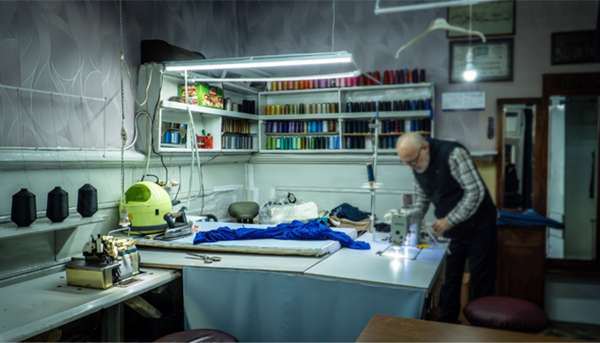
    In India, with its complex, layered textile traditions, sustainability might lead to further flattening. After all, who decides what is sustainable and for whom? The tailor bent over his bandhini work, the sun-hunched cotton farmer in his fields, often have no say in what makes a garment sustainable. This division of labor and capital becomes more complicated when you glance at India’s colonial history, where tailors were often shunted into marginalized positions.  

    So, as someone trying to shop a little more consciously — where do you even start?

    Here are a few suggestions. Avoid shopping entirely, or choose pre-loved clothing. But if you have an unbearable hankering for that cute cotton dress from that planet ’forward’ brand check for the following things.



    Look for specificity — a transparent brand will tell you exactly what makes that shirt or dress sustainable whether it’s organic cotton, low water usage, fair wages, or all of the above. Look for details: what is the fabric? Who made it and are they being paid fairly? How was the material grown? How much water or energy did it consume? Are brands using leftover material effectively, or are they contributing to the enormous fashion waste problem? Are they producing vast volumes of clothes that are then discarded rather than recycled? Sometimes, there are other hard choices to be made. Cotton, for instance, is a thirsty crop, leeching water from the soil, but on the other hand, polyester is a synthetic, non-biodegradable material. 

    Certifications help, but even they’re complicated. Some widely-recognised ones include GOTS (Global Organic Textile Standard), OEKO-TEX, and Fair Trade. But not all certifications are equal — and some are run by industry bodies themselves. 

    Transparency over perfection, always. Truly sustainable brands will be honest about what they’re doing and what they’re still working on. A glossy marketing video is not the same as a breakdown of supply chains and emissions — endless aesthetically-shot reels of tailors hunched over their sewing do not automatically translate to fair wages. Sometimes, it is simply clever marketing. It helps to write to individual brands and demand accountability.


    Until we have clearer regulations, global standards, and third-party checks that are genuinely independent, ‘sustainable fashion’ will remain a murky promise — one that can either mean everything or absolutely nothing.


    Touch, feel, observe. While it’s not always possible to judge quality or authenticity with the naked eye, there’s some truth to the idea that if a garment feels cheap or synthetic, it probably didn’t come from a clean, slow process. 

    Unfortunately, in India and globally, there’s no unified parameters for sustainable fashion. In most countries, brands can slap the word ‘sustainable’ on a tag without proving anything; regulations remain sparse. The EU has begun cracking down on misleading claims and greenwashing, although enforcement is still new and patchy. However, this is set to change come 2028, with the EU mandating a standardized digital identifier under its Digital Product Passport initiative. This is a QR code of sorts that clarifies all the details of any garment sold in the EU, and thoroughly tracks its carbon footprint. This will squarely affect the Indian manufacturing industry that supplies $7.6 billion worth of textiles to Europe. How exactly this modifies an industry often reliant on informal tailoring workshops and unregulated middlemen, remains to be seen.

    But until that is set in place more fully, that means the burden falls squarely on the consumer. And frankly, that’s not fair.

    Even with the best intentions, conscious shopping isn’t enough to fix a broken system. It’s not just fast fashion that’s the problem — it’s fast information, too. We live in a system where we are constantly bombarded by trends; they are far easier to push than facts, and far more profitable.


    So maybe the real question isn’t “Which brand is truly sustainable?” but something deeper: Why is it so hard to know for sure? Who gets to decide what’s ethical — and who is holding them accountable?

    Until we have clearer regulations, global standards, and third-party checks that are genuinely independent, ‘sustainable fashion’ will remain a murky promise — one that can either mean everything or absolutely nothing. 

    We live in an age where we know where our food is from, how many steps we’ve taken today, even the carbon footprint of our flights. But when it comes to the clothes we wear — the fabrics that sit against our skin every day — we’re often in the dark. That needs to change.

    If we’re going to talk about sustainability, let’s demand clarity. Let’s ask harder questions. Let’s treat ‘sustainable fashion’ not as a trend, but as a responsibility — one that belongs as much to lawmakers and corporations as it does to shoppers. Let’s bring light to the label.


  • The Internet Age(ing)

    Your aunt sends you a devotional Reel every morning, your father has strong opinions about which YouTube finance channel to trust, and your grandfather joins Zoom calls without being asked (but he just refuses to mute himself). For years, these felt like stories from the edges of internet life. Increasingly, they are internet life.

    We talk about the internet as though it belongs to the young. Every few months there is a new generation to decode, a new platform to panic about, a new slang term requiring a glossary. Brands chase Gen Z and startups chase Gen Alpha. Entire industries are built around predicting what younger users will do next.

    Meanwhile, some of the most consistent growth in India’s internet user base is happening among people over fifty.

    The numbers tell a partial story. India crossed 950 million active internet users in 2025, according to the Internet and Mobile Association of India, with rural adoption growing at roughly twice the pace of urban areas. Age-disaggregated data is harder to come by, but the direction seems to be clear. The share of internet users aged 35 and above has been rising steadily since 2019, and demographic projections suggest that trend will continue as India’s population ages and smartphone access deepens in smaller cities and towns. The next wave of first-time internet users in India will not look like the last one. What is less discussed is what happens to a platform’s culture when so many new people arrive on it. A demographic that is older, often more patient, and frequently more purposeful about why they are there.


    In India, a new kind of everyday ritual is taking root. Mornings begin with bhajans on YouTube. Then come WhatsApp family groups, a regional-language news video, or maybe a stock market explainer from a creator who uses analogies that are relatable. A Facebook birthday message for an old colleague, followed by a quick check of a government portal that someone figured out how to navigate and then screenshot for everyone else. The routine is structured, habitual, and deeply social. It is also as sticky, in its own way, as any Gen Z screen schedule.

    But the motivations are different. For many older users, the internet is not primarily a place for self-expression or personal branding or keeping up with the cultural conversation. It is a tool for maintaining relationships, staying connected to family, managing practical life, and participating in communities that matter to them.

    This shows up in how they behave once they are online. Older WhatsApp users, as anyone in a family group can confirm, do not just forward; they annotate. A news article usually arrives with commentary, a health tip comes with a personal observation, and good-morning messages, with their small festivals of flowers and folded hands and heart emojis, are not just broadcast content. These have quickly become a daily form of contact. Communication stays relational rather than algorithmic, and in an era when younger users often describe social media as exhausting and isolating, that is not nothing.


    The next wave of first-time internet users in India will not look like the last one.


    The effect is subtle but significant. Spaces that platforms often imagine as channels for content become, in practice, places for conversation. It’s not uncommon to see a comment section turn into a reunion or a devotional livestream become a community gathering.

    Part of what is driving older Indians online is a structural shift that does not get talked about enough in digital culture conversations. The family has changed shape and technology has moved in to fill some of the gap.

    Joint households have given way, across much of urban and semi-urban India, to smaller nuclear arrangements. Adult children have moved to other cities, or other countries. The Indian diaspora is large and still growing. There are over 32 million people of Indian origin living outside India, among the largest overseas communities in the world. For many of them, daily contact with parents and grandparents happens through a screen.

    This creates an understated yet practical imperative. Parents and grandparents who want to stay close to children abroad need to be online. Video calls, WhatsApp updates, shared Reels, and Facebook posts that let you feel like you witnessed something have become how families stay emotionally present across distance.


    Research on the lived experience of older Indians left behind by emigrating children describes something that rings true. Digital communication genuinely mitigates loneliness, but it also reveals its own limits. A five-minute call can hide a difficult day. Warmth can come through, context often cannot. Still, the alternative, sporadic phone calls across time zones, is worse. And so older adults learn the platforms, figure out video calling, join the family group, and gradually become more comfortable in digital spaces than anyone expected.

    For NRI families, this is not a small thing. The grandmother who can now send a voice note and receive a photo from a birthday party on the other side of the world within minutes of it being taken is not marginal to the internet. The internet came to her. 

    As more older Indians come online, a small but growing ecosystem has emerged around them. Companies like Seniority, Emoha, and Goodfellows are building services specifically for this demographic, from ergonomic products and elder companionship to curated digital experiences for seniors. Healthcare platforms are also increasingly offering simplified digital flows.

    Content creators are also a part of this shift. Retired teachers run YouTube channels explaining Sanskrit texts, with production values modest enough to feel trustworthy. Grandmothers share recipes with audiences spread across multiple countries. Regional-language creators discuss gardening, spirituality, personal finance, and everyday health for viewers who rarely see themselves reflected anywhere else online. Utkarsh, a Delhi-based banker told us, “I gifted my father a podcast mic for his retirement. He wants to start an educational channel to talk about finance for older people. He worked for the government for decades and wants to share his knowledge. He even has 5k followers!”


    Communication stays relational rather than algorithmic, and in an era when younger users often describe social media as exhausting and isolating, that is not nothing.


    These are not niche curiosities. Devotional content on YouTube has grown into one of the platform’s most reliably streamed categories in India. The audience for that content is not primarily young.

    But there’s another side to the story as older Indians log in more. None of this is uncomplicated. They are also more vulnerable to misinformation, digital scams, and phishing attempts. They are more likely to be scammed than younger users. On top of that, platforms were not designed with their threat models in mind. Multiple studies across different countries find that older adults are also more likely to share misinformation online, often not from carelessness but from a different sense of what sharing means. 

    This has produced a recognizable intergenerational dynamic in a lot of Indian households. The adult child explaining privacy settings, gently questioning that viral health claim, showing a parent how to spot a suspicious link, while that same parent is sending online registration links for government schemes they figured out how to navigate, or passing along stock tips, or knowing exactly which government portal has the right form for a particular bureaucratic task. Everyone teaches and everyone gets taught. Everyone is also at least slightly exasperated.

    Most Indian platforms still behave as though their user is young and digitally fluent in the way that demographic usually is. User interfaces assume a certain comfort with gesture and navigation that many older first-time users do not have. Marketing and product decisions continue to treat new users as synonymous with young users. Voice search, larger text options, simpler checkout flows, these are still exceptions rather than defaults.


    The numbers suggest this will have to change. How people pay looks different in this demographic. They use less UPI, more cash on delivery, more comfort with phone-based rather than app-based transactions. How they search looks different, they tend to use more voice commands, more full questions phrased in regional languages, and less comfort with truncated keyword logic. How they decide what to trust looks different too. Platform reputation and community validation matter more than influencer endorsement.

    Some companies have noticed and begun adapting. Quick commerce and delivery platforms have begun targeting older demographics with campaigns that acknowledge, rather than ignore, the learning curve. Uber’s guest-ride feature allows users to book rides for someone else. Blinkit has experimented with collaborative shopping tools that recognize that purchases are often made collectively rather than individually. These may seem like small product decisions, but they reflect a larger reality. Still, it is early and the gap between where the user base is going and where product design currently sits is wide.

    India’s internet is older than it was five years ago, and it will be older still in five more. That does not mean the memes disappear or the youth platforms empty out. It means the internet becomes more genuinely intergenerational, more varied in its purposes, its languages, its habits, and its assumptions about what being online is even for.

    So that aunt sending the devotional reel every morning is not a straggler arriving late to someone else’s party. She is part of one of the most significant shifts happening in Indian digital life right now, and the rest of the internet is still catching up to what that means.

  • Setting the Stage

    In 2024, an enormous crowd sways to Prateek Kuhad’s dulcet tones under a cerulean March sky. In 2025, Jasleen Royal belted her heart out at the D Y Patil Stadium, in a soft Mumbai gloaming. In 2026, on a cool Bengaluru night, Neyhal sang soft serenades on a stage in Phoenix Market City. The connection between all three? They all opened for international superstars – Ed Sheeran, Coldplay and Michael Learns to Rock.

    India’s contribution to global music for a long time was to provide a fleeting taste of its diverse soundscape before the main event took center stage. However, that function has changed in recent years, slowly transforming into something far more significant. For many Indian artists, opening for international superstars isn’t just a gig — it’s a test of talent, of taste, and, perhaps unfairly, of legitimacy.


    Prateek Kuhad is one of India’s best-known singers / Wikimedia Commons


    These moments are framed by the media as breakthroughs for the Indian musicians, as an indication that Indian music is at last breaking onto the international scene. Are these musical introductions more about looks than potential, though?

    Theoretically, opening acts are an opportunity for audiences to discover local talent and a nod to local importance. In practice, they’re often a litmus test for whether an artist can carry the weight of audience expectation before a stadium erupts for someone else. Can they impress an impatient crowd that’s mostly there for the headliner?

    It’s not just about being good — all the performers are good, perhaps even better than the headlining act. It’s about being palatable and accessible. Global enough to fit — yet distinct enough to represent something ‘authentically Indian’. That tension is both the promise and the peril of opening for international names in India. You’re seen, but are you really heard?


    Theoretically, opening acts are an opportunity for audiences to discover local talent and a nod to local importance. In practice, they’re often a litmus test: can this artist carry the weight of audience expectation before a stadium erupts for someone else?


    But where are they now? Let’s track their trajectories. Divine’s pre-Post Malone slot felt like a full-circle moment — the homegrown rapper whose music once echoed in Mumbai’s gullies now centre stage at a mega gig. But Divine was already a star. Did opening for Post change anything? Probably not.

    Similarly, when Anuv Jain opened for Ed Sheeran, it sparked chatter — was his mellow, acoustic vibe a safe choice? Did it widen his base or simply reaffirm what his fans already knew?

    But Divine and Anuv were already stars in India. Lesser-known performers frequently return to local circuits, their international prominence swiftly forgotten. For them, the slot turns into a line in their biography; it’s remarkable, sure, but it’s not always revolutionary.

    Similarly, when Anuv Jain opened for Ed Sheeran, it sparked chatter — was his mellow, acoustic vibe a safe choice? Did it widen his base or simply reaffirm what his fans already knew?

    But Divine and Anuv were already stars in India. Lesser-known performers frequently return to local circuits, their international prominence swiftly forgotten. For them, the slot turns into a line in their biography; it’s remarkable, sure, but it’s not always revolutionary.

    Opening for a global name means infrastructure, press, a larger-than-usual audience. It’s a fast pass into a moment that might take years to build otherwise. But it also reveals a deeper anxiety: that Indian artists are still waiting to be validated from the outside. That recognition must come with a stamp — global, Western, verified.


    The irony? India’s music culture has never been more expansive. From Tamil hip-hop to Punjabi pop, indie electronica to regional folk revivals — the real sonic revolutions aren’t happening in stadiums. They’re happening in private rooms, on YouTube, at intimate gigs where language and geography matter less than vibe.

    Still, the question remains. In the end, do opening acts matter?

    Yes, of course they do. But their evolving status is a mixed blessing. They don’t promise longevity; instead, they offer visibility. And whether that moment becomes a movement depends less on who you open for, and even more on the artist’s next step.

    In a country as culturally dense and musically diverse as India, perhaps the real test isn’t opening for the world — it’s opening up the world to us. On our own terms.

  • Who Owns Your Weekends?

    If you’ve lived through the pandemic, you’ve probably seen this on your Instagram. A woman bent over in quiet communion with her aloe plant, a man proudly displaying a small basket of tomatoes harvested from his terrace garden.

    During the lockdowns, terrace and balcony gardening stopped being a niche hobby and became a default ritual. And what started as a response to confinement quietly settled into a regular hobby, long after those locks were keyed open.

    But this isn’t a story just about terrace gardening. Now that life has tumbled back to the rugger-tugger of normalcy, now that we are back to being pressed for time (and money), who really has the time for a hobby?

    Pottery, embroidery, and yes, even kitchen gardening (all practices that previous generations of Indian women carried out as part of the slog of their daily life) are now being shown on our phone screens as somewhat elite antidotes to modern living.


    Tending to our terrace gardens began as a lockdown hobby. / pexels.com


    In fact, such hobbies, ostensibly opposing a capitalist society, have always simply mirrored it. During the Industrial Revolution, the hobby was seen as a productive way for the working classes to spend their leisure time; the privileged classes were convinced that without a virtuous use of their time, workers would descend into – horror of horrors – idleness! Drunkenness! Immoral activities! The hobby became a moralistic, socially-approved task.

    Several years later, the economist Thorstein Veblen’s text, The Theory of the Leisure Class, argued that in fact, ruling classes have always distinguished themselves through economically unproductive pursuits, while manual labor remained the task of those they considered ‘below’ them. He called this performance of idleness ‘conspicuous leisure’.

    Veblen would have been amused to discover that he is in fact, an Instagram darling today, quoted across reel after reel. Or perhaps he might shudder to see the similarity between our societal and intellectual patterns.


    Pottery, embroidery, and yes, even kitchen gardening (all practices that previous generations of Indian women carried out as part of the slog of their daily life) are now being shown on our phone screens as somewhat elite antidotes to modern living.


    For many Indians nowadays, leisure has been entirely conscripted into work. Today’s gig economy is partly at fault. Contentment is never enough, and so we must strive for more, bigger, better always. Our free time is spent learning AI tools to level up at the office, or working with freelance clients on the weekend, or transforming our pets into Instagram stars. At one time, the biggest flex was to be busy, and what you did in your leisure time would, even indirectly, help build skills that would swell your productivity. 

    The economy builds a further tier onto this – crippled by rising prices and growing unemployment, do we even have a choice but to hustle?


    The rise of pottery as a pleasurable pastime for the privileged / pexels.com


    So what does it say then when we see actress and model Manushi Chhillar sharing a video of herself gingerly shaping a pot on a potter’s wheel, in between shoots? Or that Meghan, the Duchess of Sussex, has an entire show on Netflix focused on entertaining wealthy friends by color-marbling silk scarves, or crafting elegant floral arrangements with flowers grown in her enviable garden? 


    Critics who lambasted her show as being out of touch are missing the point. The point is the conspicuous leisure – being able to live the ‘slow life’, to create pretty objects for no noticeable financial gain, to be able to do nothing useful with her spare time. She can afford these pastimes. Can we?

    The pottery wheel and the calligraphy brush are not just hobbies. They are announcements. They say: I have discretionary income. I have unscheduled Saturday mornings. I have a home with a terrace.

    None of this is to diss on pleasure. To celebrate beauty and profundity, to draw calm from chaos, and to halt the unbearable hurtling of our days often gives us the mental capacity to carry our lives forward. At a time when communication is frequently reduced to chattering heads on screens and meaningless nubs of emojis, old-fashioned social connection is powerful in itself. It is perhaps the essence of human experience. And sometimes, it is all just for fun, and even that is reason enough. But the question remains still – who amongst us today, can afford this?

  • The Game-Changers

    November 2, 2025: The ICC Cricket World Cup final is played between India and South Africa, at the DY Patil Stadium in Navi Mumbai. For the first time ever, a stadium in India is sold out for a women’s cricket match. 45,000 fans attend. A whopping 185 million people watch from home, as 11 women make history on the pitch.  

    August 30, 2023: The Memorial Stadium in Lincoln, Nebraska see a record-breaking 92,000 people flood the stands for a college volleyball match between the Nebraska Cornhuskers and Omaha Mavericks. The Cornhuskers win that match 3-0.

    Two nights, two years apart, but both are signals of a recent uptick in the attention given to women’s sport. Once the stadiums would have been dotted with only a few supporters. Now, it finally feels like the whole world is tuning in. Only this time, the attention feels less incidental, and more intentional. 


    India’s players celebrate with the trophy after winning the ICC Women’s Cricket World Cup 2025 in Navi Mumbai


    In the US, the shift seems more gradual. A linchpin was the back-to-back FIFA World Cup wins in 2015 and 2019. An American women’s team winning a global tournament tremendously boosted US morale. It helped that since 2019, channels showing the FIFA World Cup, such as the BBC, ensured that more women’s games were broadcast live. The easier the access, the higher the audience; the growth showed on a global scale, with the FIFA Women’s World Cup breaking even on cost in 2023. 

    In India, the breadth of interest in women’s sports is somewhat more recent (with exceptional exceptions such as track and field athlete, P T Usha), and primarily focused on cricket. India’s watershed moments have been staggered. The last few decades saw feats of boxer MC Mary Kom, badminton player PV Sindhu, shooter Manu Bhaker, and wrestlers Sakshi Malik, and the Phogat sisters. 

    But it all came to a collective head with a team achievement in winning the 2025 Cricket World Cup. The level of attention soared when India hosted, and subsequently won, the ICC Women’s Cricket World Cup. This was the third time an Indian women’s squad had reached the finals, but the first time that they converted it into a win. 

    What might have caused such a wide societal transformation? Why now? With strong female role models becoming more prominent in 2010s USA, in fields such as STEM and politics that were male-dominant, it was only a matter of time before sportswomen actively followed suit. Amongst others, the achievements of Serena and Venus Williams on the tennis courts made people sit up and take notice of women’s sports. Up until then, a mere handful of broadcasters and spectators were paying attention to women’s sport. 

    Another important driver for this growth is the support of younger sports fans, who have grown up with a deep knowledge of gender and racial equity, and expect to see it engendered across sports arenas. But this too, is only part of the explanation; both male and female Boomers watched more women’s sports events at the 2024 Paris Olympics than their younger counterparts.


    In 2022, the Board of Control for Cricket in India (BCCI) officially announced equal match fees for male and female players for international matches.


    Another narrative that has worked? The local hero making it big. Take the case of Caitlyn Clark, whose draft into the WNBA spiked attendances at both home and away games, with the highest recorded numbers since the WNBA first started in the 1990s. Clark was a college star who rose up the ranks, whose early success made her a generational talent to watch. This Caitlyn Clark effect not only shone the spotlight on other rookies, but also increased the attendance across women’s college sports, especially basketball, with talent scouts hoping to spot the next Clark in the making. 

    Another example? Harmanpreet Kaur, came from the small town of Moga in Punjab, eventually captaining the Indian Women’s Cricket Team to their first ever World Cup victory. 

    Sportspersons have long been the flagbearers of a country’s patriotism, with every international contest becoming a matter of national pride. For Indian women, there is an extra layer of sentimentalism. In cricket for example, men are painted as the ‘men in blue’, while women are characterized as ‘Bharat ki beti’ or India’s daughters.

    Sentimentality is woven into the fabric of how female athletes are presented. Their humble beginnings, their willingness to play a sport despite the sociocultural opposition, given that women are still largely expected to perform softness (as against the brashness of male sportspersons). 

    Where both USA and India see parallels is in the recency of visual markers of gender equality on the world stage. 

    For the US, that marker was the first gender-equal lineup for the 2024 Paris Olympic Games. While domestic tournaments had women stepping up and center, more athletes were spotlit on a global stage, cementing the ideals of representation.


    India’s Jemimah Rodrigues batting against Bangladesh during the 2020 ICC Women’s T20 World Cup match / commons.wikimedia.org


    In India, cricket led the way, as it usually does. In 2022, the Board of Control for Cricket in India (BCCI) officially announced equal match fees for male and female players for international matches. And the World Cup win led to that mandate being extended to domestic games. For the first time, Indian women realized that being a sportsperson can be a long-term career option, and not just a hobby. A year later came the launch of the Women’s Premier League (WPL), the female version of the Indian Premier League, the most profitable arm of Indian cricket. This injection of lucre into the game has made a world of difference – for one, cricketers now have the best coaches and mentors globally. 

    Whether in India or in the US though, this exponential growth feels more like grounded reality than a passing trend. Sponsorship numbers are a great showcase of that, reportedly growing 50% faster than those for men. Sponsor confidence is also growing, with 86% claiming that their sponsorship contracts met or exceeded their ROI expectations. 

    The Indian players have been seen on talk shows, invited onto podcasts, and are the spokespersons for a number of products. In fact, cricketers make up for 78% of the total brand endorsements for sportswomen in India, with the remaining 22% covering a range of sports, from chess to wrestling. The momentum has translated to their domestic gameplay as well, with the Women’s Premier League seeing an enormous increase in viewership between 2023 and 2025. Cultural and commercial significance have come together for the first time.


    The number of sports bars that exclusively or near-exclusively screen women’s sports has ballooned in the US in 2025, proving that interest can be converted into financially-sustainable spaces.


    And the impact is visible. According to a KPMG report, the commercial value of women’s sports in India is projected to reach $900 million by 2030. While 58% of the audience for women’s sports is still men, the stadium crowd shows more families in attendance, setting the stage for long-term loyalty within the fan bases. In the US, three in 10 adults follow women’s sports ardently. 

    Alongside this swell of commercial support, an entire ecosystem is slowly growing around women’s sports. For instance, the number of sports bars that exclusively or near-exclusively screen women’s sports has ballooned in the US in 2025, proving that interest can be converted into financially-sustainable spaces. 

     The bottomline? Seeing is believing. Seeing more women in sports more regularly, engaged in solid gameplay, is believing that they have a future, and that more athletes are waiting in the wings, to take the path that’s being blazed for them. With increased accessibility to follow the sports live, there’s an incentive to sustain that interest. Which means that fans continue to look to broadcasters and organizers to be the drivers of making women’s sports easier to watch and follow. The onus of the continued success of women’s sports is on us as consumers. The players have been bringing their A-game, whether or not the world has been watching.

  • The Paintings Are Still Resisting

    Mira Nair has said that every film she’s made over the past several decades was shaped by the art of Amrita Sher-Gil. “She taught me how to see,” Nair said when she announced Amri, her long-gestating biographical film about the Hungarian-Indian painter. The film wrapped production in May 2026, shot across Amritsar, Budapest, and Paris. The cast is exciting, with Anjali Sivaraman as Sher-Gil, Jaideep Ahlawat as her father, Emily Watson as her Hungarian mother, Jim Sarbh as the critic Karl Khandalavala (who was one of the few people in Sher-Gil’s lifetime who grasped what she was doing) and Priyanka Chopra-Jonas in a supporting role. The film arrives just as sixty of Sher-Gil’s paintings, on loan from the National Gallery of Modern Art in New Delhi, are completing their first European tour in nearly two decades, currently at the Drents Museum in the Netherlands, before a global circuit beginning in Paris in 2027, continuing to Los Angeles and Doha.

    The intention behind all of this is clearly reverence. But reverence is not the same as understanding, and in Sher-Gil’s case the distance between the two is where the most interesting questions live.

    We are living through a cultural moment that mistakes access for understanding. If something has been exhibited, auctioned, streamed, and explained, we tend to assume it has also been seen. Sher-Gil’s paintings propose a different standard. They are not difficult in the way that conceptual art is difficult, requiring decoding. They are difficult in a more fundamental sense. They decline to make themselves easy. They do not reward the kind of attention we have gotten very good at giving, the sort that is fast and appreciative but does not really stick. They ask to be sat with. And sitting with them is something the current cultural machinery surrounding her, from the film and the touring retrospective to the auction records and the forthcoming global circuit is not designed, by its nature, to encourage.

    This is not an argument against the film or the exhibitions. It is an argument about what they are for, and what they simply cannot do.


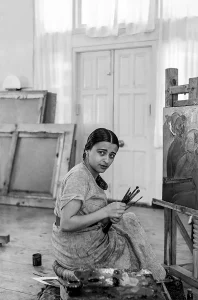
    Amrita Sher-gil, Indian modernist artist, 1937


    Amrita Sher-Gil was born in Budapest in 1913, to a Sikh aristocrat father and a Hungarian opera singer mother. The family moved to Shimla when she was eight. She began formal art training the same year. By sixteen, she was studying in Paris, first at the Académie de la Grande Chaumière, then at the École des Beaux-Arts. In 1932, she completed Young Girls, the canvas that won her the gold medal and Associate membership at the Grand Salon in 1933, making her the youngest artist, and the first Asian, to receive the honor. She returned to India in late 1934, carrying sixty canvases and what she described as an ‘intense longing’ not for home exactly, but for a subject matter that Europe could not give her. She died in Lahore on December 5, 1941, eight days before a major solo exhibition was to open. She was twenty-eight years old.

    This is the outline of a life that has proven irresistible. Tragic early death, Eurasian identity, and an often-discussed personal life. She was Paris-trained, returning to the subcontinent before it was a country. The narrative almost writes itself, and it has been written many times, with great feeling and reasonable accuracy.

    But the outline keeps getting mistaken for the point.

    Look at Three Girls, painted in 1935, the first major canvas Sher-Gil completed after returning to India. Three young Punjabi women sit close together, bodies turned slightly inward, gazes averted. Yet, you don’t feel they’re shy. There’s a lingering feeling of something heavier, a sealed-off interiority that the composition both reveals and protects. The palette is warm but not consoling, ochres and earth reds, brown skin rendered without exoticization or false softness. The women are not performing their beauty or their suffering. They are simply there, in possession of a stillness the viewer cannot enter.


    Amrita Sher-Gil, Three Girls


    Sher-Gil wrote about this body of work with clarity that has not aged well in every respect, “I realized my real artistic mission, to interpret the life of Indians and particularly the poor Indians pictorially; to paint those silent images of infinite submission and patience.” The language is of its era. But notice what the paintings themselves do, which is something more complicated than the statement suggests. The women in Three Girls are not passive. They are not objects of a reformist gaze. They are, in some fundamental sense, withheld. They are kept in a space the viewer is allowed to look into but not enter. This is a formal choice. Whether it was also a moral one is exactly the question the work keeps raising.

    Because Sher-Gil was not painting from the ground. She came from an aristocratic family with landed estates. She was educated in Paris, fluent in multiple European languages, and moved through colonial India with a mobility her subjects did not have. Her own letters describe wanting to capture ‘angular brown bodies, strangely beautiful in their ugliness,’ a phrase that, read honestly, sits uncomfortably close to the ethnographic gaze she is often credited with resisting. Scholars have noted that the same class distance that separated colonial photographers from their Indian subjects also separated Sher-Gil from the women she painted. The comparison is not a verdict. It is a question the work itself keeps open.

    Which is perhaps also why the paintings remain interesting.

    Look at Brahmacharis, completed in 1937 as part of the South Indian trilogy. A group of young male religious students, rendered in the flattened planes and muted ochres that Sher-Gil absorbed from the Ajanta cave murals in Maharashtra, fill a large canvas, nearly five feet tall. Their faces, like those in Three Girls, are turned away or downcast. They do not offer themselves to the viewer. The distance between the painter, a wealthy, European-educated woman looking at mendicant students in a country under colonial rule, and her subjects is not erased by the painting. It is present in the painting, in the careful, almost architectural arrangement of figures who remain, for all the empathy of the brushwork, on the other side of something. The painting neither resolves that distance nor pretends it does not exist. It just holds it.


    Brahmacharis by Sher-Gil


    That is what makes the work worth serious attention. The tension between Sher-Gil’s formal instinct to give her subjects a sealed interiority and her social position as someone looking across a significant class divide is not a footnote to these canvases. It is alive in them. The question is not whether her privilege invalidates what the paintings do. The question is what becomes visible in the work when we stop trying to answer that question and simply keep both facts in view at once.

    During her life, Sher-Gil was largely misunderstood and knew it. She was often criticized for depicting a ‘dark side’ of India, praised more condescendingly for her ‘social concern’. She found both responses beside the point. In 1938, she wrote to Khandalavala: “I can only paint in India. Europe belongs to Picasso, Matisse, Braque and the rest. India belongs only to me.”

    The statement is typically quoted to illustrate confidence, ambition, refusal to be small. But it can also be read as a claim of attention, as if she is saying, “I am the one who is going to look at this, really look at it, and render what I see without flinching and without flattering. This is my subject and I will not share the terms of its representation.”

    This is not an argument for dismissing the work. It is an argument for taking it more seriously than the symbol allows.

    Within Indian art circles and among those who study modern Indian painting, Sher-Gil has never been obscure. She was declared a National Treasure by the Government of India, is in the permanent collection of the NGMA, has appeared on postage stamps, and is in every serious textbook of the period. Globally, the Drents Museum noted this year that she remains largely unknown to general audiences outside specialist circles, which is why the current touring exhibition matters. 


    Which brings us back to Mira Nair, and to what Amri will need to be in order to honor its subject.


    When thinking of Sher-Gil’s work in a global context, the comparison most often reached for is Frida Kahlo. The parallels are obvious, but they can obscure as much as they reveal, and Sher-Gil spent enough of her life being flattened into a type that adding another layer of comparison does her no particular service.

    What Sher-Gil is, right now, is in transition. Her work, her memory, and even her legacy is being moved through the film and the exhibitions and the auction attention. It is being moved from the category of ‘important Indian modernist’ into something closer to global icon. This is where the current moment becomes genuinely interesting and genuinely risky.

    Iconization gives audiences permission to feel they have encountered an artist without having to reckon with the work. The stamps, the textbooks, and the auction records confirm that Sher-Gil matters. They do not tell us how to sit inside Three Girls until the stillness of those three women begins to feel like a question directed at us. They do not prepare us for the discomfort of Brahmacharis, for what it means to look at a painting that is itself about the act of looking across a distance that cannot be closed. Turning her into an icon smooths over exactly the tensions that make the paintings worth returning to.

    Which brings us back to Mira Nair, and to what Amri will need to be in order to honor its subject. A film about a painter is, almost definitionally, a film about a life. The medium insists on narrative, on scene, and on forward motion. It cannot do what the art does, it cannot be still in that way, cannot withhold in that way. What it can do, if it is serious, is make the audience hungry for the paintings. It can use Sher-Gil’s story to create the conditions under which the canvases become necessary rather than decorative. 


    Amrita Sher-Gil Self-Portrait 7


    It can refuse the consolation of the tragic arc and insist instead on the strangeness of the work, on the fact that a twenty-two-year-old’s painting of three Punjabi women contains a formal argument about looking, about privacy, about who gets to be depicted and on whose terms, that has not been settled yet. These are paintings that neither erase nor resolve the distance between painter and subject. They construct a sealed interiority for women who had very little power over how they were seen, while also raising questions about who gets to do that constructing, questions that remain unresolved eighty years later. Hopefully, the film sees that.

    Nair is a filmmaker of real intelligence and long commitment to this subject. But the question Amri will need to answer is not whether it is accurate, or beautiful, or moving. No doubt it will be. The question is whether it makes you want to stand in front of the paintings, or whether it replaces them.

    In a 1935 canvas not quite three feet tall, three women sit together and say nothing to us. They do not look at us. They were painted by a woman who had more in common with the people who would eventually hang them in museums than with the women depicted in them. And they are still among the most searching images made in twentieth-century Indian art, not because that tension was resolved, but because it was not.

    Eighty years of biography, scholarship, exhibitions, and auction records have not settled what these paintings are doing. That is not a failure of attention.

    That is the work.

  • The Dream Factory

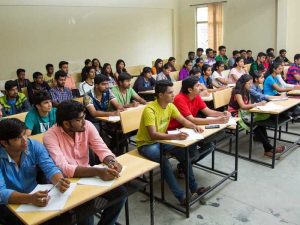
    In a rented room in Kota, Rajasthan, a seventeen-year-old from Patna is awake at midnight, studying for the Joint Entrance Examination, the brutally competitive test that is the gateway to India’s elite Indian Institutes of Technology. He has been here eleven months. His parents, a government clerk father and a schoolteacher mother, took out a loan to send him here. The coaching institute charges more than the father earns in a year. On the wall above the desk, the teenager has taped a printout. Not a motivational quote or a photograph of his family. But instead a photograph of the IIT Bombay campus. He has never been to Mumbai.

    This is not an unusual story. In many ways, it is the story of modern India. The conviction that technology is the most reliable path upward has proved remarkably resistant to contrary evidence, held so firmly it has outlasted the layoffs, the AI disruption, and every data point that complicates it. To understand why, you have to understand that the dream was never really about technology.


    The Architecture of an Aspiration

    It begins with Jawaharlal Nehru.

    After Independence, India’s first prime minister was explicit about what engineers were for. Speaking at the very first convocation of IIT Kharagpur in 1951, Nehru described the new institute as a “fine monument of India, representing India’s urges, India’s future in the making.” He had modeled the IITs on MIT after a visit in 1949, and envisioned them as the cornerstone of a post-colonial nation proving itself through technology. Engineering was not a career choice. It was civic participation.

    That idea calcified into culture. Nearly 47 percent of Indian students aspire to become engineers. The phrase mera beta engineer banega (“my son will become an engineer”) is so embedded in the cultural lexicon that it functions simultaneously as a parental dream, social pressure, and a national cliché. The 2009 Bollywood film 3 Idiots, which remains one of the highest-grossing Indian films ever made, is a firm condemnation of a contemporary education system criticized for its constrictive and stressful nature, one blamed for increasing student suicides. The film also became a sensation in China, where its portrayal of educational pressure resonated deeply with audiences. The film’s most devastating joke is a throwaway line where a pregnant woman muses that her child will inevitably be either a doctor or an engineer, depending, naturally, on the child’s gender. Seventeen years on, people still quote it. The system it critiques is still largely intact.


    IIT Kharagpur / in.pinterest.com


    The reason is not irrationality. It is history.

    The parents who pushed their children toward engineering in the 1990s and 2000s were making a rational bet. IT was one of the very few sectors in India offering global-scale salaries, relative job security, and a clear path into the middle class. Those bets paid off. A generation of engineers bought apartments, educated their children, and became the social proof that their communities needed to believe the path was real. The inheritance of ambition is not irrational. It is, in fact, quite a logical response to living memory of what worked.

    But those children, the generation now entering the workforce, are inheriting ambitions formed under different conditions. The world they are entering has AI rewriting job descriptions in real time, a tech sector that lays off thousands in a quarter and hires them back the next, and an H-1B pathway to America that is politically contested in ways it never was before.


    The Numbers the Dream Ignores

    2025 was one of the most turbulent years in India’s technology sector. Tata Consultancy Services cut nearly 12,000 employees. Startups shed an estimated 20,000 to 25,000 jobs. Surveys show that 67 percent of engineers fear AI will take their roles, and that 60 percent of engineering graduates are considered unemployable by industry standards. The Aspiring Minds assessment found that only around 10 percent of Indian IT graduates can write code that a machine can actually execute.


    That last number requires a pause. India produces hundreds of thousands of engineering graduates every year. The coaching industry that funnels students toward the IITs generates approximately ₹6,500 crore in annual revenue. Kota alone hosts over 250,000 students at its peak, in a city whose entire economy is built on exam preparation. And yet, a comprehensive skills assessment found that fewer than one in ten of the graduates this system produces can do basic programming.

    What the system has actually created, then, is a two-tier reality. At the very top, the IITs, the NITs, the handful of elite institutions, it produces engineers of genuine global caliber. Of the roughly one million students who appear for the JEE each year, only around 10,000 are admitted to the 23 IITs. That is one percent. Below that narrow apex lies an enormous second tier. Millions of students who attended engineering college, earned the credential, and emerged without the skills the said credential was supposed to signify. The dream is real at the top. At scale, it is largely a sorting factory.

    Even so, Kota’s enrollment bounced back in 2026, with coaching centers reporting 20 to 30 percent increases in admissions after a dip in 2023 and 2024. The dream, it turns out, is not particularly interested in the news cycle.


    What the IIT Produces (What It Doesn’t)

    The deepest irony of India’s tech obsession lies in the gap between what the IIT represents and what it actually delivers to the country.

    Consider the diaspora. Indians account for approximately 71 percent of all H-1B visas issued in the United States. That is 2,83,000 in fiscal year 2024 alone, compared to 47,000 for the next-highest country, China. This is a structural dominance of a specific pipeline. The rise of the Indian tech diaspora was not simply a story of individual achievement. It coincided with a period when America’s expanding software industry was actively recruiting technical talent. From the Y2K era through the dot-com boom and beyond, the H-1B visa became a key pathway into that workforce. Indian engineers became one of the largest beneficiaries of that demand. 


    The deepest irony of India's tech obsession lies in the gap between what the IIT represents and what it actually delivers to the country.


    Today, Sundar Pichai leads Alphabet, Satya Nadella leads Microsoft, Arvind Krishna leads IBM, and Shantanu Narayen leads Adobe. The roster of Indian-origin CEOs at the apex of American technology reads like a convocation list.

    These figures function in India less as biographies than as parables. They are held up not as exceptions but as proofs of concept. They signal that the system works, the path is real, and the visa is the threshold. What is less visible in that telling is the scaffolding behind each success, the years in Kota, the family loans, the millions who sat the same exam and did not make it. Over time, what began as a labor pipeline evolved into something more powerful in the Indian imagination. It became evidence that the path worked.

    And then there are the harder questions the parables just don’t answer. India produces the CEOs of the world’s most powerful technology companies, but not the companies themselves. India spends 0.65 percent of its GDP on research and development, compared to 2.4 percent in China and 3.5 percent in the United States. One analysis put it plainly, ‘India’s IT industry was built to deliver software services, not to invent.’ TCS, Infosys, and Wipro, the companies that helped create that demand for engineers in India and effectively built the Indian middle class, turned Bengaluru into a global destination. But they were made for execution, not origination. They scaled what worked. They delivered what clients asked for. They optimized. They did not, for the most part, create.

    This is a direct consequence of the same cultural logic that fills Kota every year. The system that rewards exam performance over curiosity, credential over risk, and stability over failure is the same system that produces brilliant executives for other people’s companies while struggling to produce a Nvidia of its own. Liberalization opened markets, and the fastest path to growth lay in services. As one analysis observed, ‘frontier technology asks for long horizons and uncertain payoffs. It demands that money be spent before results are visible and that failure be accepted not as an aberration but as a necessary stage.’ That is beginning to change. In India’s major cities, startup failure is increasingly treated as a rite of passage rather than a source of shame. Founders now publicly announce closures, return investor money, and move on in ways that would have been unthinkable a decade ago. But a founder from Benaras tells us, “In Tier-II and Tier-III cities, the stigma still exists. It’s not as bad as it once was, but it’s there. The cultural permission to fail productively has not yet reached us. But the truth is you cannot build an Apple or a Nvidia or an OpenAI without it.”

    Why Has AI Disruption Not Changed the Math?

    Nearly 64 percent of Indian IT firms integrated generative AI tools in 2025. One report estimates that 640,000 low-skilled service jobs in the sector are at risk from automation, while only 160,000 mid- to high-skilled positions will be created to replace them. The math is not encouraging. The sector that has historically absorbed India’s engineering graduates is slowly reducing its need for exactly the kind of engineers the coaching industry mass-produces each year.

    And yet the NASSCOM numbers reveal something counterintuitive. Direct tech sector employment is projected to reach approximately 6 million in fiscal year 2026, up 2.3 percent, with a net addition of 135,000 employees. Even in a year of structural disruption and high-profile layoffs, the industry added jobs. The sector is simultaneously contracting in some roles and expanding in others, a volatility that looks, at least from the outside, like chaos, but which, over time, still trends upward.

    Perhaps that is the fact that keeps the dream alive. On aggregate, tech keeps winning. It does not win for everyone, and the cost in wasted potential, family debt, and in the most devastating cases, student lives, is enormous. But the aggregate keeps trending upward, and aspiration, once it becomes cultural and braided into identity, does not respond to individual tragedies. It responds to the aggregate.


    What This Has to Do With The US

    Americans are living through their own version of this story. A generation raised to believe that college was the reliable ladder has discovered that the ladder has become very expensive and leads to a labor market that no longer reliably rewards what it once did. The disruption is one American workers are anxiously tracking. AI replacing roles, the hollowing out of middle-skill jobs, and the sense that credential and effort no longer produce stability are all also already inside India’s tech sector. It’s just further along.

    What India offers, then, is a story about itself. But zoom out and it is also an early preview. The question of what happens when a society’s most powerful aspiration outpaces its economy’s ability to fulfill that aspiration. Then, it is not uniquely Indian. It is merely more visible there, more extreme, more accelerated.


    Vibrant Academy / in.pinterest.com


    No Clean Answers

    Back in the room in Kota, the teenager with the IIT Bombay printout knows, on some level, the contradictions of the world he is trying to enter. The dream is not delusional. India’s tech sector expanded from $118 billion in revenue in 2015 to an estimated $283 billion in 2025. The engineers who left for Silicon Valley and now write the next chapter of AI are not inventions. The path is real, even if it is narrow.

    The problem is not that the dream is false. It is that the dream has been scaled to serve far more people than it can accommodate. And the machinery for managing that gap, the cultural permission to try something else, to redefine success, to fail without shame, and perhaps most urgently, to build something that the world has never seen before rather than execute what others have already imagined, is still catching up.

    Until it does, the lights stay on in Kota. The printout stays on the wall.

  • How Bollywood’s NRI Fantasy Helped India Imagine Itself

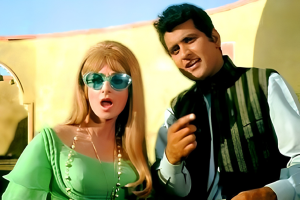
    A young Indian woman stands in London, blonde-streaked hair, cigarette in hand, barely able to recall a word of Hindi. By the film’s end, she has poured her liquor down the drain, draped herself in a saree, and rediscovered her roots. That is the arc of Preeti in Manoj Kumar’s Purab Aur Paschim (1970) and it tells you nearly everything you need to know about how India once regarded its diaspora.

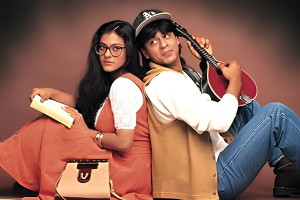
    Fast-forward 25 years. In Aditya Chopra’s Dilwale Dulhania Le Jayenge (1995), a swaggering NRI named Raj romps across Europe, flirts his way through Switzerland, and winds up in a Punjab mustard field. He is charming, cosmopolitan, and impeccably desi at heart. No redemption arc required for he was never lost to begin with.

    The distance between these two characters is cinematic, but it is also the story of how India reimagined itself, its relationship with the wider world, and the Indians who chose to live in it. At the heart of that story is a surprisingly simple idea: the NRI, for decades, was not a person on screen so much as a form of proof. Proof that India could travel. Proof that its identity could survive the world. What that proof needed to look like has changed enormously and tracing those changes tells you more about India than about any NRI who ever actually lived abroad.


    Purab Aur Pachhim / in.pinterest.com


    The Cautionary NRI: Post-Independence to the 1980s

    In the decades following Independence, the NRI on screen was less a figure of aspiration than one of warning. Films like Purab Aur Paschim presented life abroad as a moral test, one that many Indians were failing. Preeti, raised in London by a father who has grown contemptuous of his homeland, doesn’t merely lack Indian values. She has actively traded them for Western ones. The film’s resolution with her full embrace of Indian tradition functions as cultural restoration. The foreign land had corrupted her and only India could make her whole again.

    This was not a mere coincidence of storytelling. This reflected the anxieties of a newly independent nation still defining itself in relation to a colonial past and the cultural influence of the West. India’s socialist-leaning economy in those decades was built on self-reliance and insularity. It was swadeshi (which literally translates to ‘of one’s own country’) in both commerce and culture. In that context, the Indian who left for the West was not admirable. They were, at best, a cautionary tale. At worst, they were deserters. Academic analyses of the film have noted that earlier Bollywood treated the diaspora through what one researcher called “the disparaging gaze of a ‘deserter’.” The NRI’s potential for cultural contamination had to be contained, reversed, or punished.


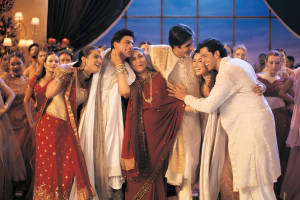
    Kabhi Khushi Kabhie Gham / in.pinterest.com


    The Liberalization Fantasy: 1991 and Everything After

    Everything changed in 1991, when India dismantled its protectionist economic model and opened its doors to foreign capital, global brands, and a new vocabulary of aspiration. Suddenly, the world felt proximate. International mobility became something to chase, not fear.

    Bollywood moved quickly. Netflix’s The Romantics (2023), which features the first on-camera interview with filmmaker Aditya Chopra, offers a telling piece of context here. The son of legendary director Yash Chopra and the creative force behind DDLJ, Chopra helped redefine how Bollywood imagined the diaspora. Director Smriti Mundhra, herself an NRI who grew up in the US, describes Dilwale Dulhania Le Jayenge (DDLJ) as “a direct reflection of the diaspora and the world we live in”, noting that for her generation of Indians abroad, it was the first Hindi film that truly spoke to them. That reception was deliberate. DDLJ arrived at the precise moment when a growing diaspora audience was hungry to see itself on screen, not as a cautionary figure in need of cultural rescue, but as someone who could belong to both worlds at once. The shift was a creative decision grounded in a changed audience and a changed country.

    By the mid-1990s, the NRI had been entirely recast. Alongside DDLJ, films like Pardes (1997) and Kabhi Khushi Kabhie Gham (2001) introduced a new archetype, one of someone who is wealthy, globally mobile, Western in style, but irreducibly Indian in values. These characters lived in sprawling London homes and traveled freely across continents, but they wept at the sound of a Punjabi folk song and placed tradition above personal desire.


    The NRI's potential for cultural contamination had to be contained, reversed, or punished.


    Crucially, scholars have observed that the two films approached this balancing act differently. Where DDLJ proposed that Indian identity was a ‘portable asset’ that could survive migration intact, Pardes suggested that cultural loss was ultimately unavoidable, only postponed. The anxiety of the earlier era had not fully disappeared. It had simply been made romantic.

    What DDLJ did, though, was shift the moral center. Raj is not rewarded for rebelling against tradition. In fact, he is rewarded for respecting it. His entire mission is to win not just Simran, but her father’s blessing. The emotional climax of the film is not a flight into modernity, it is a quest for family approval. While the geography had changed, the value system had not. The message, received by millions across India and in the diaspora, was reassuring. It said that you could leave home without losing it.


    What the NRI Represented to India

    To understand why this fantasy landed so powerfully, you have to understand what the NRI meant to the Indian watching from home.

    The NRI of 1990s Bollywood was aspirational on multiple levels. At the most obvious, it represented wealth and mobility at a time when international travel was still rare and ‘foreign-returned’ still carried a certain halo. But success in London or New York carried symbolic weight beyond economics alone. These were cities that occupied a privileged place in the Indian imagination after centuries of colonial entanglement. To succeed there was to answer something. But to thrive there, on your own terms, while remaining recognizably Indian, that was the deeper fantasy. The NRIs in these films weren’t aspirational because they were just wealthy. They were aspirational because they felt like vindication.


    Dilwale Dulhania Le Jayenge / in.pinterest.com


    This is why, as one analysis of DDLJ put it, the NRI was transformed from “the marginal outsider” into “not just a possible Indian national subject, but possibly one of its best.” In a decade when India was renegotiating its place in the world, the glamorous, rooted NRI offered a comforting narrative of national confidence.

    What these films didn’t show was equally telling. The Bollywood NRI of the 1990s never dealt with visa rejections or immigration queues. They were never subjected to racial microaggressions, or if racism appeared at all, it was cartoonishly overt, easier to dismiss than the ambient, grinding kind that real diaspora Indians described experiencing. There were no student loans, no identity crises, and no painful silences at the dinner table where one generation spoke a language the other had half-forgotten. As one British-Indian viewer told us, real prejudice “is a lot more subtle and usually communicated through microaggressions.” “It’s nothing like the cinematic version. It’s somehow worse,” they added.

    The screen NRI was not a portrait. It was a projection. And projections, by design, leave the difficult parts out.


    The Quiet Shift: 2010s and Beyond

    By the 2010s, the old anxieties had begun to soften. Global mobility was no longer a novelty for India’s growing middle class. International education, travel, and careers had become familiar realities rather than remote fantasies. India’s cultural confidence, its sense of itself as a significant global presence, had also grown considerably. So, aspiration no longer pointed exclusively outward.

    The films registered this shift subtly but unmistakably. English Vinglish (2012) uses America not as an ideological destination but as a backdrop for one woman’s journey toward self-worth. The question of whether an Indian woman can survive contact with the West doesn’t arise. It’s taken for granted. What the film asks instead is quieter and more personal. It asks if she can survive her own family’s indifference to who she is.


    While the geography had changed, the value system had not… It said that you could leave home without losing it.


    Zoya Akhtar’s films push this further. In Zindagi Na Milegi Dobara (2011) and Dil Dhadakne Do (2015), characters move through global spaces with the ease of people who have always belonged there. International mobility is neither extraordinary nor threatened. The old binary, India versus the West, tradition versus modernity, all of it seems to have largely dissolved. What remains is a more layered, less anxious understanding of identity. One that is fluid, geographically unmoored, and unburdened by the need to prove anything to anyone.

    More recently, films like Kapoor & Sons (2016) have quietly abandoned the fantasy altogether, presenting diaspora characters whose struggles are psychological and familial rather than cultural. The NRI is no longer a symbol. They are, finally, just a person.


    Every Era Gets the NRI It Needs

    The trajectory of Bollywood’s NRI, from a cautionary figure to a glamorous proof of Indian possibility to ordinary human beings, tracks something larger than cinema. It tracks how a country’s self-image changes as its circumstances do.

    A socialist India, slightly weary of the West and intent on self-definition, needed the NRI to be a warning. A liberalizing India, newly hungry for the world and anxious about what it might cost, needed the NRI to be a reassurance. A more confident India, less obsessed with proving herself, no longer needs the NRI to be a symbol. It can simply be a person.

    The Bollywood NRI was never really a portrait of the diaspora. It was a way for India to imagine herself and negotiate the questions that globalization was raising, all through the language of romance and spectacle. What do we keep? What do we trade? Who are we when the world comes closer? Those questions mattered enormously to a generation navigating an opening India without a roadmap, and the NRI, glamorous and rooted and improbably uncomplicated, offered one kind of answer.

    As India changed, so did the fantasy. And perhaps that is why the NRI feels less central today. Not because the films failed, but because the questions that once made the character so powerful no longer carry the same urgency. The work is largely done. The mirror has been put down.

  • Why Gen Z Turns to Social Media for Financial Advice

    Scroll through TikTok long enough and you’ll find a Gen Z creator explaining compound interest with the same energy someone else uses for a GRWM. Another breaks down taxes the way friends dissect breakups. It’s oddly comforting. Financial advice, once the domain of suits and spreadsheets, now arrives with trending audio and jump cuts.

    For Gen Z, money lessons don’t come from a person in a blazer across a mahogany desk. They come from social media. From Instagram reels explaining how to manage a monthly budget of ₹45,000 a month in a big city. From TikToks that start with, “Here’s what I wish I’d known about savings at 18.” And while that might seem frivolous at first glance, it makes more sense the longer you sit with it.


    Nearly 70 per cent of Gen Z turns to social media for financial guidance | Image Credit: rupixen on Unsplash


    This is a generation that grew up watching adults lose jobs overnight, watching rent climb faster than salaries, watching their student debt turn into inheritance. They’re not hostile to financial knowledge. They’re just wary of how it’s been delivered. Too formal. Too opaque. So they go where explanations already live — their feeds.

    A 2025 study conducted by Spruce Money, found that nearly 70% of Gen Z in North America are influenced by financial trends on social media (or the internet), compared to 51% of millennials and 27% of Gen X. TikTok leads the pack, followed by Instagram, Facebook, podcasts, and online communities. That hierarchy matters. TikTok isn’t just popular. It’s where the language is familiar and relevant, and the information easily available. No jargon, no shame, no assumption that you already know the basics.


    Formal finance still feels like a private club with a strict dress code. Social media feels like you can walk in wearing pajamas.


    What older observers often miss is that Gen Z doesn’t treat social media advice as gospel. Many openly acknowledge the risks. They cross-check tips on Google, Reddit, or with a friend who “knows this stuff.” They follow multiple creators precisely because they don’t fully trust any single one.

    Formal finance still feels like a club with a dress code. Social media feels like you can walk in wearing pyjamas.

    This shift isn’t limited to the United States. In India, ‘share market’ creators explain SIPs and stock basics through memes and masala edits. In Brazil, TikTokers dance while breaking down inflation. In Nigeria, young creators teach forex trading with the same cadence others use for makeup tutorials. In South Korea, finance YouTubers cut advice with K-drama clips and jokes about anxiety that land a little too close to home. Across contexts, the tone is the same — peer-to-peer, informal. 

    Yet, beneath this swathe of easily accessible information, lies tremendous potential for misinformation. Exaggerated claims and casual scams can spread swiftly. The line between a helpful tip and a dangerous shortcut can blur in a 30-second reel.

    Regulators have started to notice. In Australia, nearly one in three young adults follows at least one financial influencer, and most admit those influencers have changed their behavior. In India, SEBI’s 2026 guidelines require ‘fin-fluencers’ to disclose sponsorships and avoid offering unlicensed advice. The UK and Brazil are moving in similar directions. The goal isn’t to shut these creators down, but to acknowledge that they’ve become part of the financial ecosystem, whether more traditional financial institutions like it or not.

    But focusing only on regulation misses the larger point.

    Gen Z lives in an economic reality where traditional markers of stability feel increasingly distant. Home-ownership feels like a distant possibility, if at all. Rising inflation eats much of their paychecks. Long-term planning feels like a luxury reserved for people with monetary cushions. In that context, advice that feels human, immediate, and survivable carries more weight than advice that is accurate but unreachable.


    Gen Z lives in a time where traditional stability feels increasingly distant | Image Credit: Leeloo The First on Pexels


    Authority used to look like expertise delivered from above. Now it looks like someone slightly ahead of you, explaining what worked for them and what didn’t, without pretending to have solved everything.

    Social media didn’t replace banks, advisors, or financial education. Institutions left a gap, and the internet filled it in a way that felt immediate, democratic, and legible.

    For older readers trying to understand this shift, the question isn’t why Gen Z trusts TikTok. It’s why so many formal systems still make understanding money feel like homework instead of a conversation. 

    Once you answer that, the feed starts to make a lot more sense.

  • When Shopping Became a Game

    Open Temu and you are not immediately asked to buy something. You are asked to spin a wheel, claim a reward, watch a countdown, and share a link. The interface feels closer to a casual game than a marketplace, where participation comes before intent and value is unlocked through progression.

    What looks like shopping is closer to training. The system does not persuade, it conditions your behaviour through participation. Temu’s rise is often explained through cheap prices and aggressive advertising, but that explanation misses what distinguishes the platform. It blurs the boundary between commerce and play, turning shopping into a system where rewards, urgency, and progression shape behaviour alongside price. What can look like novelty is better understood as a shift in how persuasion operates, embedded directly into interaction rather than delivered as a message.

    Gamification is not new, but here it is no longer a layer that separates it from other aspects of our lives. Now, it is the system. Discounts are earned through participation, progression unlocks value, and attention becomes the currency that precedes money.


    This works because games operate on a different logic than advertising. Traditional ads interrupt, they ask to be noticed, judged, and resisted. Games organise behaviour. Progress depends on returning, repeating, and completing actions, and over time those actions stop feeling like choices and start feeling like movement. And so when shopping is structured this way, the decision to buy feels like an end of that movement.

    Temu is not alone in this approach. TikTok Shop folds buying directly into scrolling, blending entertainment and commerce into the same gesture. Shein-style interfaces rely on countdowns, points, and reward ladders that keep users moving through the app. Even airline and delivery platforms now use progress bars, limited-time perks, and visual milestones to structure behaviour. While the specifics differ, the logic is the same. When participation comes first, conversion tends to follow.

    The mechanics are visible, often even obvious. But visibility does not make them neutral. The question is not whether users understand the system. It is whether understanding changes how they behave inside it.


    "Traditional ads interrupt, they ask to be noticed, judged, and resisted. Games organise behaviour."


    There is also an economic logic at work. Gamified spaces rely on users spending time, attention, and effort before spending money. Each interaction generates data, reach, and momentum for the platform. The reward might be a small discount or bonus, but the value extracted compounds. Participation drives growth, and growth strengthens the system that keeps users moving through it.

    This helps explain why advertising now looks less like persuasion and more like environment. Platforms no longer rely primarily on telling stories or making claims. They shape the conditions in which decisions are made. When those conditions feel playful, resistance softens without needing to be confronted.

    Temu’s success points to a future where retail feels less like browsing and more like progression. The store becomes something to move through rather than something to consult, and buying becomes the outcome of participation rather than its starting point.


    This does not necessarily mean consumers are being tricked. The mechanics are visible. But visibility does not make them neutral. Design shapes behaviour whether or not users are conscious of it. When shopping is structured as a game, value shifts. It is no longer only about what you buy, but how you are encouraged to keep moving.

    What Temu ultimately shows is not that people prefer games to shopping, but that the two have become difficult to separate. In a crowded digital economy, the product is no longer just the item itself, but everything moves you toward it. Advertising has not disappeared, it has been absorbed into spaces that no longer need to ask.