Blog

  • The Desi Frontier

    This article was written out of frustration. A frustration born from the fact that even in 2026, discussions of genre fiction still focus on Western authors. Indian science fiction is superb – and yet it is too often ignored or entirely undiscovered.

    Why this sniff of stigma? Why are we thumbing past some of the country’s best writing? 

    A possible reason might be that for many readers, the entire spectrum of such literature — fantasy, science fiction, speculative, whichever lens you may choose — is condensed into some sort of escapist writing, far too unrelatable and therefore incomprehensible to the ‘average’ reader. “It’s just too out there for me,” says Shrila Basu, the author’s friend who recently finished a 900-page tome of historical fiction set in a country she has never visited.

    And yet. Samit Basu’s recent short story What Would Akanda Do? Grapples with the afterthoughts of a Bollywood star who has signed away his likeness to AI, while his debut book, The Simoqin Prophecies, was marketed as ‘Monty Python meets the Ramayana’. Indrapramit Das’s novel The Last Dragoners of Bowbazar is set in a very recognizable Kolkata. And Lavanya Lakshminarayan’s The Ten Percent Thief grapples with questions of systemic caste inequity. All these themes have an immediate resonance for readers in India — albeit refracted through the lens of completely different universes. 

     

    Indra Das’s vividly-inked book is set in contemporary Kolkata.


    So why is Indian speculative fiction still struggling to get a foothold, in India and internationally? 

    Lakshminarayan, in a phone conversation with The Moment suggests that in India, readers are possessed of a sort of inverted snobbery, in which non-fiction books are pinnacled as the pursuit of self-improvement, while the universe of the imagination is often trivialized. 

    The only exception might be mythology; writers like Devdutt Patnaik and Amish Tripathi, as well as comic books such as Amar Chitra Katha tap into stories that feel like a part of living tradition, rather than something removed from reality. No wonder then that Bollywood star Ranveer Singh has acquired the rights to play Lord Shiva in the film adaptation of Tripathi’s The Immortals of Meluha

    Both mythology and science fiction create fantastical worlds; but the one remains faith-based, while the other is steeped in science. For Indian readers then, these templates of genre are walled into place, making it tougher for fantasy or science fiction to reach bookshelves around the country. In the enormous mosaic of the publishing world, the fractured attention economy makes discovering great Indian books really hard.

    An anonymous source within Indian publishing circles gave an even grayer reading of the situation. “Part of it is that there are simply not enough people who want to read works in English. Even fewer who want to read literary works in English. And even fewer who want to read work in English emerging from India.” For genre fiction, they added, “readers mostly look West for their cues on what to read — so it tends to be much lower on Indian publishers’ priorities.” 


    Lakshminarayan, in a phone conversation with The Moment suggests that in India, readers are possessed of a sort of inverted snobbery, in which non-fiction books are pinnacled as the pursuit of self-improvement, while the universe of the imagination is often trivialized.


    Perhaps it all comes down to the matter of marketing muscle. 

    Marketing in India, no matter how robust, cannot quite harness the extraordinary talent of genre fiction in the way international marketing ecosystems can. And so, to discover speculative fiction, a reader (wherever in the world he is) must spade through shelves of George R. R. Martin and Sara J Maas, before arriving — if they arrive at all — at writers from Goa or Kolkata. 

    “I have worked with excellent publishers in India,” Lakshminarayan says, “but no matter what we do over here, we absolutely cannot compete with the next big Sally Rooney.” 

    Industry insiders suggest that almost everywhere in the world, such literary fiction retains an aura of prestige that ‘genre’ fiction still grasps at. This aura is unsullied by the problems of profitability; apparently most literary writing does not even recoup its advance. Yet publishers press on, sending such books to national and international book lists, book clubs and literary festivals. This might be one reason why, in the international publishing world, Indian writing in English is largely associated with Kiran Desai or Arundhati Roy.

    Sadly, “Indian readers are sometimes even slower to discover our books,” says Lakshminarayan. And when they do discover them, they are often surprised that the writer is based in India at all. 

    That irony is compounded by a broader amnesia about India’s own speculative tradition. For instance, Rokeya Shekhawat Hussain’s Sultana’s Dream — a visionary feminist utopia published in 1905 — was groundbreaking not just for its own time, but even for ours. Besides, regional writing in Bengali and Malayalam have long harbored currents of speculative storytelling. 

     

    Lavanya Lakshminarayan is the first Indian woman to be nominated for the Arthur C Clarke award.


    But change is certainly underfoot.

    Writers like Indrapramit Das, Tashan Mehta, Samit Basu, and Lavanya Lakshminarayan are building vividly-inked worlds as eerily accessible as they are fantastical, rooted in Indian realities even when they are set in distant futures or sideways presents. Publishers are urging them on —  Bloomsbury’s excellent (albeit clunkily-named) anthology Post-Millennial Indian Speculative Fiction in English being a case in point.

    There are prizes galore. Samit Basu’s The City Inside was named one of the best sci-fi/fantasy novels of 2022 by The Washington Post and Book Riot. Indra Das won the Best Novella category at the 2024 British Fantasy Award for The Last Dragoners of Bowbazar. Lavanya Lakshminarayan is the first science fiction writer to win the Times of India AutHer Award and the Valley of Words Award, and the first Indian woman to be nominated for the Arthur C. Clarke Award (in 2024) for The Ten Percent Thief. Tashan Mehta won the Best Fiction award at the AutHer awards. 

    What is missing is the ecosystem to sustain them — the readers, the publishers, the critical culture that would allow Indian speculative fiction to become, as it deserves to be, a central strand of Indian literary life rather than a footnote.


  • Smashing Boundaries

    Before it was played under bright Olympic lights or became a backyard staple in British country homes, badminton had a very different name: Poona. 

    In the 1860s, British army officers stationed in Pune (then Poona) stumbled upon a curious game that locals were playing — one that involved woolen balls, wooden rackets, and boundless improvisation. Some say its roots lie even further south, in Tamil Nadu, where a version was played with a soft ball made of thread or wool. And in the UK, people believe its origins lie in the ancient games of battledore and shuttlecock, versions of which were played all over Europe and Asia. 

    The British, already accustomed to tennis and lawn tennis, took the Indian game, added a net, created different rules, and carried it back to England. It is believed that army officers, returning from India perhaps, played a version of this sport at Badminton House in south Gloucestershire, and this likely gave the sport its name. 


    Smash! Playing badminton in 1939. / in.pinterest.com


    That origin story reveals how play travels across borders and classes and castes, mutating and adapting as it goes. Even the ‘Poona game’, as it was initially called in British circles, wasn’t a monolith. People in Shimla played it differently than those in Calcutta or Bombay. Karachi had its own spin. In southern India, purportedly in Thanjavur, there was the equally well-regarded Ball Badminton, a separate version played with a soft ball. Up until the 1960s, this version was so popular that players had to specify which kind of badminton they played – ball or shuttle! There is even a Ball Badminton Federation of India today! 

    In fact, so deeply entrenched was badminton that luxurious British homes across colonial India boasted of badminton courts — ‘12  acres of  well-wooded  grounds, including Tennis and Badminton  Courts’ bragged an 1899 advertisement for ‘The Park’ in Shimla – as did posh ladies’ clubs and gymkhanas. It was played by both men and women — a rare instance of accessible, gender-neutral recreation in colonial India. Certainly, this badminton-mania continued even after Independence from the British, with the Indian newspaper, The Bombay Chronicle, even hiring its own badminton correspondent to cover the sport.


    Fast forward to today, and India has produced some of the world’s finest badminton talent: Prakash Padukone, PV Sindhu, Saina Nehwal, and Srikanth Kidambi to name just a handful.


    Fast forward to today, and India has produced some of the world’s finest badminton talent: Prakash Padukone, PV Sindhu, Saina Nehwal, and Srikanth Kidambi to name just a handful. The sport, now a national obsession, is watched by millions and played competitively in schools and academies across the country. This year, India will also host the BWF World Championships in New Delhi for the first time since 2009. Yet many fans have no idea that it owes its start to Indian ingenuity and downtime.

    To stretch the point a little bit, we could consider that badminton lives on in some of the fastest-growing sports today. Take pickleball and padel, which are surging in popularity across the US, India, and Europe. Both are often described as ‘easier tennis’ or ‘faster badminton’. Pickleball, in particular, is now one of the most rapidly-growing sports in the US, especially among older adults. Padel, with its glass-walled courts and energetic play, is gaining momentum in Indian metros too. At their core, these are simply offshoots of already-existing racket sports such as badminton and tennis. 

    The twists and turns of badminton’s history challenge our idea of where innovation in sport begins. So often, global sports are traced back to formal British institutions, codified rulebooks, and ‘official’ origins. But games don’t really start in rulebooks. They start on porches, in dusty playgrounds, on uneven streets — and perhaps that is the most fun of all.

  • The Needle Returns: How Vinyl Became a Global Language Again

    On a rainy evening in New York, a record store in the East Village opens its door and a warm note escapes into the street. A small crackle, a bassline, and the soft thump of a needle settling into a groove. A teenager walks in holding a Billie Eilish LP under her arm. Behind her, a man in his sixties thumbs through a crate of Coltrane reissues. They stand shoulder to shoulder, separated by decades but listening, together, in the same way. Neither notices how improbable this scene would have seemed even fifteen years ago.

    Moments like this are no longer confined to Manhattan. You can find them in a café in Seoul, where customers whisper over coffee while a jazz record spins, or in a bar in Bengaluru, where someone in a football jersey flips a Hindustani classical LP before returning to their friends. Across the world, listening rooms, vinyl nights, and record fairs are drawing crowds who grew up with smartphones rather than turntables. In Tokyo, jazz kissaten have become pilgrimage sites for Gen Z. In Mexico City and Manila, collectors swap records the way people trade stories. Vinyl, once dismissed as an artifact, has re-entered the world as a surprisingly universal way of listening.

    But here’s something to consider. Its comeback is not merely cute, quirky, or retro. It has become a global language, and it tells us something about the deeper cultural shift happening quietly across continents.


    Classic music setup indoors. / www.pexels.com


    A return driven by desire, not nostalgia

    The revival began, predictably, in the West. By the early 2020s, vinyl in the United States had surpassed CDs in annual revenue for the first time since the late 1980s, a milestone once considered impossible. The momentum continued into the mid-2020s, even as streaming tightened its grip on the industry. Europe saw shuttered record shops reopen, listening rooms resurface, and younger buyers, many born after the LP’s supposed death, queue for new releases.

    The revival is now too widespread to classify as a passing trend. It feels more like a recalibration of how people want to experience music.


    Global fatigue with frictionless culture

    Streaming won because it made everything easier. But the very efficiency that made it irresistible has also made it exhausting. Endless playlists, algorithmic recommendations, and background listening have turned music into ambient vapour, something that fills a space but rarely holds it.

    Vinyl moves in the opposite direction. It has weight, ritual, and it demands commitment. You cannot skip songs with a thumb. The music unfolds at its own pace. That slowness, once dismissed as an inconvenience, has become part of the pleasure. Around the world, people seem to be seeking more friction, not less. Not chaos, but a kind of intentionality that digital culture has steadily eroded.


    www.pexels.com


    Streaming has made music universal, but it has also made much of listening feel disposable. Vinyl rewards sustained attention, and sustained attention often leads listeners outward. Someone who buys a record often ends up exploring the artist’s wider catalogue, the producers behind the music, the labels that released it, or the traditions that shaped it. A jazz album can lead to Brazilian funk, a disco compilation to Italian electronic music, or a regional Indian soundtrack to an entirely different musical archive. For many younger listeners, records are not nostalgic objects but gateways into worlds they are discovering for the first time.

    In India, that rediscovery extends beyond familiar classics. The renewed interest in vinyl has brought old Bollywood scores back into circulation, but collectors are just as likely to seek out Hindustani classical recordings, regional film soundtracks, jazz reissues, disco compilations, or independent pressings. The appeal lies as much in curiosity as in memory.


    The object as meaning

    Unlike our Spotify or Apple Music playlists, vinyl is not just a medium. It is also an object. The cover art, the liner notes, the weight of the disc, and the quiet ceremony of lowering the needle turn music into something you can touch. In an era where so much of life exists only on screens, owning a record feels like reclaiming something personal.

    Younger listeners often treat records like autobiographical artifacts, while older listeners see them as bridges between different versions of themselves. Few cultural objects today are shared across generations with so little irony.

    There is also a social dimension. Across cities, record stores, listening bars, and collector meetups are rebuilding forms of community that digital culture often struggles to sustain.


    In Delhi, that impulse has found a home in spaces like 304, a speakeasy and vinyl bar where themed listening nights draw regulars as much for the atmosphere as for the records themselves. One patron put it simply: “It feels like community, but it also feels like home. I come here even though I have a player at home because they have records I don’t. But I always meet people who think like me here.” The attraction is not only analogue sound. It is the chance to experience music alongside other people who have chosen to slow down and pay attention.


    What the comeback reveals

    The vinyl revival is almost an emotional argument, a quiet refusal of speed. It pushes back against the feeling that music has become too frictionless, too compressed, or too disposable. The format offers an alternative rhythm, one that feels both nostalgic and strangely contemporary. It suggests that the digital world may be everywhere, but it does not have to be everything.

    Every city that embraces vinyl does so differently. In some places, it is about preserving cultural archives. In others, it is about discovery, design, or community. Yet the underlying message remains remarkably consistent: people want to listen with their whole attention again. They want to touch their music. They want time to have texture.

    The needle is not simply returning to the groove. It may be returning us to a slower, more deliberate way of being in the world.

  • The Lost Art of Being Bored

    Somewhere between the fourth “Are you still watching?” prompt and the fifth scroll break, we forgot how to be bored. Not the existential kind — the quiet, idle kind that once filled train rides, queues, or the gap between one thought and another.

    Now, boredom feels like a glitch. A pause we’re desperate to fix.

    If you’ve ever checked your phone during a ten-minute Uber ride or scrolled through three apps while waiting for your coffee, you know what this looks like. The modern condition isn’t loneliness or distraction, it’s the refusal to ever feel under-stimulated.

    A recent study found that the average person spends 88 days a year on their phone. That’s nearly a quarter of our waking lives convincing ourselves we’re doing something even when nothing much is happening. And maybe that’s the point. The scroll gives us the illusion of momentum. Before phones, people carried books. Before that, newspapers. Before that, probably conversation. Humans have always found ways to fill silence. But something about this era feels different. It’s not that we’re avoiding people. It’s that we’re avoiding the dull hum of our own thoughts.


    www.pexels.com


    There’s now an entire micro-economy built around saving us from ourselves. Time-limiting apps, mindfulness podcasts, IRL ‘digital detox’ retreats — all promising to help us get off our phones, while marketing themselves on our phones. It’s a bit like buying more stuff to cure overconsumption: a paradox so obvious it barely qualifies as irony. What’s fascinating is how universal this has become. Across cities: New York, Mumbai, London, Seoul — the gestures are the same: the downward gaze, the thumb twitch, the half-attentive conversation. Even boredom has been globalized. 

    But here’s the twist: boredom isn’t the enemy we’ve made it out to be. It’s the unsung architect of human creativity. Studies show that when we’re bored, the brain’s ‘default mode network’ switches on — the part responsible for imagination, reflection, and problem-solving. It’s why people get their best ideas in the shower or on a long walk. Those unstructured moments of nothingness let thoughts collide in ways they never could during constant stimulation.

    And yet, stillness now feels almost transgressive. The act of doing nothing has become culturally suspicious. As if sitting quietly signals inefficiency. Productivity has become the closest thing to virtue we have. Even rest needs to be aestheticised — #selfcare, #slowmorning, #digitaldetox.

    We’ve turned being offline into its own form of performance. That’s not necessarily bad, but it’s telling.


    There’s now an entire micro-economy built around saving us from ourselves. Time-limiting apps, mindfulness podcasts, IRL 'digital detox' retreats — all promising to help us get off our phones, while marketing themselves on our phones. It’s a bit like buying more stuff to cure overconsumption


    The truth is, no one really wants to quit their phone. They want to quit the feeling of being constantly behind — the mental lag that comes from living in 12 tabs at once. But we can’t ‘fix’ attention by downloading another app. We can only re-learn what to do with the space we’ve been avoiding.

    Because when you stop filling every gap, good things start to happen. You actually notice the small stuff again — the sound of your neighbour’s playlist, a conversation between strangers, the way the afternoon light moves across the wall. It’s not life-changing. It’s just life, seen without interruption.

    That’s the part no app can sell you: the quiet texture of noticing.


    www.pexels.com


    Of course, none of this means boredom is glamorous. It’s deeply uncomfortable at first. The twitch to check, refresh, or scroll doesn’t go away overnight. But that discomfort is also data — a reminder of how overstimulated our attention has become.

    Reclaiming boredom feels so radical now because in a world designed to monetize our attention, choosing to be unproductive — to stare, to think, to drift — is its own kind of rebellion.

    So here’s a modest proposal: don’t delete your apps. Don’t toss your phone in a river. Just let yourself get bored once in a while. Let a moment hang in mid-air before you rush to fill it.

    Because if there’s one thing our phones can’t simulate, it’s the pleasure of being fully, beautifully present in the mess of ordinary life.

    And if that feels boring, that’s probably a good sign.

  • Scents and Sensibility

    Have you ever caught a whiff of a smell and been instantly transported to a memory, a place, a feeling? Chances are, that note came from jasmine. And chances are, that jasmine came from India.

    Walk through the perfume counters at Saks or Sephora, and you’ll see French and Italian names perched behind glass. Each bottle, priced upward of $300, promises opulence in a spray. But behind that luxury is a fact that is often forgotten: over 80% of the world’s jasmine used in perfumery comes from India, especially the sun-soaked fields of Tamil Nadu. Before it became the heart note in J’adore or Glossier’s You, jasmine was picked — by hand, at dawn by Indian women paid only a sliver of what the final product earns. 

    India is, quite literally, the nose behind some of the world’s most iconic scents. Yet, when it comes to branding, ownership, and prestige, the country barely gets a footnote.


    India supplies much of the raw material for the world’s luxury perfumery. / www.pexels.com


    Perfumery didn’t begin in Paris. It began in the smoke of Indian temples, in attars distilled in Kannauj, in rose petals, khus, vetiver, and sandalwood soaked for days. This knowledge was passed down, generation to generation, by master perfumers, over hundreds of years. After all, fragrance is rooted in its culture, its customs and religious practices. India isn’t just a supplier — it’s the source. In fact, a study by the OEC in 2024 revealed that a large part of the world’s essential oils come from India.

    Yet, global luxury has long romanticized the final product, not its origins. Fragrance is marketed as French seduction or Italian elegance, erasing the cultural and agricultural labor that makes it possible. 

    It mirrors a broader pattern: global brands profit from Indian ingredients — think turmeric in wellness, khadi in fashion, or even yoga. But Indian creators rarely control the narrative, let alone the margins. 

    That tide, however, is beginning to turn. A new wave of Indian fragrance houses — including brands like ISAK, Bombay Perfumery, and All Good Scents (amongst many, many others) — are starting to reframe Indian perfumery as not just heritage, but luxury. They’re using locally sourced ingredients such as mango (yes!) and age-old techniques, but with modern, global packaging and storytelling. In fact, the Singapore-based Rahasya Fragrances, (launched by a trio of diaspora Indians) just launched their Indian-inspired scents at Selfridges, purportedly the first niche Indian perfume brand to do so.

    And perhaps most importantly, they’re formulating perfumes that actually work for Indian climates. These perfumes are longer-lasting in for humid climates, bolder to match the sensory palette of Indian wearers, less alcohol-forward. The cold-weather compositions of Paris don’t always hold up in Mumbai’s summer. Manan Gandhi, the founder of Bombay Perfumery, tells us that they do construct fragrances keeping in mind the ambient environment in India. “We use higher dosages of naturals, new natural extract technology like Co2-extracted citrus and spice oils that don’t dissipate as quickly, making the top note longer lasting and interesting,” he explains.

    These brands aren’t just creating products. They’re staking a claim. They’re saying: we don’t need validation from Europe to know jasmine is sacred. Or that rose, saffron, oud, and vetiver are luxury. They always have been.


    Perfumery didn’t begin in Paris. It began in the smoke of Indian temples, in attars distilled in Kannauj, in rose petals, khus, vetiver, and sandalwood soaked for days.


    The global fragrance industry is been projected to reach $88 billion, with the U.S. taking the biggest slice of the pie. But India’s own fragrance market is growing — and fast. 

    Unfortunately, what’s missing though is a cultural ecosystem, and the kind of infrastructure — fragrance critics, mainstream endorsements, or influencer-led discovery platforms — that push a perfume into cult status. 

    What exists instead is legacy — an unbroken thread from temple offerings to wedding garlands to quiet rituals of self-adornment. And increasingly, a generation that wants their luxury to mean something — not just in scent, but in story.

    We’re in a time when consumers are finally asking: Where did this come from? Who made it? At what cost? After all, the world already smells like India. It’s time the credit — and the profits — followed suit.

  • Eyes Up Here

    It begins with a notification. Your food has arrived and the guard approves your visitor. Your domestic worker has checked in at the main gate and a package has been collected on your behalf. Someone has entered the building and someone else has just left.

    There was a time when this would have all felt odd or otherworldly. But none of this feels remarkable anymore, which is precisely the point.

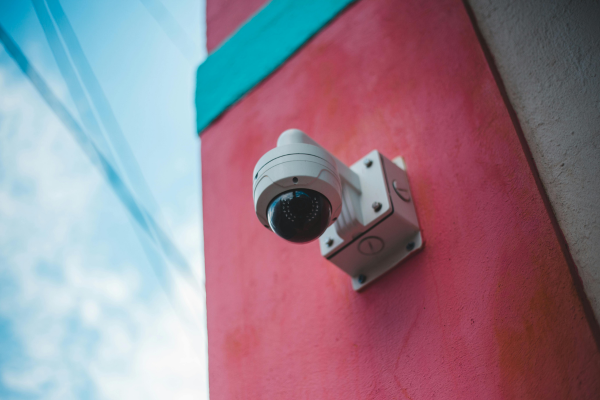
    Across urban India, millions of people now move through apartment complexes, workplaces, and neighborhoods mediated by apps. Visitors are logged, deliveries are tracked, staff attendance is recorded, and CCTV feeds stream directly to smartphones. Every movement generates data. Most of the people generating it do not think of what is happening as surveillance. They think of it as convenience, and that distinction, small as it seems, may explain one of the most consequential shifts in how Indian cities now function. Surveillance has not arrived as an imposition. It has arrived as a service.

    The platforms behind this shift are not household names in the West, but their scale is significant. MyGate, founded in Bengaluru in 2016, now serves over 25,000 apartment complexes across India and has raised more than $80 million from investors including Tiger Global and Tencent. NoBrokerHood, whose parent company NoBroker has taken in over $200 million in funding including backing from Google, operates across tens of thousands more. Together, the two platforms are active in over 40,000 urban residential complexes. A loose American analogue might be Amazon’s Ring combined with an HOA management app, but these platforms go further in scope and deeper into daily life.


    / unsplash.com


    The pitch is straightforward enough. Cities are larger than they were a generation ago. Apartment complexes house thousands of residents who may never learn each other’s names. Families are geographically dispersed. Elderly parents increasingly live alone in buildings where their children can check in on them from another city. The ability to know, in real time, who is at the gate and when the domestic staff arrives offers genuine reassurance to people whose lives are structured around exactly these anxieties.

    In that sense, these systems solve real problems. The question is what else they do.

    Here is something the platforms do not advertise. When a resident checks whether the driver has left or whether the grocery delivery has been collected, they are not simply receiving information. They are also producing it. The timestamp of that check, the frequency of those queries, the pattern of who you approve and how quickly you respond, all of it accumulates into a behavioral record whose uses are not defined by you, and not fully disclosed to you either. The resident monitoring the delivery is also being monitored. The gate, as it turns out, watches both ways.

    This is where the experience diverges depending on where you stand. For residents, the app is a dashboard. You can see who arrived and when they left, approve or deny entry with a tap, and operate, in the language of the platform, from a position of control. For the people being logged on the other side of that dashboard, the experience is something else entirely. Domestic workers, drivers, cooks, and delivery staff are photographed, timed, and rated as a routine function of building operations, often without meaningful consent and often without any real understanding of what is being collected or where it goes.


    The gate, as it turns out, watches both ways.


    “I just press my thumb every day and go,” says Shanta, a domestic worker in Gurgaon. She is referring to the biometric attendance system used to register workers entering the society. “They told us a few years ago that without police registration and putting my thumb impression, I could not work in any of the societies.”

    A 2023 investigation found that 14 domestic workers interviewed across complexes using these apps did not fully understand the features being applied to them. MyGate’s platform includes a rating mechanism through which residents can score workers on punctuality, attitude, and quality of service, but workers cannot see their own ratings and have no equivalent ability to rate their employers. MyGate’s co-founder compared this to employees using ID cards at corporate offices, though office employees generally know what is being tracked, have HR protections, and work within legal frameworks that domestic workers in India largely do not.

    Workers, in this system, are not its least important participants. They are its most visible ones, the part of the data economy that has been made fully legible while having the least say in the terms. But to stop the analysis there is to miss the larger transformation. The workers are the sharpest illustration of an asymmetry that runs through the whole system. Residents are also inside it. They have simply been given a more comfortable position from which to experience that fact.

    “People don’t think of it as surveillance,” says Udbhav M, a digital rights advocate. “They think of it as safety, as modern living. But convenience and control often travel together.”


    / www.pexels.com


    The Internet Freedom Foundation, a Delhi-based digital rights organization, has flagged excessive data collection, inadequate transparency, and poor consent protocols across residential management platforms. In several documented cases, apps stored location histories and facial recognition scans of workers who had no knowledge this was happening and no mechanism to access, correct, or delete the records. There are no unions negotiating data rights for domestic workers and no sector-specific regulation governing how a housing app may use a cook’s biometric information. The legal frameworks that might create accountability simply do not yet exist at the scale the technology has already reached.

    What makes this more than a story about labor rights or data privacy is the question of how it happened so smoothly. Nobody announced a new surveillance regime for urban India. There was no public debate, no moment when residents collectively decided this was the kind of city they wanted to live in. The technology arrived packaged as a lifestyle upgrade and was adopted accordingly.

    Part of the answer is speed. The platforms grew faster than any regulatory conversation could keep pace with. Part of it is framing, given that these are security apps rather than surveillance apps, and the distinction matters psychologically even if it is technically thin. And part of it is something more fundamental about what happened to trust.

    A generation ago, trust between a resident and a domestic worker was, at least in theory, interpersonal. You knew the person who cleaned your house. They knew you. The relationship had texture even when it was unequal. Today that trust is increasingly outsourced to infrastructure, to the timestamp, the notification, the platform, and the record it keeps on everyone’s behalf.


    That substitution has happened quietly and largely without examination, not just in how residents relate to workers but in how everyone inside these systems relates to everyone else. So, the neighbor you have never met, the delivery worker you will never see, and the guard whose name you do not know, all of them are now mediated by an app that turns presence into data and data into a sense of control.

    “I like knowing who’s coming in,” says Rakesh, a resident of a high-rise in Pune. “It gives me peace of mind.” He pauses. “But yeah, we never really asked the workers if they were okay with it.”

    That admission is more telling than it might seem. The failure to ask is not an oversight so much as a structural assumption built into these platforms, that some people are the users of the system and others are simply what the system runs on. The more interesting question, the one the platforms have no incentive to raise, is whether that distinction is as stable as it appears, and whether the residents who feel like they are watching have fully reckoned with how much they are also being seen.

    The cameras at the gate are not going anywhere. MyGate alone processes over a billion check-in events annually. The infrastructure is being built at a pace that makes after-the-fact regulation very difficult, while the cultural habits forming around it are more durable still.

    What lingers is the habit of trading the right to not be seen for safety. A whole architecture of trust has been rebuilt around the premise that knowing is the same as understanding, that the record is the relationship.

    The gate watches. It logs and timestamps and notifies. What it cannot do is ask whether any of this was what anyone actually wanted. And who knows what the answer to that question would have been.

  • Swipe Right for Stress

    There was a time when therapy was a hushed topic, discussed in whispers and hidden behind closed doors. Now, the stigma is beginning to fade. Gen Z grew up in an era where conversations about anxiety, depression, and burnout became normalized. Therapy is now digital intimacy. It has moved from the couch to the screen, and in some cases, your therapist isn’t even human. 

    A lot of people are turning to AI-driven chatbots for emotional support. Available 24/7, judgment-free, and infinitely patient, these digital therapists fill a gap in traditional mental health care. Support is now easier than ever to access with tools such as cognitive behavioral therapy (CBT), crisis intervention, and mindfulness training at your fingertips.

    Mental health care is overloaded, therapy is expensive, and waiting lists are long. With that reality in mind, AI treatment provides instant relief from lunchtime anxiety and midnight worries. But can an algorithm offer the kind of support that people need?


    AI-powered therapy apps are all the rage. / www.pexels.com


    Malvika Fernandes, a Dubai-based psychotherapist in private practise offers a trenchant rebuttal. “A chatbot can never replace a qualified therapist. This is a very complex field with professionals spending decades studying the mind, behaviour, attitudes and cultural contexts that affect clients’ mental health. A chatbot may give overtly positive, soothing responses that may help you feel in control. AI usually gives solution-oriented suggestions. But they won’t be able to offer the nuanced processing work that is required.” 

    Fernandes goes on to suggest that “You can use ChatGPT or Claude as your first aid when there is no other way out, but it cannot be your first option; however, it can certainly give generic, additional support. Hopefully your first option is a human connection – a friend, a family member, a colleague, a neighbor, a therapist, your pet, even journaling or just sitting with your own thoughts. It can even be somatic practises like dance or pottery or swimming. Only if we don’t have those options available, then yes, we can look to a chatbot for help.” 

    Is AI able to understand human emotions, or can it just mimic empathy? Even as access to AI therapy grows, there remain risks. Is it possible for chatbots to determine if a user is in a crisis? What happens if they are wrong? After all, AI can never truly respond; it can merely pull from a database of responses.


    What happens when an app, trained on Western cultural mores that skew towards individualism rather than collective family dynamics, offers mental health advice to a user from the Global South?


    “Can it help by challenging certain thoughts? Certainly, in small ways as tertiary support, it offers very soothing responses,” explains Fernandes. As someone who has tested these chatbots out, she believes that AI will tell you what you want to hear, not what you need to hear. A Stanford study reports how chatbots can cause ‘delusional spirals’ by validating flawed human beliefs.

    Equally importantly, what happens when an app, trained on Western cultural mores that skew towards individualism rather than collective family dynamics, offers mental health advice to a user from the Global South? Context is crucial when it comes to mental health.

    But perhaps the biggest question of all is why. Why do we need to turn to chatbots at all? We know that unfettered capitalism pushes populations towards productivity and individualistic success, without interrogating the mental health costs. Meaningful human interaction has plummeted, with a strong individualistic social media taking its place. 

    Simultaneously, in the Global South, as in the Western world, there is a tremendous push towards online and digital spaces. The irony here is that we are turning towards digital solutions that have likely exacerbated the problems in the first place.


    Can a phone ever really replace a human psychiatrist? / unsplash.com


    In India, certainly, there is a shortage of trained professionals equipped to handle mental health crises – the data reveals that there is 1 therapist for 10 lakh people in the country. And even when accessible, therapy is expensive, and in some areas, dogged by a strong stigma.

    Given these circumstances, chatbots may work as a trial ground for certain digital mental health solutions. There are now niche therapy apps tailored for LGBTQ+ individuals and students, making mental health support more inclusive.

    All this is to say of course that AI shouldn’t replace human therapists, although it can certainly play a supporting role. But it is impossible to ignore how it will reshape the ways in which we seek emotional support, ways which we once thought impossible.

  • The Mahjong Moment

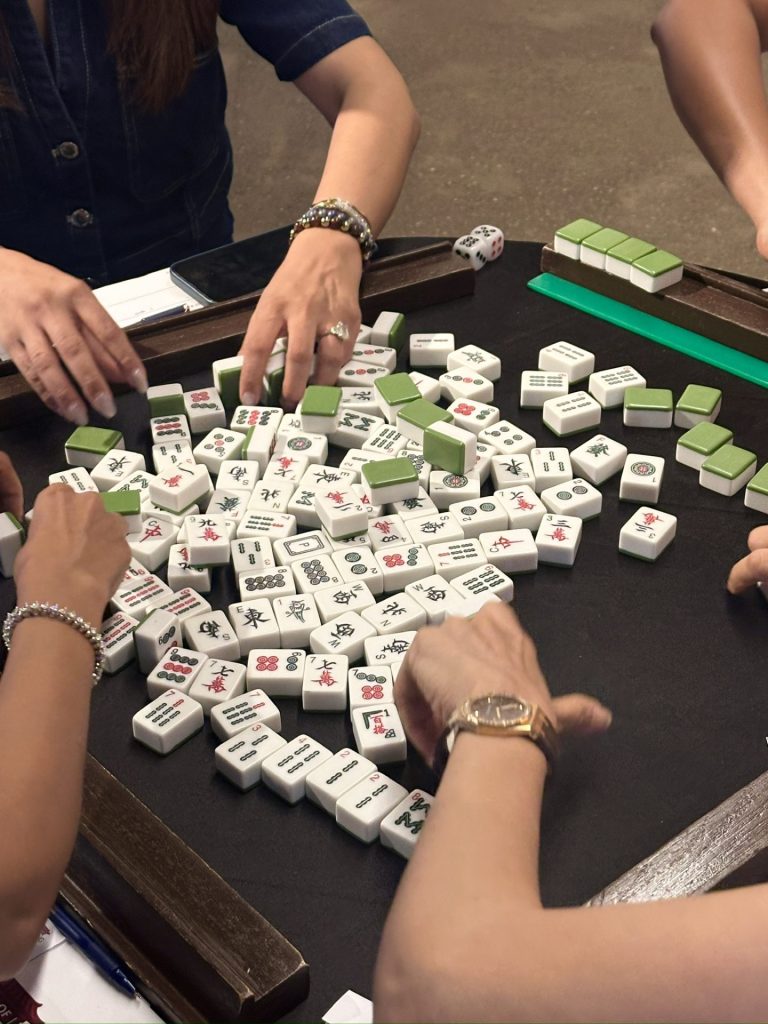
    Laid out in a neat grid, they resemble miniature art: delicate green bamboo, crimson characters, blue circles, and compass-like winds carved into smooth rectangles of ivory, bone, or plastic. You’ve probably seen them before — scattered across your grandmother’s dining table or trending now on TikTok as a satisfying ASMR clack.

    Mahjong isn’t new. Its history is long and layered. Believed to have originated in the mid-1800s in China, the game was once the preserve of Qing officials and scholars before it spread across social classes and borders. In 1920s America, it surged in popularity thanks to an export boom and was a status symbol among white upper-middle-class women, complete with their own ‘exotic’ tile sets and rulebooks – that love for Mahjong continues to this day. Meanwhile, in Hong Kong, Taiwan, and Japan (and elsewhere), the game evolved into its own regional variants and became a staple of family life.

    Today, Mahjong is back — loudly, proudly, and globally. In New York, Asian-American communities are reclaiming it as part of their own cultural inheritances. In London, hidden Mahjong clubs have emerged in basement speakeasies. In Hong Kong, competitive Mahjong tournaments are being live-streamed with fashionably dressed players and full sponsorships.


    Image Courtesy: Sangeeta Kewalramani, House of Mahjong


    Unsurprisingly, India is having its very own Mahjong moment too.

    In Mumbai, a group of young professionals started The Mahjong Network via WhatsApp. Within months, it had grown into a full-blown movement, with rotating hosts, mentorship sessions, and tournament-style gatherings. Aditi Dugar, restaurateur at Masque, Masque Lab, TwentySeven Bake House, and Paradox has Instagrammed her love of the game. Stars of the Netflix show The Fabulous Lives of Bollywood Wives, Maheep Kapoor and Bhavana Panday are similarly obsessed. In Delhi, casual brunch cafés now offer Mahjong-themed mornings. In Bengaluru, a Parsi restaurant offers daily Mahjong classes; in Mumbai, an (unrelated) Parsi cafe offers the same thing. On Urbanaut, a ticketing platform, a plethora of Mahjong events rub shoulders with jazz performances and guided museum tours. Schools and colleges are hosting tequila and Mahjong alumni events. Indian jewellery brands such as Nishkara are even crafting jewelry and bag charms inspired by Mahjong tiles. Across India, brunches, birthdays and tea parties are being designed around Mahjong tables. 

    There is nothing new about Mahjong in India though. The Times of India of the 1920s is dotted with mentions of Mahjong-playing ladies, an elite British craze sparked by the colonial ties between China and India. Lacquered scarves with dragon designs and imported bone-and-bamboo Mahjong sets were all the rage with the ladies who lunch stepping to their colonial club of choice for their weekly game fix. Colonial-era Chinese restaurants, opened by immigrants from China, likely also operated as Mahjong clubs, possibly helping to pull new fans to the game.


    Today, Mahjong is back — loudly, proudly, and globally. In New York, Asian-American communities are reclaiming it as part of their own cultural inheritances. In London, hidden Mahjong clubs have emerged in basement speakeasies. In Hong Kong, competitive Mahjong tournaments are being live-streamed with fashionably dressed players and full sponsorships.


    Even after Independence, the game never really disappeared. It sat quietly in Parsi homes, where aunties would gather around the card table in the afternoon, and in Indian military circles, passed between postings as a refined time-pass. 

    It’s no wonder then that India, a largely family and community-driven country, has taken to the game so thoroughly. Everyone from nostalgic Gen X-ers who remember watching their parents play, mid-career women looking for a new social scene, and Gen Zs are embracing Mahjong as an exercise of both mind and memory.

    Sangeeta Kewalramani, Mahjong teacher and founder of Mumbai’s House of Mahjong echoes this. “Socially, it brings people together across generations, I’ve even taught grandparents and grandkids together,” she explains. “I think why it has a renewed appeal is because of its versatility. For example you can host a Mahjong lunch party with the girls and also compete formally at a tournament. You have older women who’ve been playing rummy or bridge for years and are now loving the novelty of Mahjong. But more and more I see women in their 20s and 30s getting hooked.”  

    In some ways, the appeal of this Chinese game in India mirrors the global moment. It taps into the longing for connection and community in offline spaces, and a quiet rebellion against endless productivity.

    Part of its comeback lies in the aesthetics: the tactile satisfaction of the tiles, the visual charm of the sets, even perhaps the gifting culture that is intrinsic to the nature of the game. “It’s no longer just about the tiles; it’s about the lifestyle, the hosting, and the gifting traditions that surround the game – giveaways and prizes are an integral part of the whole culture. Mahjong is its very own subculture now,” explains a representative from Nishkara.


    In Mumbai, a group of young professionals started The Mahjong Network via WhatsApp. Within months, it had grown into a full-blown movement, with rotating hosts, mentorship sessions, and tournament-style gatherings.


    Another reason? Everyone agrees that in a world defined by hyper-speed and endless screen time, Mahjong offers a kind of analog elegance. It demands attention, invites conversation, and unfolds in real time — four people, one table, no scrolling.

    But there’s also something deeper at play. The pandemic left many of us starved for community and craving rituals that feel grounding. Mahjong delivers both. It’s strategic, communal, and meditative, a rare combination in modern life.


    sangeetakewalramani / Instagram


    But this is where we differ from the rest of the world. Mahjong players in India largely belong to a specific social class with the privilege to access gated and membership-only spaces such as the Willingdon Club in Mumbai. Mahjong sets, although easily available, are expensive, and access to Mahjong classes is often paid. 

    We’re living in an age not of invention, but of re-invention. From vinyl to zines, from Indian pickles to Mahjong tiles, there’s a wider cultural pull toward revisiting what once was: toward reclaiming forms of slowness, tactility, and togetherness that got lost in the churn of modernity. 

    Mahjong isn’t just back. It never left. We’re the ones circling back, clicking tiles like rosary beads, finding comfort in repetition, connection in tradition, and clarity in the clatter.

  • Mango Mania

    We’ve all grown up eagerly awaiting the monsoon season — not just for the joy of sipping chai and indulging in hot pakoras, but for the arrival of the undisputed king of fruits: the mango. For many of us, mangoes are wrapped in memory: grandmothers and mothers lovingly slicing them after a meal, their fragrance filling the air. Succulent, fresh, and impossibly tender, the mango has been a ritual, a nostalgia trip, a slice of summer on a plate. India’s love for mangoes goes far beyond summer indulgence — it’s a centuries-old obsession deeply embedded in the country’s culture, diplomacy, and history.

    Every sun-charred summer, people scramble to buy them by the dozen, and visitors to India often leave with brimming crates, as souvenirs. Airports, during mango season, are dotted with cartons of the fruit, ready to cross borders — a happy consequence of modern-day globalization.

    And yet, there is nothing new about globalization. If we jigsaw together fragments of Indian history, we would see that centuries before the first European ship crossed a storm-tossed ocean to India, the mango was already trotting across the globe. Born in the foothills of what is now Meghalaya, India’s beloved Mangifera indica had been cultivated for at least four thousand years before a Westerner ever tasted it. Sanskrit texts praised it. The Buddha is said to have meditated in a mango grove.


    India’s favorite fruit. Nuff said. / unsplash.com


    In fact, our first hint at the sweep of the rambling Indian trade and pilgrimage routes comes via Buddhism — it was ancient Buddhist monks, on pilgrimage to Indian Buddhist sites, who funneled the fruit into South East Asia, from where it trundled into China. By the tenth century, it had made its way to East Africa, through Persia.

    The Maratha rulers, too, are said to have planted the tree everywhere they went, resulting in even further dissemination of the fruit. These were a few amongst the seeds of a fruity network that began in 1575, eventually arrowing into Agra in 1580, where Emperor Akbar, fascinated by a fruit unrivalled in color, smell, and taste grew his own mango orchards and even took to pouring milk and treacle at the base of the trees to enhance their taste.

    It was the Columbian Exchange that finally sailed mango seeds across the ocean to Europe in the 15th century, and later to Brazil. In every place it arrived, the mango was adopted, transformed, and made local. In Mexico, it became the bedrock of the mangonada and of street snacks dusted with chili and lime. In the Caribbean, it fermented into rum punches and stewed into chutneys. From there, it was a hop, skip, and jump to North America.
    Even the colonizing British, who tilted their sturdy noses up at many Indian fruits and vegetables, could not resist the mango. As early as 1883, they were shipping Christmas hampers of mango chutney, jam and jelly from Mumbai to family and friends in the UK.


    India’s love for mangoes goes far beyond a simple summer indulgence — it’s a centuries-old obsession deeply embedded in the country’s culture, diplomacy, and history.


    In 1838, the fruit itself found itself an immigrant in London, thanks to the eccentric agriculturist Framji Cowasji Banaji who shipped a hermetically sealed basket of his choicest produce to the queen of England for a spot of diplomacy. It is not known in what state the mangoes reached England. What we do know is it would take until the early 1900s for the British in India to successfully send a large batch to the UK in good condition.

    The globetrotting continued after India won its independence from the British. Back in 1955, Prime Minister Nehru sent a few mango saplings to China — a small gesture, but it said a lot. It wasn’t just about fruit; it was a way of saying, “Here’s something we love — and maybe you will too.”

    Decades later, the mango in 2006, when US President George Bush visited New Delhi, Prime Minister Dr Manmohan Singh, offered mangoes to the US President, effectively ending a two-decade ban on the fruit in America.

    In such a way, the mango crossed borders and bridges, linking a network of commerce whose threads stitch together millions as far away as Mexico and China, thus begging the question — how old really is globalization itself?

  • Is Beauty Tourism the New Healthcare Frontier?

    There’s a culture building around a form of tourism that we don’t see much in advertisements. If your hairline needs a boost, you’re likely to head to Turkey. If you want glowing glass skin, you find yourself in South Korea. If you’re hoping to perfect your smile, you’ll probably find yourself in Albania. And if you’re looking to shave the rough edges off your nose, you’ll likely be flying to India. Welcome to the world of medical tourism for aesthetic procedures. 

    There’s nothing really new about medical tourism itself. What has changed though are people’s perceptions of it; patients are now far more open about flying around the globe just for an elective aesthetic procedure that might have drawn frowns earlier. 

    But what does this mean for the healthcare profession? And how does this impact the healthcare of those who are residents of these medical tourism hubs — are they getting left behind?


    Medical tourism’s new face – beauty. / www.pexels.com


    Roll out the red carpet

    Governments have always welcomed medical tourists, with countries opening up their borders, and private hospitals opening up premium suites. Profits soar when patients from around the world pay their bills in foreign currencies. The medical aesthetics market was estimated to stand at 82 billion USD in 2024, and is projected to double in size to 143 billion USD by 2030. 

    And yet, for most people the world over, even basic healthcare is expensive. For cosmetic procedures, those costs escalate further. A hair transplant costs, on average, $13,000 in the US. In contrast, a trip to Turkey, including the flights, accommodation, and the procedure itself, could cost as little as $3,400, with a reputable clinic involved. That cost driver alone can be lucrative enough for people to consider it a viable option, regardless of the risks involved. 

    But this isn’t a story just about Turkey. Malaysia, South Korea, Thailand, Colombia, Mexico and India are well positioned as destination countries for aesthetic medical tourists. India, for example, is doubling down on the opportunity, with e-medical visas for medical tourists in place for nearly 170 countries, and a possibility of visas on arrival in the offing. 

    India’s edge in medical tourism lies of course in its affordability for international travelers, including those of Indian origin residing in the US, UK and Canada — treatments typically run 60–80% less than in the US or Europe — combined with over 57 JCI-accredited hospitals. The other enormous advantage is India’s facility with English; medical staff fluent in the language are an enormous draw for Westerners, and help ease the language barrier. It’s important to note that India caters to a swathe of visitors; around 88% of arrivals are from neighbouring South Asia especially Bangladesh, the Middle East, Africa, and Central Asia.


    The country is already uniquely positioned as an aesthetic wellness destination through traditional Ayurveda and yoga retreats — Kerala, for instance, is internationally-known for its serene retreats offering holistic healing.


    The country is already uniquely positioned as an aesthetic wellness destination through traditional Ayurveda and yoga retreats — Kerala, for instance, is internationally-known for its serene retreats offering holistic healing. Perhaps it’s no wonder then that a 2023 survey found that India is ranked second and third in rhinoplasty and liposuction procedures, and is well on its way to dominate in the fields of liposuction, rhinoplasty, Botox, fillers and semi-permanent makeup.

     This is further strengthened by the government’s Heal in India initiative which emphasizes the country as a premier destination for integrated and holistic healthcare, for both complex medical procedures as well as aesthetic ones. As a result, India’s aesthetic healthcare market is estimated to reach approximately US$ 3.02 billion by 2030.


    A new hierarchy 

    The low-cost-high-convenience model to achieve a certain set of beauty standards is attractive enough for people the world over to give it at least one go, especially since this was once available only to the super rich or the celebrities. With packages and services that can manage the end-to-end coordination for a medical tourist, that level of privilege is now available to anyone who can afford it. And affording it is simply getting easier, with time. 

    The tide is shifting even in countries like India, where there is now a surge in aesthetic procedures away from the big metros. Tier 2 cities are slowly increasing their access to quality aesthetic health care. Perhaps there will soon come a time when international visitors will fly into Patna for its specialized liposuction services! 

    Sure, this is a boon for visitors, but there’s a growing concern for the residents of these destination countries and how this medical tourism boon is reshaping the face of domestic healthcare, particularly for developing countries.


    The promise of affordable plastic surgery draws patients halfway around the world. / www.pexels.com


    Since most of the medical tourism for aesthetic procedures is centered around private healthcare, the boost in the sector becomes lopsided, with public healthcare lagging. 

    Public healthcare tends to rural and urban populations at a highly subsidized rate, but is largely underfunded and as a result, suffers from overcrowding and large wait times, owing to the quantity of the population it has to service. 

    In Malaysia, for example, private healthcare is now reserved for the wealthy and for the tourists, while local populations must rely on underfunded public healthcare. Thailand is seeing an active brain drain from the public sector to the private sector, as doctors choose lucrative financial options over the rigor of public healthcare systems. Yes, healthcare is noble work, but privilege now dictates the quality of it. 

    While India’s policy push for medical tourism does emphasize on the need to safeguard domestic healthcare first, there is already a yawning economic divide when it comes to access to top-tier healthcare. Aesthetic medical tourism would be simply unthinkable for most of the population.


    The medical aesthetics market was estimated to stand at 82 billion USD in 2024, and is projected to double in size to 143 billion USD by 2030.


    Taking a Stand

    Healthcare has always been a service industry. But it has also always been distinguished as a calling, or an honorable career, because of what healthcare professionals do: they heal. Much like teaching, the ‘for profit’ consideration is culturally expected to be secondary to the actual act of service they provide through their skills. 

    However, when profits are booming from treating patients with only vanity concerns, it begs the question – what about those without these privileges? And perhaps this is the biggest unwanted cultural shift for destination countries in medical tourism i.e. an even greater gulf between the haves and have-nots. 

    More people than ever before are choosing to have these aesthetic procedures. And certainly their growing accessibility is reducing the gap between the haves and have-nots in the aesthetics department. But maybe it’s time we asked if the only ones benefiting from any growing healthcare system are those who access it on-demand and not on-necessity.