

Walk down any supermarket aisle and you’ll notice something strange. Your perfume is a swirl of bright yuzu and grounding green tea. Those berries you bought to accompany your breakfast muesli now star in sleeping lip masks. That vibrant persimmon in your fridge? It has rebranded itself as a volumizing shampoo. Open your bathroom cabinet, and you could almost assemble a brunch menu.
That’s not a happy coincidence. It’s part of a slow, deliberate cycle that’s been shaping our consumption patterns for decades — one where ingredients don’t just travel between cultures but between categories. From menu to mirror. From the barista counter to the beauty aisle.
This cycle is called the Menu Adoption Cycle, and it is how ingredients slowly move up the cultural ladder — from food to trend to lifestyle. It usually begins with fine-dining chefs or wellness influencers playing with an ingredient that’s niche, exotic, or ancient. Then cafés and boutique food brands take over, bringing it into pop-culture’s reach. Soon, global food giants get in, turning the once-niche into fast-moving consumer goods. And finally, the spillover: personal care. You might not even get raspberries in India. But you’ll probably put them on your face.
This isn’t new. But the speed and saturation with which it now happens is. Blame it on Instagram, where vivid colours and minimalist packaging transform ingredients into aspirational props. Or TikTok, where trends collapse entire categories — breakfast becomes beauty and groceries become glow-ups. A grandmother’s remedy became a ritual — bottled, branded, and sold as soft luxury.
Blueberries rose in public estimation only after a concerted effort to present it as an especially healthy fruit, rich in antioxidants. Once the media lapped it up, a fruit that was only used as a stuffing in pies became known as a cancer combatant, a soldier against cognitive dysfunction and an inflammation shield. From there, it was a short leap into kitchens, and an even shorter leap into our bathroom cabinets.
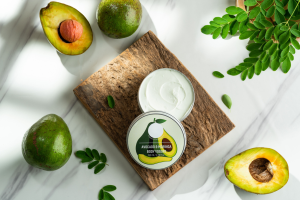
Or take avocado — the fruit of millennial brunch culture. Its rise as a food trend came with real estate jokes and housing crisis memes, but soon it was starring in hair masks, moisturisers, and anti-aging creams. Avocados aren’t even native to India or the US for that matter. They were introduced to the former via Sri Lanka around the 1940s, and only recently began to be cultivated in parts of Karnataka to meet local demand. In the US, they were introduced in the early 20th century, but it wasn’t until California growers launched strategic marketing campaigns in the 1990s that the avocado moved from niche ingredient to a symbol of health and lifestyle. The point is: an ingredient doesn’t need to be familiar to feel essential. It just needs the right aesthetic.
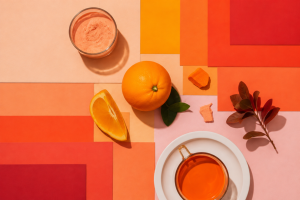
As urban wellness culture grows, the same patterns emerge globally. But interestingly, many Indian ingredients with deep cultural histories (kokum fruit, the Bengali gondhoraj lime) rarely complete this global loop. They don’t fit the aesthetic code. They’re not instantly recognizable. They don’t ‘pop’ on a shelf.
So why do we keep consuming this way?
Because ingredients today are identity cues. We don’t just want nourishment or skincare.
The cycle isn’t just cultural. It’s emotional. The moment we start craving a flavour, we also start craving what it represents: health, calm, minimalism, and/or glow. And when we can’t have the real thing, we reach for the signal. Because what we consume — on our plate or on our skin — is never just about need. It’s about aspiration. It’s about how we want to be seen.
So the next time your shampoo smells like your breakfast, know this: it didn’t get there by accident. It was designed to. Because maybe we’re not just chasing glow. Maybe we’re chasing the calm of a ritual we never got to keep.





Leave a Reply