

The internet was built for people. Increasingly, it serves machines.
From the beginning, the Internet was premised on one simple assumption: that people were using it. Then came the bots, the AI agents, the web crawlers.
The Dead Internet Theory, a conspiracy that emerged on obscure message boards in the late 2010s, claimed that governments and technology companies had quietly replaced ordinary internet users with bots, leaving a web populated largely by artificial activity. It was almost immediately poohpoohed, of course. But it proved unexpectedly prescient.
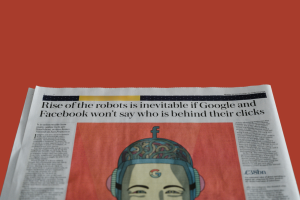
This year, we have reached the turning point. Cloudflare, perhaps the most prominent connectivity cloud company globally, recently reported that automated requests now account for more than half of the activity passing through its network. More recently, Web security firms have documented rapid growth in AI agents. There’s now a giant uptick in fake followers on social media sites. Influencers themselves are sometimes entirely fake. Is this perhaps the future of the Internet then?
Five years ago, such traffic barely existed. Today, thanks to AI, it is almost taking over!
A user asks a question, receives a summary, compares products or books a reservation, and this is done without ever visiting the sites that supplied the underlying information. The work still depends on human intent, but the actual visit no longer does.
For decades, digital publishers and e-commerce platforms relied on a straightforward chain: a visitor arrived, viewed advertisements or products and generated revenue. AI agents break that chain. They consume computing resources, bandwidth and content, yet generate neither ad impressions nor loyal readership. This shifts the bedrock of economics on which the Internet used to run.
Expectedly, publishers have begun responding. Some have pursued litigation or licensing agreements with AI firms whose models rely on their reporting. Others have blocked AI crawlers altogether. Still others are experimenting with charging AI companies directly for access, accepting that future readers may arrive not as people but as software representing them (a generational shift in itself).
The same forces are reshaping the supply of information.
Search-engine optimization had already encouraged publishers to produce ever larger volumes of keyword-rich content. Generative AI has reduced the cost of doing so to almost nothing. AI can produce endless listicles, summaries, social-media posts and copy of every kind – simply for other AI to consume.

And what of us? The users for which this was all built? How can we trust the content that we consume online?
The obvious answer of course, is to turn analog, reverting to physical dictionaries and encyclopedias for research. But that is only a part-solution, for an increasingly connected online world. Another answer might be to hunt for spaces that are largely inaccessible – to machines, of course, but also to humans. People increasingly trust closed-door spaces such as invitation-only Slack communities, private Discord servers, paid newsletters and group chats. This represents a striking reversal of the internet’s original logic that democracy and ease of access was the web’s greatest strength.
This doesn’t mean of course, that the internet is really ‘dead’. Billions of people continue to read, argue, shop and create online every day.
Every era of the internet has been defined by its dominant user. In the 1990s, it was the individual browsing webpages. In the 2000s, it was the search engine indexing them. In the 2010s, it was the social-media feed organizing attention. The next era may belong to software that reads, shops, negotiates and decides on our behalf.
The internet was built on the belief that someone, somewhere, was looking at a screen. Its next phase will depend on a more difficult question: how to build a profitable web when, increasingly, something is looking instead.





Leave a Reply