Blog

  • ID, Please: Are We Moving Towards an Adults-Only Social Media?

    When Facebook first launched in 2004, it started as a social media platform for college students only. If your email ID had a .edu suffix, it won you eligibility. By the time Facebook went global in 2006, it allowed anyone over the age of 13 with a valid email address to access the platform.

    Two decades later, as many countries debate bans on social media access for children under the age of 16, the question that arises is this: do these bans mean social media is an adults-only space now? And if it is, what implications does that have on today’s internet culture? 

    The bans reveal deeper truths about how we define adulthood. We self-censor when we see children around us, hoping to not make a negative impression on a young person still feeling their way around the world. Will a child-free social media then impact censorship and self-censorship? In 2024, X (formerly Twitter) amended its policy to allow users to post ‘consensually produced’ mature content, including nudity and pornography. That might have opened the door to Grok being asked to digitally undress people. While women are perhaps the greatest victims of this, children too became targets. Will an adult-only platform then further empower users to make such problematic requests? (In India perhaps, this is now a moot point, since all adult content has been banned by the Indian government from March 2026.)



    If social media needs to be governed by age restrictions, we must also then question all content about or featuring children that is posted on these platforms. 

    After all, the core reason for most bans is to keep children safe from being exposed to harmful content and abuse online. The other reason is to place limits on their screen times, which have been on the up and up. But does that line of decision-making then impinge on the rights of children below 16? The bans seem to gesture at that age-old parenting position: only we know what’s best for you.

    The other concerns are practical. If the only security measure to verify age online is to enter your birth date, that’s an easy step for children to manipulate; it’s no different than using fake IDs and hoping to get into a bar. Reportedly, kids in the UK and Australia have admitted to entering fake birth years and drawing fake moustaches to make accounts on the sly. This sort of cheating will likely have a negative influence on children who are still learning socio-cultural concepts of trust and honesty.


    If social media needs to be governed by age restrictions, we must also then question all content about or featuring children that is posted on these platforms.


    This restriction takes an interesting turn in patriarchal societies. In India, for instance, girls still face much greater social and cultural restrictions than boys. For many young girls, social media is the one democratized space where they can interact unrestricted with people who live outside of the social mores of their milieu. When such bans are enacted in India, it further empowers restrictive setups to keep girls and women off the internet altogether, all under the garb of doing it for ‘their safety’. Statistically, only 33.3% of women have ever reported using the internet in India, as opposed to 57.1% of men. With a large gender divide between urban and non-urban centers yet to be bridged, the ban may have more negatives than positives.

    On the other hand, shows like Adolescence very effectively depict the negative impact of children being influenced by the internet, especially in spaces that their parents are not actively monitoring. The show also touches on concepts of ‘the manosphere’, where adult men are the primary drivers of problematic content about being alpha males. While such content is harmful for children, these bans don’t quite consider the impact on other adults who might be equally malleable. Recent studies have shown that the adolescent phase of the brain lasts from the age of 9 to 32, which means that those even beyond the age of 16 might be susceptible to such harmful messaging. And so, while these bans imply trust in adult discernment, they also send out another message about adulthood to children: not all adults know better, but we’re the ones looking out for you.



    Yes, the world is watching with bated breath how these bans play out within the countries that have taken the first step, Australia being patient zero, in many ways. But when the onus continues to fall on the habits of users, rather than the growing ambit of the platforms and the need for them to take accountability on making the internet a safer place for all, it does bring into question who these bans are intended to serve.

    What they ultimately reveal is not just how we think about children online, but how much we overestimate adulthood itself.


  • The New Loneliness Market

    Open any major platform and a pattern appears. A stranger studies quietly on TikTok Live, a creator walks through a supermarket with viewers trailing behind, meditation apps offer modes that resemble shared presence, and AI companions send morning greetings. Productivity tools now include virtual coworkers. These features look like entertainment or efficiency hacks, yet they are built to give people the sense that someone is nearby.

    A decade ago, loneliness felt like an interior mood. Now it shapes product decisions across the tech industry. Companies have realised that users return more reliably when something feels companionable. The numbers reflect this shift. Low-interaction livestreams on TikTok have grown steadily over the past two years, AI companion apps have pulled in tens of millions of users around the world, and long, quiet study videos on YouTube continue to draw consistent viewing. The engagement holds even when very little is happening.

    The reasons stretch beyond technology. Remote work reduced daily contact, and many shared spaces either changed or disappeared. Cafés raised prices, libraries shortened hours, and neighbourhood spots became harder to maintain. A global survey in 2024 by Meta and Gallup reported that around one in five adults experiences frequent loneliness. It tracks with what people describe in their own lives. As familiar rhythms faded, they began looking for softer forms of connection that could slip into unpredictable days.


    Image Credit: Libby Penner on Unsplash


    AI accelerated the trend. Companion apps offer a feeling of steadiness without the weight of social performance. Conversations take place at a pace people can manage, which often makes them easier than real ones. The appeal here is quiet. Many users are not searching for romance or fantasy. They want acknowledgement that fits into the edges of a scattered routine.

    Livestreams and shared-task videos serve a different purpose. Someone’s presence, even through a screen, can create a backdrop that softens the day. Walking streams, cooking sessions, and silent study rooms are simple formats, yet they mimic the comfort of being around others who are also going about their lives. These spaces carry no pressure, which explains their endurance.


    Many people are not seeking grand emotional narratives or deep conversation. They want a softer kind of company that can sit beside work, chores, or study, and the world does not offer that easily anymore.


    The behaviour is most visible among younger users, yet it crosses age groups. Many people feel stretched by erratic schedules, high expectations, and social environments that sometimes feel too demanding. A low-demand connection can feel reliable in a way traditional social life often does not. A livestream does not ask you to keep up. A digital companion stays even when you step away.

    Companies respond to what they see. Some now measure engagement in terms of presence rather than taps or clicks. A few creators who hold attention simply by showing up regularly. The idea is straightforward. People trust spaces that feel steady, and steadiness keeps them returning.

    Of course there are concerns about how these habits develop. Platforms gain when users stay inside their ecosystems, so these environments can expand quietly. Hours drift by. A stream that starts as background company sometimes takes up a larger share of the day than expected. Comfort and habit can merge without much notice.


    Image Credit: Amanda Vick on Unsplash


    Even with the risks though, it is clear that these tools fill a gap. Many people are not seeking grand emotional narratives or deep conversation. They want a softer kind of company that can sit beside work, chores, or study, and the world does not offer that easily anymore. Technology stepped into the space left behind by changes in work, housing, mobility, and community life.

    The loneliness market is less a verdict on people and more a reflection of the current moment. It shows how individuals are rearranging their emotional routines when older forms of connection no longer appear without effort. Digital companionship, even when light, offers a sense of continuity that is hard to find elsewhere. The behaviour will shift as the world changes, yet the need that drives it feels durable. People want to move through their day with some feeling of closeness, even when that closeness takes a different shape from what they expected.

  • When Books Became the Last Un-curated Object

    On a weekday morning in New York, a man pulls a paperback from his tote bag and props it against his knee. In a subway car full of phones, the gesture feels almost declarative. Across the aisle, someone glances over, not out of curiosity, but recognition.

    Scenes like this are becoming more noticeable. In London, on the Overground, in Seoul, in study cafés that fill by noon, and even in Bengaluru, in library-cafés where people come as much to sit with a book as to escape the heat. Reading in public isn’t new. What’s new is how visible it feels.

    Part of that visibility comes from contrast. Nearly everything else we consume now arrives pre-filtered. The shows we watch, the music we hear, the news we encounter, even the jokes that find us are shaped by recommendation systems designed to anticipate our preferences. The book, oddly enough, still resists that logic. It doesn’t auto-play. It doesn’t refresh. It doesn’t quietly optimize itself to keep you engaged.


    We now have library-cafes in Bengaluru where people read, and escape the heat | Image Credit: Vika Glitter on Pexels


    That resistance has started to matter. Despite years of predictions about the death of print, physical books remain dominant. In the United States, print accounted for close to three-quarters of publishing revenue as recently as 2022. Surveys also suggest that print remains the most widely used format across age groups, even as younger readers increasingly move between print, e-books, and audiobooks.

    E-books haven’t disappeared, but they haven’t replaced print either. Digital reading has grown steadily, especially in genres like romance, where speed and volume matter. What’s emerging instead is a split. Screens for convenience and paper for presence. The choice feels less about format and more about how people want their attention handled. In markets like India, where access to e-readers, stable connectivity, and digital payment systems is uneven, print remains the default rather than a preference.

    That distinction becomes clearer in public. In Tokyo, dedicated reading spaces and silent cafés have emerged as environments designed for sustained focus. In Seoul, book cafés offer multi-hour seating for readers who want to stay in. In India, informal reading communities like SGNP Reads and South Bombay Reads have begun organizing public reading sessions, turning parks and promenades into shared quiet spaces. In New York, the subway has always had readers, but the sight of a paperback now stands out against endless scrolling.


    Many younger readers move fluidly between print, audiobooks, fan fiction, and online communities. The book offers texture where the screen offers flow.


    Part of the appeal is physical. A book takes up space. It occupies both hands. It sets a pace you can’t speed up without effort. In a life where work, leisure, and socializing all collapse onto the same glowing rectangle, the book reintroduces a boundary, albeit a modest one.

    Yet, that boundary is increasingly rare. Work messages arrive on the same screen as entertainment. News alerts interrupt conversations. Even leisure is measured, tracked, and optimized. The book doesn’t participate in that economy. It doesn’t ask who you are or adjust itself based on past behavior. In a culture obsessed with personalization, the book remains curiously indifferent.

    Of course, books are not untouched by algorithms. Covers are tested, titles are optimized, and BookTok can turn a novel into a bestseller overnight. But the act of reading, especially reading in public, still resists total mediation. Once the book is open, the feed stops.

    Books offer a rare encounter with something that doesn’t choose you back | Image Credit: Element5 Digital on Pexels

    That is perhaps why books have become visual objects again with bold covers. Publishers seem to have leaned into this visibility with spine-forward design becoming more common. Special editions of books like Fourth Wing by Rebecca Yarros, with sprayed edges and highly stylised covers, have been designed as much for display as for reading, particularly within BookTok-driven genres.

    Is this nostalgia, or is it compensation? Historically, reading has always moved in cycles. Moments of rapid technological change often produce counter-movements toward slower forms of media.

    This shift isn’t exactly a revival. Print never disappeared. What’s changed is how visible and intentional it now feels. Many younger readers move fluidly between print, audiobooks, fan fiction, and online communities. The book offers texture where the screen offers flow. This helps explain why independent bookstores are opening again. In the United States, their numbers have grown by roughly 70 percent since 2020, with more than 400 new stores opening in 2025 alone.

    It would be easy to frame this as a romantic shift. But something more pragmatic seems to be underway. In a world where nearly everything is curated in advance, the book remains one of the few experiences that unfolds without anticipating you. It doesn’t adapt, optimize, or respond. It simply demands attention. And increasingly, that seems to be the point.

  • How India’s App Economy Learned to Read You

    Turn on a phone in India and it is easy to miss how little effort is involved. Dinner appears on Swiggy before your hunger has even fully registered. Groceries arrive speedily from Zepto, timed neatly between meetings. CRED nudges you with a reward that feels oddly well placed. Nothing breaks, nothing asks too many questions, and largely, the system works for its users.

    What disappears under that smoothness is how much machine learning hides under it. Over the last decade, India’s app economy has become exceptionally good at recognising behavioural patterns, not just what users do, but when they do it, how often, and in what sequence. The most successful platforms no longer compete primarily on features or price. They compete on prediction. 

    How did the country get here? Between 2016 and 2020, the Indian government pushed for large-scale digital expansion across the country. In 2025, approximately 85% of Indian households had at least one family member with a smartphone, according to the Government of India’s Press Information Bureau. It is amongst the world’s largest markets for smartphones and surveys reveal that it has amongst the world’s highest social media users. Millions of users came online in a compressed window of time, often mobile-first and app-first. 

    That scale changed the economics of apps almost overnight. Food delivery, quick commerce, and fintech became winner-take-most markets. By 2022, India’s food delivery market was dominated by two platforms controlling the vast majority of orders (even while battling critiques of exploited labor). Simultaneously, leading fintech apps reported that repeat users generated a disproportionate share of revenue. Margins were thin, competition was intense, and customer acquisition costs rose quickly. Retention mattered more than novelty. Engagement mattered more than differentiation. Behaviour became the most reliable signal platforms had. 


    Image Credit: Erik Mclean on Pexels


    So apps began to observe closely. Not in the cinematic sense of surveillance, but in the infrastructural sense of logging patterns. When people open an app, how long they linger, which offers they ignore, which ones they redeem late at night after a long day. Late-evening discount nudges on food delivery apps, for instance, are often timed to coincide with historically higher order completion rates, especially among repeat users. Over time, these traces form behavioural profiles that are less about identity and more about rhythm. Hunger has a schedule, spending has a mood, and attention has a curve.

    The country is overwhelmingly an Android market, which means lower-cost devices, faster adoption, and looser default permission settings. Android accounts for over 95 percent of smartphones in active use in India, a sharp contrast with the United States, where iOS takes the lead. Digital literacy varies widely, and privacy controls are often abstract problems for users, compared to the immediate payoff of convenience. In this environment, behavioural data is easier to capture than explicit intent, and far easier to monetize. Industry studies consistently show that personalized, behavior-timed notifications convert at significantly higher rates than generic promotions, making prediction more valuable than stated preference.

    The result is a different relationship between user and platform. The app does not need to ask what you want. It waits, infers, and nudges. Rewards systems, flash offers, and personalised notifications are calibrated around timing rather than persuasion. The aim is not to change behaviour, but to meet it at its most predictable moment.

    This is why many Indian apps feel intuitive. They are not responding to conscious choice. They are responding to repetition.


    But consent is not often taken seriously enough, and not always understood. In return for speed, convenience, and small moments of pleasure, users offer up parts of their daily life.


    There is also a cultural dimension to this dynamic. In a country shaped by inequality and aspiration, everyday behaviour becomes a resource. Fintech apps learn when users feel optimistic enough to spend. Delivery platforms learn when exhaustion overrides frugality. Patterns drawn (mostly) from urban and semi-urban users are packaged into predictions and fed back as ease. 

    None of this is illegal. Much of it is disclosed, technically, through consent screens and privacy policies. But consent is not often taken seriously enough, and not always understood. In return for speed, convenience, and small moments of pleasure, users offer up parts of their daily life.

    This is not a uniquely Indian story. American platforms pioneered many of these techniques. But India is where the model sharpens. Cheap data, dense competition, and a massive, heterogeneous user base make behavioural optimization unusually valuable. The app economy does not need to persuade users to behave differently. It simply learns how they already behave. Over time, this changes what products are built for. The most valuable users are not the most satisfied ones, but the most predictable ones. Behaviour becomes capital.

    Seen this way, India’s app boom is not just a story of innovation or convenience. It is a story about how everyday life is being translated into signals, and how those signals now sit at the centre of consumer capitalism. The system works because it feels frictionless. But that frictionlessness has a cost. It makes the trade invisible. And that may be the most consequential shift of all.

  • The Payment Revolution Was Not Televised

    It is a Wednesday morning and Salim has not carried change in three years.

    He runs his autorickshaw through the western suburbs of Mumbai, and at the end of every ride, his passenger does the same thing. They open a phone, point it at the small printed QR code taped to the back of the front seat, and pay. No fumbling for change, no negotiation about whether he has a fifty, no waiting while someone searches a bag for coins that may not be there. The money arrives in the driver’s account before the passenger has even put their phone away.

    The driver is not an outlier. Across India, a country that ran almost entirely on cash a decade ago, this is often how transactions happen now. From fancy city restaurants to shops in towns that may not even have a bank branch, people now turn to digital payments.

    This happens through a system called UPI or Unified Payments Interface. It is a real-time, instant payment system that allows you to transfer funds between bank accounts using a smartphone, QR code, or virtual ID. By the end of 2025, UPI was processing 21.6 billion transactions in a single month.


    In 2025, India saw 21.6 billion UPI transactions across the year | Image Credit: Nathan Dumlao on Unsplash

    That scale marks a shift. UPI has grown beyond a new system or a policy success into an infrastructure that has become invisible through use. What was once an alternative to cash is now the default layer through which everyday transactions move. At the same time, other markets, including the United States with the launch of FedNow in 2023, are only beginning to build comparable systems. The question has quickly shifted from whether digital payments will take hold to what happens once they already have.

    The story of how this happened begins on the night of November 8, 2016. Prime Minister Modi appeared on television at eight in the evening and told the country that its two largest currency denominations, ₹500 and ₹1000 notes, the currency of vegetable vendors and domestic workers and small shop owners, would cease to be legal tender at midnight. Four hours’ notice for 86 percent of the cash in circulation. The lines outside banks began forming before dawn and did not shorten for weeks. The human cost was real and the politics remain fiercely contested. But in the space that the absence of cash opened up, something else took hold. UPI had launched just months earlier to modest interest; suddenly it had the entire country’s attention, not because it had been marketed well, but because there was nothing else to turn to.


    The payment revolution was not televised. It happened in the hands of hundreds of millions of people who needed it to work.


    To understand what UPI is, it helps to understand what it is not.

    It is not an app. Google Pay and PhonePe and Paytm all run on UPI, but UPI is the infrastructure beneath them. The system was built by the National Payments Corporation of India, a non-profit backed by the Reserve Bank of India. It is open to anyone, owned by no one, and available to every bank, app, and fintech company that wants to build on top of it. Any two banks can talk to each other through it and any two apps can transact across it. The system does not privilege one platform over another, which means competition happens in the services built on top of it rather than in the rails themselves.

    What it does is simple. It lets anyone send money to anyone else, instantly, from one bank account to another, using only a phone number or a virtual ID. It works across platforms, banks, and users. For those without smartphones, it works through a basic menu system accessible on any mobile phone, the kind that has been around since before the internet was in everyone’s pocket.

    In 2023, the United States launched FedNow, its long-awaited instant payment system, welcomed as a significant modernization of American financial infrastructure. By the time it arrived, there was a gap in the two markets that is worth understanding, because it did not happen by accident. The United States built its financial infrastructure around private competition, mainly card networks, fintech platforms, and bank-by-bank systems, a structure reflected in services like Venmo, Zelle, and Apple Pay, which operate within proprietary or limited networks rather than a unified public rail.


    Venmo works within Venmo, Apple Pay works within Apple’s ecosystem, and Zelle works between participating banks. Each is a private solution to a public problem, capturing value for its owner and excluding users not already inside the system. The result is a patchwork that works well enough for most people most of the time. But its gaps fall hardest on the people least able to navigate around them.

    What this looks like in ordinary life is harder to convey in numbers. It looks like the domestic worker who receives her salary at midnight on the last day of the month, transferred in seconds, without her employer needing to find an ATM or her needing to be present to collect it. It looks like the small textile shop in Surat whose owner now has a complete digital record of every transaction, with a credit history where none existed before, which means access to loans previously unavailable to businesses like his. It looks like the teenager splitting a food delivery order with four friends, each paying their share in under thirty seconds, none of them thinking of it as a financial transaction at all.

    The friction of cash, the exclusion of people without banking relationships, and the invisibility of small economic actors to institutions that allocate credit, was a structural condition shaping which transactions were possible and who could participate in which economies. While UPI did not dissolve that structure, it changed who is visible inside it. The domestic worker with a transaction record is now legible to a bank, visible in data in a way she was not before. The textile shop owner exists, financially speaking, in a way that his years of cash dealings never allowed. Legibility is not equity, and visibility is not access, but you cannot begin to participate in a formal economy that has no record of your existence, and for millions of people, UPI created that record for the first time.


    While UPI did not dissolve that structure, it changed who is visible inside it.


    None of this is without complication. The same infrastructure that processes Salim’s fares also creates a permanent, state-accessible record of every payment every Indian makes. India still lacks comprehensive data protection legislation that would give citizens clear rights over this information. Who can access transaction data, under what conditions, with what oversight, these remain contested and unresolved, and the scale of the system makes the stakes of those questions large.

    There is also the question of cost. UPI’s zero-fee model for small transactions drove adoption, but running the infrastructure is not free, and where that cost falls, and who decides, are governance questions the system’s success has deferred rather than answered. And then there is the more enduring concern, the one of an infrastructure that does not flatten inequality by existing. It changes its shape. The textile shop owner has a credit history now, but does that translate into a loan at a fair rate? That depends on systems well beyond UPI’s reach.

    The payment revolution was not televised. It happened in the hands of hundreds of millions of people who needed it to work, on a Wednesday morning when a man in an autorickshaw stopped carrying change and did not miss it.

    It was scanned, though. It was absolutely scanned.

  • Pulp Friction

    There is growing concern in some markets that reading for leisure is declining, even as other forms of reading continue to grow. Articles and studies show that even with the rise of BookTok and online reading communities, reading for pleasure, meaning reading done for enjoyment rather than for work or school, appears to be declining in some markets. A recent US-based study found a nearly 40% decline in daily reading for leisure over the past two decades in the country. In India, the picture is less clear, with growth in some segments of publishing alongside concerns about declining leisure reading habits in others.

    For decades, A H Wheeler stalls at railway stations made books and newspapers visible and affordable to millions of travelers. Founded in 1877, the chain became one of the most recognizable features of Indian railway travel. But that visibility is now shrinking. Indian Railways has begun phasing out many traditional Wheeler stalls, replacing them with multipurpose kiosks and retail formats better aligned with current commuter habits. 


    But, there was a time when you would find yourself at a railway station and your eyes would not have been able to miss the sight of a book stand, stacked with newspapers, and bright, often evocative covers of pulp fiction novels — some retailing as low as Rs 30, but maybe no higher than Rs 150 — that would have been snatched up by travelers of all ages and classes. These newspapers and books were not always in English; you’d mostly see titles in Hindi, or in Tamil if you’re traveling down South, or in Gujarati in the Western regions, and so forth. 

    Pulp fiction made reading accessible across regional languages and price points. To negate pulp fiction from the considerations of literature is to negate a sizable and often undercounted readership that never quite stopped reading for pleasure and entertainment, even in the face of technological advancement. Writers and critics of Hindi pulp have repeatedly argued that these novels created generations of habitual readers across North India, particularly in small towns where inexpensive, serialized fiction was often more accessible than literary publishing.

    In Hindi pulp fiction, in particular, there are recurring themes of detective fiction and family drama. The stories are often fast-paced, sensational, or melodramatic, and the material is often racy and provocative, making for a great quick read in transit (hence the prevalence of sale at railway stations and bus stands), or for a light escape from the daily drudge. Much of this readership exists in regional languages, where pulp continues to be widely produced and consumed, even as English-language pulp has declined.


    Some of the most prolific figures in Indian pulp fiction built vast readerships that continue to circulate today; case in point, Rajesh Kumar, who has written 1,500 titles in novels and short stories, including serialized fiction. One of the biggest names in the Hindi language is Surender Mohan Pathak, with 250 novels to his name. Their works have been printed and re-printed for decades now, and they are even paid handsomely enough for them to have quit their day jobs to write full-time. They are invited to literary panels. Some of their works have been adapted for the screen, like Ved Prakash Sharma’s adaptations, including projects based on Dahej Mein Revolver and Qatil Ho To Aisa. Earlier generations of Hindi pulp also fed directly into mainstream cinema, with writers like Gulshan Nanda inspiring films such as Kati Patang and Daag.

    In the face of these facts, it is hard not to see a class bias in what is considered literature, and which languages receive greater legitimacy. In India, pulp fiction often serves as accessible reading material for commuters and working-class readers. When reading material is made accessible financially and physically, it is likely to allow for greater adoption. Price remains one of the biggest reasons publishers continue investing in pulp fiction, and readers continue returning to it. Reportedly, the profit margins for a pulp fiction novel once stood at 100%, since they would fly off the shelves. With the advent of television and soap operas, the sales for pulp fiction fell by 80% and so did profit margins, down to roughly 15% in comparison. Yet, loyal readers continue to gravitate towards the novels, and casual readers don’t mind making the investment since the opportunity cost is relatively low. So despite a taxation of 5% on pulp, the cost factor has not shifted so as not to alienate the readers, helping sustain the market year after year.

    It might be interesting, then, to see the impact of price on the adoption of other literature, and see how it may have impacted readership, if at all. For one thing, fast fiction like the kind penned by Chetan Bhagat, Durjoy Dutta, and Nikita Singh, among others, also retails at a low price between Rs 150 and Rs 300, which makes these English language novels with mass-market titles accessible to those who may be first-time readers, or who have shied away from picking up reading for pleasure, making it more similar to pulp than not, but in a more contemporary and aspirational English-language form. 


    To negate pulp fiction from the considerations of literature is to negate a sizable and often undercounted readership that never quite stopped reading for pleasure and entertainment, even in the face of technological advancement. 


    Interestingly, despite the widespread readership, figures for the distribution and sale of pulp fiction are sparse. With some books, the authors might know the number of copies that were sold, or the reprints. Pathak’s 65 Lakh Ki Dakaiti (the 65 Lakh Robbery) reportedly sold 50,000 copies on its first run, and has cumulatively sold 2.5 million copies since its first print. However, many pulp fiction novels are published through small regional presses with limited distribution tracking. Like many inexpensive mass-market books, they also circulate informally between readers, particularly during long train and bus journeys, making their actual readership harder to measure through sales figures alone. 

    In the last decade or so, there have been moves that have brought some additional legitimacy to where pulp stands in literary terms in India. Audible India launched Thriller Factory in 2019, a ten-episode show that dramatized the works of Ved Prakash Sharma for an audio format. The Blaft Anthology for Tamil and Gujarati pulp fiction also brought Tamil and Gujarati pulp fiction into translation to make them available to readers who don’t read in scripts other than English in 2008. 

    At a moment when anxieties about readership continue to grow, pulp fiction remains a reminder that accessibility and habit may matter just as much as literary prestige in sustaining reading cultures.


  • The Narrowing of Theatrical Cinema

    There is a particular kind of film that feels almost impossible to describe now. It was not ‘art house’ and it was not a ‘blockbuster’. It did not need a festival premiere to be taken seriously, and it did not need a spectacular budget to fill seats.

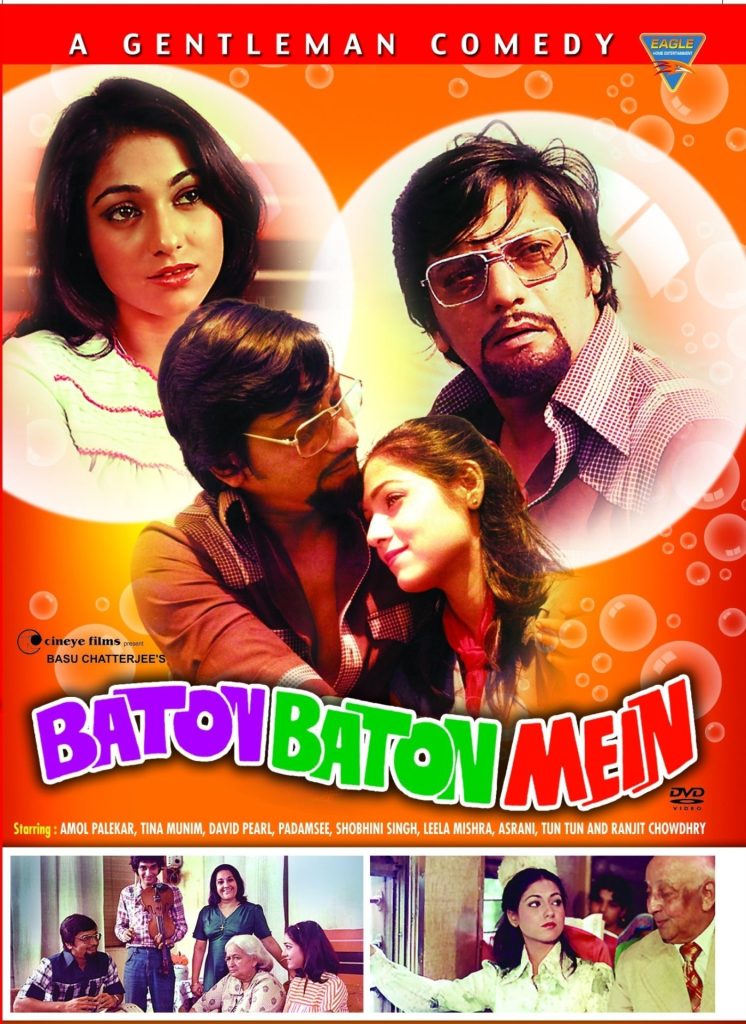
    Basu Chatterjee made films like that. Rajnigandha, Chitchor, Baton Baton Mein — these films were rooted in the textures of ordinary middle-class life. They were not parallel cinema in the way that Mrinal Sen or Ritwik Ghatak were parallel cinema. But they were not mainstream in the way the masala film was mainstream either. They occupied the space between, which in the 1970s and early 1980s was a genuine middle space, with an audience that already existed for it. Chatterjee did not have to manufacture that audience or explain himself to it. The audience was simply there, because cinema was one of the few shared cultural spaces that existed, and people came from all directions, including viewers who might otherwise have separated into distinct tastes. And this was true for cinema across the board.

    This middle cinema was global. The Godfather was not a compromise between art and commerce. It was both, simultaneously. Annie Hall, which won the Academy Award for Best Picture and was also widely seen. In the UK, films like Four Weddings and a Funeral was both moved just as easily between critical acclaim and mass popularity. Good Will Hunting moved between critical conversation and mass viewership without anyone treating that as a paradox. These were not lucky accidents. They were products of a particular moment in which cinema held enough cultural authority that critics and audiences were still, broadly, addressing the same films.

    That moment seems to have passed. What replaced it is structurally different in ways that have made this middle cinema almost impossible to sustain.


    A film that wins at Sundance and a film that opens at number one globally may be reviewed by entirely different sets of writers, discussed in entirely different corners of the internet, and watched by audiences with almost no overlap.


    The first thing that changed was television. The original expansion of television pulled casual viewers away from cinemas. People who had gone to see whatever was showing, out of habit and for want of choice, now had an alternative. What remained in cinema audiences was more self-selected, which pushed studios toward films that justified the trip. Essentially, films that were events and spectacles became reasons to leave the house. This is the beginning of the blockbuster, the lesson studios drew from Jaws and Star Wars, which is that cinema should be an experience unavailable at home.

    That has only intensified as home entertainment evolved and grew. The case for going to a cinema is now almost entirely the case for immersive scale. You’re going for the big screen, the sound, and most importantly, the shared physical event.

    However, what this sensibility didn’t accommodate was the mid-sized film, the film that is absorbing and well-made and emotionally honest, but does not require a particular kind of screen or scale to be itself. That film, in the recent past, has been quietly reclassified. It is now a platform film, a streaming film, and an awards-season film. It is a film you watch, but not quite a film you go to the cinema to see.

    The second thing that changed was fragmentation. When there were three television channels, a major broadcast, like a Sunday evening film or a national event, was genuinely shared across households. In the UK, this was visible even at the level of infrastructure, the ‘kettle surge,’ when electricity demand would spike as millions of viewers put the kettle on during the same commercial break. Shows like Eastenders and Coronation Street regularly drew audiences in the tens of millions, cutting across class and taste. Broadcasters even coordinated with power utilities to anticipate these surges.

    When there were a handful of major studios and a finite number of cinema screens, films competed for the same audiences in a way that required them to speak across differences. The masala film and the Chatterjee film and the parallel film were all fishing in the same pond. Their audiences overlapped because their audiences had to overlap; there were only so many ponds.


    In this sense, the streaming era has not expanded cinema, it has subdivided it. There are now effectively separate cinemas running in parallel — the theatrical blockbuster, the prestige platform drama, the festival film, and the genre film with its devoted communities, and the international film available to anyone with a subscription. Each of these has its own critics, its own awards circuits, and its own conversations. The conversations almost never meet. A film that wins at Sundance and a film that opens at number one globally may be reviewed by entirely different sets of writers, discussed in entirely different corners of the internet, and watched by audiences with almost no overlap. It is precisely this overlap that middle cinema depended on, and what fragmentation has removed.

    This is not censorship and it is not a decline in quality. It is the structural consequence of abundance. When everything is available, curation replaces the shared default. People move toward what already fits their sense of themselves, and the algorithm confirms that movement. The middle film, which depends on crossing those preferences, is less likely to be encountered at all. It does not disappear because no one wants it. It disappears because there is no longer a common space in which it can stand, where different kinds of audiences encounter the same film.

    The third thing that changed was how cultural prestige is produced and distributed. A film that won the approval of major critics in major newspapers was, by that fact, legible to a general audience as something worth seeing. The review was a form of translation, it moved a film from the space of professional evaluation into the space of ordinary decision-making. A Pauline Kael review or a Khalid Mohamed review was read by people who were not themselves critics, and it shaped what they chose to see, which meant that critical approval and popular viewership were directly connected.


    The bridge is smaller partly because fewer people believe it should exist.


    That transmission has broken down. Critical discourse now circulates largely within communities of people already oriented toward cinema as a serious pursuit. The general audience making decisions about what to watch is not reading reviews in the same way, if it is reading reviews at all. It is looking at aggregator scores, at social media responses, at what the people it follows are talking about. These are not the same inputs. A film can score excellently with critics and generate no momentum in the broader culture. A film can generate enormous social media energy and be treated with contempt by critics. The two systems of evaluation have separated, and without the transmission between them, the bridge has no foundations.

    For middle cinema, which depended on that transmission to move between critical approval and popular viewership, this separation is decisive. Its audiences still exist, but they are no longer encountering the same films together.

    What this means practically is that films occupying the middle have no natural amplifier. The blockbuster does not need critics; its marketing budget and its franchise recognition do the work. The art house film does not rely on mass audiences in the same way; its festival circuit and platform deals often sustain it. But the film that is genuinely good and genuinely accessible, the film that wants to reach a broad audience on the strength of its quality, has no structural support. It must either position itself as an event or position itself as prestige, and neither positioning quite fits it.

    It is worth being precise about what is lost. What is lost is not the films themselves. Films of the kind Chatterjee made are still created. The Holdovers, Past Lives, C’mon C’mon, and many more are films of human scale, rooted in feeling rather than franchise, legible to any attentive viewer. The loss is not their existence but their circulation. They do not move through the culture the way Rajnigandha moved through Indian culture in 1974.


    What is also lost is a certain kind of shared point of reference. The film that crossed between critical and popular spaces was a cultural object that different kinds of people could talk about together. It did not require specialist knowledge to engage with, but it rewarded attention. It gave people with different orientations toward cinema a common point of reference. That point of reference is increasingly rare, which means that conversations about cinema are increasingly conversations within already-formed communities rather than across them.

    And what is perhaps most subtly lost is the implicit argument that quality and accessibility are not opposites. The current arrangement makes that opposition feel structural. Films that are taken seriously seem to require effort to find. Films that are easy to find seem not to be taken seriously. This is not a law of nature. It is a consequence of how distribution, criticism, and audience formation happen to be organized right now. But when it becomes the background assumption, it shapes what filmmakers attempt, what studios fund, what audiences expect, and what critics attend to. The bridge is smaller partly because fewer people believe it should exist.

    The question of whether it can be rebuilt is not really a question about cinema. It is a question about whether shared cultural spaces can exist inside systems designed around personalization.

  • Fashion’s Borrowings Across Borders

    For centuries, Kolhapuri chappals have been the footwear of Maharashtrians. In 2019, they were formally given a Geographical Indication stamp, protecting their heritage and regional identity. In 2025, they walked the Prada runway.

    The sandal seemed unremarkable at first glance: slim leather straps, clean lines, a muted palette that matched Prada’s minimalist ethos. Yet, for many Indians, its outline was unmistakable. Prada didn’t acknowledge its lineage, sparking immediate backlash about the absence of credit. Within days, the Italian fashion house issued a rare apology.

    And yet the Prada episode was not an isolated misstep but part of a much older story. Fashion has always transformed everyday cultural objects into global commodities, sometimes with credit, often without. Each time, the same questions surface: what separates appreciation from appropriation? And perhaps more urgently, who profits and who disappears in the process?

    A century before Prada’s sandal, the couturier Paul Poiret introduced a Parisian craze around ‘harem pants’. The billowing trousers, derived loosely from Middle Eastern and South Asian silhouettes, were marketed as revolutionary, liberating women from corsets and skirts. French society debated their propriety; critics called them scandalous. But the scandal made Poiret a celebrity. The garment’s layered histories, its regional makers, were left out of the conversation altogether.

    Half a century later, American counterculture reached for similar vocabularies. Hippies adopted kurtas, Nehru jackets, and, most iconically, paisley — a motif with its own long, winding journey: once a Persian boteh, then woven into Kashmiri shawls, later mass-produced by Scottish mills, before being rebranded as a universal symbol of bohemia in 1960s USA. To wear a paisley shirt in San Francisco was to signal rebellion; to weave one in Kashmir was to survive an economic system that commodified the work as ‘exotic’.

    In 2019, Gucci marketed a $790 turban on Nordstrom’s website. For Sikh communities in the US and abroad, the sight was painful: a sacred article of faith rebranded as novelty accessory. Nordstrom pulled the listing after backlash, but the incident underscored how cultural symbols are emptied of meaning when filtered through retail systems. Similarly, in 2026, Ralph Lauren sent models down the runway wearing silver jhumkas, immediately sparking criticism about ‘whitewashing’ brown cultures.

    The tension, then, isn’t simply about ‘borrowing’ or ‘stealing’. It’s about who gets to be remembered as visionary and who gets left as background. Poiret is remembered as an innovator; the hippies as style revolutionaries. The artisans and cultures whose forms they borrowed were simply treated as raw material. 


    Not Just the West

    It would be easy to frame cultural appropriation as a simple story of the West stealing from the Global South. But the truth is more complicated, and less comfortable. 

    Even within India, fashion replicates the same hierarchies. Mirrorwork from Kutch, bandhakala from Odisha, or phulkari from Punjab reappear in luxury collections on Mumbai and Delhi runways. These traditional crafts are recast as ‘contemporary Indian chic’, while the artisans themselves remain invisible. A couturier’s reinterpretation will be hailed in fashion glossies, while the cluster that keeps the tradition alive is relegated to the backdrop. 

    Bollywood, too, has been a major appropriator. Costumes borrow freely from regional dress — the nauvari sari of Maharashtra, a nine-yard drape designed for ease of movement, or the phanek of Manipur, a handwoven wraparound skirt with deep cultural and ritual significance. Restyled for spectacle and glamour, stripped of context, what was once an everyday identity marker becomes either caricature or fleeting ‘trend’.

    The erasures deepen with caste and community. Dalit and indigenous aesthetics — tattoos, beadwork, woven textiles are sometimes lifted into urban ‘boho’ fashion without acknowledgement. What appears as edgy styling in a Mumbai boutique is the same design that is stigmatized when worn by its origin community.


    It’s tempting to keep asking the familiar question — was this respectful, or was it offensive? But that binary feels increasingly inadequate. The more urgent question is: what structures exist to ensure visibility, credit, and compensation travel alongside the aesthetic?


    Indian fashion too has long absorbed silhouettes from elsewhere. Our own luxury houses borrow freely from Western codes of chic: tuxedo tailoring, Art Deco embellishments, the ‘little black dress’. The difference of course, lies in the power dynamics. Across geographies, the story repeats: sacred or everyday dress becomes exoticized, repackaged, resold — with the origin community forced to fight for recognition as custodians rather than decoration.

    Making the case for cultural sensitivity isn’t just an Indian or South Asian problem of course. In Mexico, the Mixe community has repeatedly pushed back against designers lifting their traditional blouse patterns without consent. In Nigeria, Yoruba adire — the indigo-dyed resist textile now displayed in global museum shows and reimagined on luxury runways — still leaves its makers with fragile livelihoods. And in Morocco, the caftan drifts in and out of Western trend reports as “boho chic,” stripped of its grounding as a living garment tradition. 

    All of which underscores the deeper point: appropriation isn’t solely about geography — East vs. West, North vs. South. It is about power. Who gets to transform a craft into couture, and who is left unnamed in the process? Who crosses borders freely, and who is told their dress is “too ethnic,” “too traditional,” or “too niche”?

    Cultural ‘homage’ isn’t always doomed to misfire. Done with care, collaboration, and credit, it can open doors rather than close them. Dior’s 2023 show at Mumbai’s Gateway of India, for instance, wasn’t perfect — some critics noted the spectacle outweighed the storytelling, but it did something rare: it placed Indian craft on a global luxury stage, with artisans visibly acknowledged in pre-show materials.

    Smaller labels like Raw Mango and Pero set a different precedent: naming weavers, spotlighting craftspeople in campaigns, and making sure the ‘handmade’ isn’t just marketing gloss but a living partnership.

    Elsewhere, designers like Stella Jean have built collections around collaborations with artisans from Haiti to Burkina Faso, ensuring royalties and credit flow back to the communities whose work inspires the clothes. In menswear, labels like Wales Bonner and Bode have shown how heritage can be central, not ornamental — drawing from Caribbean tailoring or American workwear without reducing them to moodboard aesthetics.


    A portrait of Nigerian textile designer Chief Nike Davies-Okundaye | Image Credit: foluartstudio on Instagram


    It’s tempting to keep asking the familiar question — was this respectful, or was it offensive? But that binary feels increasingly inadequate. The more urgent question is: what structures exist to ensure visibility, credit, and compensation travel alongside the aesthetic?

    Homage is not about moodboards or polite footnotes. It’s about contracts that outlive a season, royalties that flow beyond the runway, and credits that show up not just in show notes but on the product tag. Imagine a Kolhapuri sandal carrying the name of its maker as proudly as the house that sells it.

    Fashion has always been about circulation — of cloth, of silhouettes, of symbols. But circulation without recognition is erasure. The industry doesn’t need to stop ‘borrowing’; it needs to start acknowledging that such ‘inspiration’ comes with responsibility.

    Because in the end, the Kolhapuri is not just a sandal. The turban is not just a headpiece. The paisley is not just a motif. They are cultural legacies — reshaped, rebranded, resold. And each time they travel, they tell us less about the garment than about the hands we choose to see, and the hands we don’t.

  • The Politics of a Flatbread

    When is a roti not just a roti?

    Rolled out every day in kitchens across the Indian subcontinent, the roti has traveled around the world. It moved with merchants, sailors, immigrants, and indentured labor — its shape gently shifting with every border it crossed. In the 19th and early 20th centuries, after the abolition of slavery, Britain sent over 1.3 million Indian indentured laborers to far-flung colonies — about 145,000 to Trinidad alone between 1845 and 1917. Alongside clothes and keepsakes, they carried recipes and muscle memory: the instinct to make something familiar in an unfamiliar land.

    In the Caribbean, that meant lentils — giving rise to dhalpuri, roti stuffed with split peas and blistered on a hot stove. In Singapore and Malaysia, Tamil Muslim immigrants stretched wheat dough into flaky roti prata.  In some ways, the roti becomes an edible testament of who migrates, how they adapt, and whose foodways get preserved or erased. Even Mexico’s tortilla, though corn-based, echoes roti’s logic of adaptability: a flatbread shaped by the land it’s made on. What this really shows is that roti’s evolution has always been tied to power — who moves, who adapts, and whose foodways get preserved or erased. What this really shows is the flatbread’s evolution has always been tied to power — who moves, who adapts, and whose foodways get preserved or erased.


    Sliced beef and vegetables on a tortilla | Image Credit: Los Muertos Crew on Pexels


    Today, Indian cuisine means different things in different kitchens in different parts of the world. In London, it may appear on a posh tasting menu; in Trinidad, in a lunchtime wrap sold by a street vendor; in Kuala Lumpur, on someone’s breakfast table. That Indian food has carved inroads into most countries is indisputable.

    Yet, in some Western dining spaces, while Indian flavors are reframed as modern or refined, there is often little acknowledgement of their history. British chef Tom Kerridge’s £28 butter chicken, for instance, became a talking point because of how casually it detached a dish rooted in Delhi dhabas from its cultural context. For many, the issue wasn’t the reinvention — it was the idea of presenting it at a luxury price point without any real nod to where it came from. 

    Of the few Michelin-recognized Indian restaurants in the world, many sit outside India — a reminder that global prestige often arrives only when Indian cuisine is filtered through Western institutions. For instance, the UK has multiple Michelin-starred Indian restaurants. Meanwhile, India itself has none; the Michelin Guide still doesn’t operate in the country.


    Of the few Michelin-recognized Indian restaurants in the world, many sit outside India — a reminder that global prestige often arrives only when Indian cuisine is filtered through Western institutions.


    Not that borrowing is a one-way street. Indian chefs reinterpret French pâtisserie, Japanese matcha, and New York bagels, layering their own stories onto global cuisines. The question isn’t whether adaptation is allowed — it’s whether the origin story stays visible, and whether those who shaped a dish have a seat at the table.

    The flavors may be the same, but the reception rarely is. Upscale restaurants serving ‘elevated Indian street food’ often draw critical attention, while dhabas offering similar dishes are rarely spotlighted. Part of this is access — who can secure prime real estate, hire PR, or design spaces that match fine-dining expectations. Part of it is perception: dishes become more ‘approachable’ when plated minimally, spiced subtly, and narrated through a Western frame.

    The commercial landscape mirrors this. On supermarket shelves, boutique spice brands continue to favor polished packaging over conversations about sourcing and credit. The market for Indian packaged foods and spices has grown rapidly, with diaspora-led brands driving global curiosity. Those who control the narrative often control the profits, too.


    A serving of soft-shell tacos | Image Credit: ROMAN ODINTSOV on Pexels


    But these tensions exist within the diaspora as well. A Trinidadian dhalpuri won’t taste like a Punjabi roti, yet both carry the same emotional resonance for those who grew up eating them. Authenticity becomes a question of belonging rather than purity: who decides what counts, and what gets preserved?

    In the end, roti’s story isn’t about drawing hard lines between ‘authentic’ and ‘changed.’ It’s about recognizing that every flatbread — whether folded around curry in Trinidad, flipped in a Malaysian street stall, or plated in a New York bistro — carries the imprint of the hands that made it and the landscapes it travelled through. The challenge is making sure those hands and landscapes aren’t forgotten when the dish arrives at the table.

  • Gold Standard: Why India’s Obsession With the Metal Still Glitters

    You’ve probably seen it before, perhaps at a family wedding or on one of those inevitable afternoons spent sifting through your mother’s old sarees. Nestled inside a fading velvet box is a necklace: heavy, intricate, and unmistakably gold. It might have belonged to your grandmother, who wore it on her wedding day before passing it on to your mother, who cherishes it for the memories it holds in addition to its karat value. Because in India, gold has never been just adornment — it’s emotional security shaped into metal.

    In a culture where daughters traditionally leave their family home after marriage, jewelry has been one of the few forms of wealth that is supposed to remain entirely theirs. Gold becomes a safeguard you can wear in joy and sell in crisis, a portable inheritance passed through generations.

    That emotional weight has been put to the test in recent years. In 2024, gold prices in India smashed records, crossing ₹1 lakh per 10 grams for the first time — hitting ₹1,01,350 — amid a mix of global uncertainty, inflation, and currency volatility, and they stayed close to that peak into mid-2025. Yet instead of dampening enthusiasm, demand remained unshaken. This steep rise held true even in 2026, up until the government doubled the customs duty on gold, in an attempt to reduce forex — much of India’s gold is imported. 


    Image Credit: Freepik


    In the West, a diamond might say ‘forever’, but in India, gold says ‘for every moment that matters’. It is woven into the rituals that mark life’s milestones: newborns receive tiny bangles, brides in Kerala are layered in kilos of gold, and during Diwali, shopfronts glitter with coins and chains. Across the country, a woman’s jewellery is her streedhan — legally and culturally hers, even after marriage. And for generations, this was the only wealth women legally controlled. Asia now accounts over half of global gold jewelry demand, with India among its biggest drivers.


    Even global luxury brands are reimagining gold through South Asian aesthetics; French maisons have introduced designs echoing filigree, jali work, and vintage coin pendants — proof that the allure travels well.


    This bond with gold isn’t only symbolic. It’s practical. In rural and semi-urban India, gold loans remain one of the fastest, most trusted ways to raise cash — no paperwork, no questions. A single bangle can cover school fees. A pair of earrings can fund surgery. The Reserve Bank of India notes that gold-backed loans form a significant share of short-term liquidity in the country. Even the smallest piece — a nose pin worn by a domestic worker, a threadbare bangle on a labourer’s wrist — is beauty, dignity and safety net.

    India’s gold story is echoed across Asia. Chinese families gift gold during Lunar New Year as a blessing for prosperity, and Vietnamese weddings often include gold jewelry, symbolizng stability and honour. Across the region, gold isn’t just ornament; it is security, inheritance, and a cultural shorthand for familial continuity. In South India’s temples — from Tirupati to Padmanabhaswamy — tons of donated gold lie in vaults, much of it given not by kings, but by everyday devotees offering a sliver of personal wealth to the divine.

    What’s remarkable is how this attachment to gold has adapted without losing relevance. Today’s brides may not want the heavy, rigid sets of their mothers’ era, but they still want gold — just in forms they can wear beyond the wedding day.

    “I wanted something I could wear again, not just lock away,” says Zenia, 28, who paired her grandmother’s ornate gold choker with a hand-embroidered gara saree at her Parsi wedding. Instagram is now filled with side-by-side photos of brides alongside their grandmothers, the captions celebrating ‘tradition meets modernity’. Jewelers report rising demand for lighter pieces — stackable chains, coins, vintage-inspired designs — that carry heritage without feeling locked in the past. Even global luxury brands are reimagining gold through South Asian aesthetics; French maisons have introduced designs echoing filigree, jali work, and vintage coin pendants — proof that the allure travels well.


    Image Credit: Lara Jameson on Pexels

    India’s households hold over 25,000 tonnes of gold — more than what most central banks keep in their vaults — a quiet sign of how deeply people here trust tangible wealth over markets or digital assets. And more than 60% of that demand still comes from weddings.

    That’s the quiet truth beneath the glitter: when families pass down gold, they’re passing down more than wealth. They’re passing down memory, meaning, and a promise that some things — no matter how the world changes — will always hold value.