Blog

  • Candy Crush

    Twenty years ago, chocolate was synonymous with Cadbury’s dairy milk bars. 

    Oh, how the times have changed! 

    Walk into a good bakery or a boutique grocer in any major Indian city today and there’s a new kind of chocolate on the shelf — slender bars wrapped in textured paper, stamped with words like ‘single origin’, ‘70% Kerala’, or ‘tree-to-bar’.   

    India is at an interesting inflection point right now. The country’s chocolate market is growing quickly (valued at US$ 2.9 billion in 2025) and is expanding every year. But as India grows more adventurous, the craft corner of that market is growing even faster. Auroville’s Mason & Co is often credited as an early catalyst, and brands like Naviluna in Mysuru, Pascati in Mumbai (one of the few certified organic brands in India), and Soklet in Coimbatore, Subko Cacao and many more have adopted the same philosophy.

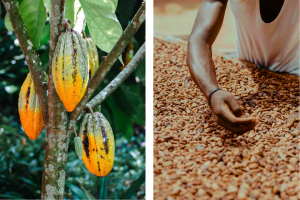
    The rise of craft chocolate in India didn’t happen overnight. It began quietly with small producers who wanted to work with Indian cacao rather than imported beans. In states like Kerala and Tamil Nadu, cacao has been grown for decades, mostly sold to large manufacturers. But in the last few years, independent makers have not only embraced a bean-to-bar approach, they’ve stepped it up to tree-to-bar. “We have complete control over the process, right from the harvest stage, which is why we call it tree-to-bar, not-bean-to-bar”, explains Akhil Grandhi of Bon Fiction chocolate.


    I believe that moment of reckoning is here and we can no longer stereotype ourselves. We have the perfect storm of upwardly-mobile, aspirational, well-traveled consumers (at least in tier one urban Indian cities.


    These chocolates are made in small batches. The process isn’t just technical; it’s personal. Makers are involved in growing, picking, roasting, tasting, and tweaking. It’s slower and far more expensive than mass market chocolate, which is why artisanal bars often cost more. But the promise is different: flavour with context. And the flavors are often Indian. Take for instance, Paul & Mike’s Pistachio and Idukki Cardamom chocolate, or their Thandai chocolate. Or take Soklet’s Desi Rabdi or Bhut Jolokia Chile bars. Or even take Bombay Sweet Shop’s kaju katli and dark chocolate ganache? All whimsical, singular confections that could only be created in India.

    A further sign of the times is that this tiny corner of the chocolate world has also absorbed larger wellness trends. And so you’ll find organic, vegan and sugar free concoctions on the shelf as well. “Post Covid, a tremendous shift started taking place,” says Krishna Prasad S, founder of Soothy’s Chocolate, “People started reading labels and becoming more aware of what they eat.” Soothy’s is about to launch a brand new sugar-free chocolate, sweetened with a protein element sourced from Africa. 

    “Everybody is now moving away from refined sugar,” echoes Rukshin Anklesaria at Ambriona. “Nowadays, my bestseller online is my 90% dark chocolate.” Certainly an unusual choice for a country with an insatiable sweet tooth.


    www.pexels.com


    What makes this movement culturally important is that it repositions chocolate from a foreign luxury to a distinctly local craft. For decades, India’s idea of premium chocolate came from Europe – Swiss or Belgian usually. To many consumers, ‘good chocolate’ meant foreign chocolate. Artisanal makers are inverting that. “This has been our focus, trying to build an association around Indian cacao, in the same way that we associate chocolate with Switzerland or Belgium,” says Chaitanya Muppala of Manam Chocolate, another pioneering craft chocolate house. “We also want to remind people that cacao doesn’t grow in Europe, it grows here, and we can make world class global standard specialty craft chocolate from India.” 

    Krishna Prasad S agrees. “The next big thing will come from here,” he says. Soothy’s itself is poised to launch in the USA next month, ready with its range of milk and dark chocolates.

    “We need to embrace our complexity and not reduce ourselves to the usual outside-in view of elephants and palaces,” says Muppala. “I believe that moment of reckoning is here and we can no longer stereotype ourselves. We have the perfect storm of upwardly-mobile, aspirational, well-traveled consumers (at least in tier one urban Indian cities).”

    Muppala would know. Manam has opened a slew of spaces across India, from The Chocolate Karkhana and Chocolate Beverage Bar in Hyderabad, to a Chocolate Experience space in New Delhi, a pop up at Mumbai’s Galeries Lafayette, and a beverage bar in New Delhi along the way. Similarly, Subko Cacao has opened The Cacao Mill in Mumbai, an experiential chocolate factory. The time for fine flavor cacao is clearly now.


    To many consumers, ‘good chocolate’ meant foreign chocolate. Artisanal makers are inverting that.


    And although all specialty chocolatiers are well-versed in the frou frou talk of ‘sustainable’ and ‘community centric’, not everyone walks the talk. “We were always very clear that we wanted to build something sustainable and meaningful,” says Muppala. “This is not about a photo op, going to a village and taking pictures. For it to be sustainable, everybody in the value chain has to make money. Global profit pooling in cacao is alarmingly skewed. About 80% goes to the manufacturer and retailer, about 8% to the trader and only about 6% to farmer.” 

    At the consumer level, the change is tied to something much broader: India’s growing curiosity about food. The same audience that embraced specialty coffee, sourdough, and regional cheeses is now paying attention to cacao, so much that India even held its own Cacao and Craft Chocolate Festival. No small feat for a country that once used the word ‘chocolate’ interchangeably with ‘Cadbury’. 

    Still, the movement has its challenges. India’s heat makes chocolate notoriously hard to produce, store, and ship. Small makers spend more on climate control, packaging, and quality checks than big brands ever need to. Pricing remains a barrier: an artisanal bar can cost five or six times more than a mass-market one. And the market, however swiftly it is growing, is still nascent. 

     

    unsplash.com


    But despite these hurdles, the arc is clear. India is developing a chocolate culture of its own — one that values skill, local agriculture, and flavour that’s not afraid to be complex. The real story isn’t that India now makes good artisanal chocolate. It’s that consumers can finally taste the difference — and care enough to choose it. As food cultures mature, people start looking beyond sweetness and convenience. They look for origin, ethics, craft, connection. And that’s when an everyday product becomes something more than a treat. It becomes a reflection of how a country eats, pays attention, and grows.
  • Moving Pictures

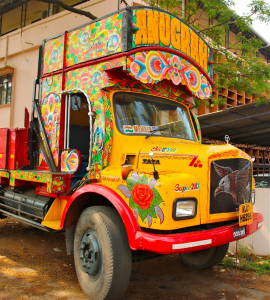
    If you live in India, you’ve definitely spent a moment (or many) stuck behind a truck on the highway and you’ve likely noticed its vividly-colored back — hand-painted with instructions like “Horn OK Please” or “Use Dipper at Night”, often framed by floral vines, rising suns, peacocks, tigers, gods, or movie stars. Some trucks are adorned with beaded tassels dangling from side mirrors, fringed mud flaps, reflective stickers, even hand-scrawled poetry. It’s loud, layered, and alive.

    This is truck art, one of India’s most under-celebrated forms of public folk expression. Truck art is not just paint on metal; it is identity, memory, pride, and protection — all in motion.


    in.pinterest.com


    The tradition began to bloom in the mid-20th century. These trucks first drove onto Indian roads during World War II, pressed into service as military vehicles. Naturally, in the way of all military vehicles, they were drab camouflage-colored creations. But after the Second World War, these trucks were released to the public and refashioned for civilian purposes. Canny local artists immediately spotted an opportunity, transforming the trucks’ formidable look into the vibrant creations that we see today.

    Today, many drivers and owners spend months on the road, far from home. Adorning their vehicles became a way to carry a piece of that home with them — a protective charm, a source of joy, even a declaration of identity. A driver might honour a deity for safe passage, or paint his children’s names on the bumper. Political slogans, shayari, religious symbols — all share space. The truck becomes a canvas, a shrine, a mobile memory-keeper.


    in.pinterest.com


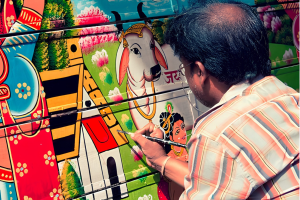
    These artworks are typically crafted by self-taught artists working out of roadside studios near truck stands or dhabas. In places like Uttar Pradesh, Rajasthan, and Maharashtra, small communities of painters keep the tradition alive using enamel paints, stencils, and sheer muscle memory. The work is fast but detailed and often done overnight while the truck is parked, ready to hit the road again by morning.

    Across the country, the art shifts with region and road. In Punjab and Rajasthan, you’ll see camels and similar desert motifs. In Bengal, lotuses and expressive eyes. In the South, mythological figures share space with cinema stars. In Maharashtra, floral borders and geometric symmetry abound. And nearly everywhere, you’ll see the iconic warning: “Buri Nazar Wale Tera Muh Kala” (“May the evil-eyed one be shamed.”) 

    It isn’t just visual. These trucks are multisensory: the jingle of mirror tassels, the scent of agarbatti from a dashboard altar, the glow of string lights flickering during nighttime drives. 


    In places like Uttar Pradesh, Rajasthan, and Maharashtra, small communities of painters keep the tradition alive using enamel paints, stencils, and sheer muscle memory. The work is fast but detailed and often done overnight while the truck is parked, ready to hit the road again by morning.


    But this folk art is fading. As fleets become corporatized and brand-conscious, hand-painted trucks are giving way to mass-produced decals that are easy to stick on. Uniformity is prized. Artistry is optional. And the roadside painters, once vital artisans, now struggle to find work.

    Still, echoes remain. A lone peacock feather curling under a bumper. A faded ‘India is Great’ half-covered by a sponsor’s logo. These fragments remind us that art doesn’t need white walls or spotlights. Sometimes, it speeds past you on the highway — gritty, bright, and definitely alive.

    To preserve truck art is to honour the creativity of the everyday — art born not in galleries, but in grease-streaked garages and under open skies. Art that reflects how people live, move, and believe. 

  • Content Creators Are Taking Over The Internet

    “What do you want to be when you grow up?”

    “A content creator.”

    As early as 2019, a survey by LEGO found that 30% of children between the ages of 8 and 12 want to be content creators or YouTubers when they grow up. Despite the social media ban for children under 16, one in every three Australian children wants to be a social media influencer. In India, 83% of Gen Z (especially from Tier II and III cities) identify as content creators.

    Indian taxation systems now recognize social media influencers as a tax-paying professional category, and in March 2024, PM Modi distributed the first-ever National Creators Awards to Ranveer Allahbadia and Curly Tales founder Kamiya Jani. The awards were meant to honor creators aligned with the government’s narrative of nation-building. For a social media-savvy government, this makes inordinate sense; one study found that 37% of viewers trust influencers more than actual brands, making influencer endorsements particularly powerful. In April 2026, the Indian government outlined a plan for Content Creator Labs to be opened in schools and colleges across the country. This is all part of a push to position India as a global hub of content creation as part of the ‘Create in India, Create for the World’ initiative

     All this points to the idea that content creation is gaining acceptance as a ‘real job’ both in India and globally. The creator economy’s direct revenues are projected to reach $100–125 billion by the end of the decade, according to a report by India’s Ministry of Information and Broadcasting. But how did we get here? And what does it take for a ‘passion’ (for the lack of a better word) to turn into a profession? 


    Indian taxation systems now recognize social media influencers as a tax-paying professional category, and in April 2026, the Indian government outlined a plan for Content Creator Labs to be opened in schools and colleges across the country.


    For one, the profession has a name: ‘content creation’. The creator economy focuses primarily on those who create for the internet, and mainly in video form; its foundations were unintentionally laid when YouTube entered the picture, and introduced the concept of monetizing content. 

    YouTube saw that users were using their free time to come up with creative sketches, review videos, or music covers. Within two years of its 2007 launch, YouTube decided to split ad revenue with creators, in the hopes that the monetary benefit would incentivize people to post more, and then inspire others to do the same. 

    It helped that YouTube’s creator base had many early adopters. Anthony Padilla and Ian Hecox of Smosh first ‘broke the internet’ with their cover of the Pokemon theme. iJustine came in with tech reviews in an innovative format, and NigaHiga brought absurdist comedy and an Asian lens to American humor. 

    They took to YouTube because it gave them a video-first base to express themselves. Vimeo had come in before YouTube in 2004, but it was a model with limited reach, where you often had to pay to access content. YouTube capitalized on being a free-to-access resource, significantly lowering the barrier for entry. 

    YouTube was the earliest democratic platform for people who were aspiring entertainers. These creators likely couldn’t find a footing in the traditional media landscape of film and TV. When platforms started generating monthly earnings for creators, it brought a sense of near-instant financial gratification – up until now, the idea was that if you were an artist, you had to wait years to get your dues. Within traditional media, that is still true today. Once branded collaborations came in, they added financial viability for creators, and a new way of creating brand loyalty for companies. 

    It helps, then, that platforms choose to celebrate their creators, like YouTube did for almost a decade with YouTube Rewind. There’s never quite been anything like it. Until they were included (it began as US / UK-dominant), Indian creators took matters into their own hands and made a Desi Rewind in 2017. That move went a long way in showing young Indian audiences and their parents that content creation has real value as a paying profession, and is not just a tool for popularity. 

    Many forget that Justin Bieber was just a kid on the internet making covers before he created original music in 2009, and was discovered and turned into a global pop icon. Platforms like YouTube still serve as a showreel, in the hopes that creators will land a film or be considered for awards. For stand-up comedians, putting their bits and clips online allows them to draw more audiences in to watch live shows. Shows like Little Things by Dice Media or Kota Factory by TVF were acquired by Netflix India just after their first few seasons on the ‘Tube. 


    unsplash.com


    American YouTubers like Mr Beast earn as much as USD 54 million a year from the platform, and he only started creating videos on YouTube in 2012. Compare this to Rhett and Link who run Good Mythical Morning: they started in 2006, and today, GMM earns 30 million USD a year through its channel network. Clearly there are enough pieces of the pie to go around. 

    It can still be hard to imagine that content creation is a legitimate, standalone career, rather than a stepping stone to something bigger. And that’s where other platforms like Instagram and TikTok take the reins of reinstating legitimacy. 

    Earnings on Instagram and TikTok are largely limited to gifts and to branded deals. Payouts based on views are still small, if not non-existent, meaning that the value creators can generate for themselves is tied to what they can create for others. On the other hand, if used properly, this can be extraordinarily lucrative; Instagram creators such as Anaheez Patel have fattened their business from ₹40,000 per month to ₹40 lakh in less than two years.  

    Others have leveraged their enormous followings to switch career gears. Preeti Sarkar, a YouTuber, has now launched a fashion brand called Preetizen. Underneat, a shapewear brand, was launched by Kusha Kapila. Kabita’s Kitchen, a popular Indian cooking channel, now has a range of masalas – Kabita’s Kitchen Masala Mix.


    At the end of the day, if the broadest definition of a career is simply the time you spend working, content creation has been one for over two decades — ever since the first person chose to post a video to the world instead of keeping it in a home archive. India is now racing to catch up to that reality on an institutional scale: tax categories, government awards, Creator Labs in schools, and a ministry-backed revenue projection all say the same thing — this is no longer a hobby waiting for legitimacy. This is a proper job.


    unsplash.com


  • Indra Nooyi and the American Dream

    Priya Nair, Hindustan Unilever

    Vibha Padalkar, HDFC Life

    Vishakha Mulye, Aditya Birla Capital

    Prabha Narasimhan, Colgate-Palmolive (India)

    Jasleen Kohli, Digit Insurance

    Kiran Mazumdar Shaw, Biocon Ltd

    Falguni Nayar, Nykaa

    These are just a few names of female corporate leaders that I fossicked up after watching Indra Nooyi’s eyebrow-raising conversation with former US Secretary of State Condoleezza Rice at an interview conducted by Stanford’s Hoover Institute. 

    “I could never have become CEO in any other country in the world, including in India,” said Nooyi, former CEO of PepsiCo, drawing a collective gasp across the Indian Internet. “It’s because the system [in the USA] is meritocratic. Mentors don’t care whether you’re male, female, ethnicity, gender, they don’t care, they just want the best brains to rise to the top.”


    Indra Nooyi / in.pinterest.com


    The chat and the kerfuffle it brought in its wake, plunged me down a rabbithole of remarks on gender disparity by Nooyi. 

    In a Freakonomics podcast with Stephen Dubner in 2018: “I’d say that when you become a CEO and you’re a woman you are looked at differently. Whatever you say people do — they say things like, ‘Well a guy CEO wouldn’t have said that. Or a guy would have said it differently.’ You are held to a different standard, there’s no question about it.” 

    In an interview with the New York Times in 2019: “The pipeline is leaking at the early stages. Because we get enough women coming into the work force in various stages. But by the time they get to Level 2 and Level 3, they just drop out of the work force for several reasons…We can ill afford to be a country where women drop out of the work force.” 

    She isn’t wrong. Women lead 55 of America’s 500 largest companies, according to the 2025 Fortune 500. This is a number that is higher than ever before, yet a mere 11% of the total (compared to 5% in India). So perhaps we must ask why progress still drags, even in ‘meritocratic’ mature economies such as that of North America?


    But to diminish a country as baldly as she did, one that provided the bedrock of the very education that catapulted her to Yale, one that afforded her the privilege of progressive parents, is to come across as tone deaf.


    It is equally sobering to hear the words ‘USA is the greatest country in the world’ used at a time when the news cycle is riddled with polarization. Certainly, the USA opened its arms to her in 1978. Certainly, she got to test her mettle against a legion of privileged Americans (and triumphed). Certainly, the country built her into the titan that she is today. And yet we must ask — does the Great American Dream gild every immigrant in the same way? To many others, the Dream, perhaps, is not one door but many — some wide open, some revolving, some bolted tightly shut. 

    Onwards to her other jarring statement. “India is a chaotic country. The beauty of India lies in its chaos. Absolute chaos. And if you are familiar with India, and you’ve travelled in India before and you like that chaos all around you, you go back. It’s like a drug. You get addicted to it,” she said.

    This she pitted against an orderly ‘homogenous’ China. Although her words were meant to be complimentary, to pick the one stereotype used to tar India for decades is…certainly a choice. India is by no means a perfect country. It is fraught with inequality — caste, class, gender and religious schisms yawn as deep as chasms. But to diminish a country as baldly as she did, one that provided the bedrock of the very education that catapulted her to Yale, one that afforded her the privilege of progressive parents, is to come across as tone deaf.

    For many Indians and Indian Americans, Nooyi is a beacon, bolstering their idea of the Great American Dream, and equally an exemplar of the model minority. In some ways, she is perfectly positioned, a first-generation immigrant ricocheting between two democratic colossi. For someone in her position, a little nuance, a little sensitivity might have come in handy. For Nooyi, all roads lead to New York. But there are different New Yorks now, and the old ones have lost some of their lustre.

  • India’s Silver Economy is a Gold Mine

    What do you think about, when you think about seniors? Fingers gnarled with arthritis, creaky knees, rheumy-eyed, bent over in half, marooned in bed with a ceaseless hack of a cough, enslaved by the slow creep of age — if this is the picture your mind draws immediately, you are probably in the majority. But you’d likely be wrong.

    The entire landscape of senior living is undergoing a tectonic shift. 

    Ageing no longer marks the end of living. Most retired people are financially independent, computer savvy, and physically fit. Older adults, unencumbered by family responsibilities and the drudge of office jobs, are no longer leading anodyne existences. Instead, they are discovering new passions such as music, sport, travel, photography. They are skewering stereotypes by picking up barbells and whipping battle ropes at the gym. They’re changing the face of technology. No wonder then that many are making the choice to live on their own, or in assisted living facilities, away from cosseting family members. “I don’t want to be a burden to my child,” says Leena Vora, whose son lives in Singapore. “Besides, I have a very full life in Mumbai. I play mahjong at the club, meet my friends every day, I am perfectly content where I am.”


    The Diaspora Dilemma

    Much of this shift is being driven by changing family structures. Today’s families are more geographically dispersed than ever before. Children scatter across cities and countries for education and careers, families are choosing nuclear homes rather than traditional joint family structures, birth rates are tumbling as education levels rise, and growing prosperity means that people are living longer lives. (India’s lifespan has bulged from 41 years in 1950 to a staggering 72 years in 2023.) 


    unsplash.com


    It follows therefore that the elderly population is on the rise, bringing India’s caregiving crisis into sharp focus. 

    “I grew up very close to my grandparents, so I’ve witnessed the ageing journey firsthand — not just the practical challenges, but the emotional ones as well,” says Deveshi Trehan, Co-Founder of Suvarna Living, an independent senior living advisory. “When I moved abroad to study, it was the first time I’d spent months away from them. Like many NRIs, I experienced the guilt of loving your family from a distance. But at the same time, living overseas also changed my perception of senior living. I saw thriving communities where older adults lived independently, built meaningful friendships, and embraced retirement as a new chapter.


    Children scatter across cities and countries for education and careers, families are choosing nuclear homes rather than traditional joint family structures, birth rates are tumbling as education levels rise, and growing prosperity means that people are living longer lives.


    For a rapidly graying population, the need of the hour is for a centrally-positioned government policy with arms extending both to institutional medical care as well as informal home-centric solutions. After all, ageing is no longer just a healthcare issue; it bleeds inexorably into housing, transport, local governance, technology, employment, safety, financial services as well as social life. At the moment, the National Programme for Health Care of the Elderly (NPHCE) spotlights only hospital-based care. The Elderline, a phone helpline fashioned by the Department of Social Justice & Empowerment offers emotional support as well as field interventions, but only from 8am to 8pm.

    And so state governments are stepping in. Kerala, for example, is India’s fastest-silvering state, and migration has left growing numbers of elderly people living alone there. Its government is trying to narrow the care gap, by ushering in a dedicated department for senior welfare to address the challenges of an ageing population.

    The new department’s strategy is centered on ‘ageing in place’ — helping older people remain in their homes and communities rather than shuffling them into institutions. The plans include expanding community and home-based care, and connecting older people with meaningful social activities. The state also plans to launch a certified caregiver training program, build a professional care workforce, and create elderly parks, day-care centers and fitness facilities. 

    Elsewhere, municipalities are designing their own measures for support — for instance, the Mumbai Police’s initiative on senior citizen safety involves paying courtesy visits to elders, especially those living on their own. 


    unsplash.com


    Private Enterprise: Senior Living Comes of Age

    Where government action lags, private companies and concerned individuals swoop in. 

    Seniors savvy with their smartphones now have the option of installing apps such as Khyaal, that offer everything from investment solutions to access to fitness classes and karaoke sessions. Seventeen-year-old Hemesh Chadalavada built a gadget, the Alpha Monitor, that detects when people with Alzheimer’s fall or stray (up to 5 kms) and immediately alerts the carers. Technology is immensely helpful, especially for seniors navigating their retirement years at home on their own.

    For those who prefer community living, there are now choices a-plenty. Such centers are pooled in big cities like Bengaluru, Pune, Chennai, Kerala, and Delhi NCR although communities are emerging even in locations such as Dehradun and Goa. 

    “The first organized senior living communities in India were launched around 2004, making it a relatively young sector compared to more mature markets,” explains Trehan, “Adoption was slow, and we still continue to spread awareness, largely because many families associate senior living with old age homes. That perception is still changing as people experience these communities firsthand and realize they combine independent living with hospitality, wellness, and access to healthcare. Today, the sector is growing rapidly, but it remains significantly underserved. Our market penetration sits at only 1.3% – suggesting significant room for growth.” (The senior living sector in the country has attracted around Rs 3,500 crore in investments in the last couple of years.)

    As Trehan says, many of these new communities are no longer centered solely around healthcare. They combine hospitality, wellness, social engagement, and technology with senior-friendly design. For instance, Antara’s senior living residences offer emergency health responders and senior-specific interior design together with veterinary services (for residents with pets), fitness centers and even a small private movie theater. 

    Some elders may even choose community-specific options. For instance, in Mumbai, the Shapoorji Pallonji Home for Senior Citizens houses Parsi senior citizens from the ages of 60-75 — “Not only was this the most affordable option, I also chose it for the homely Parsi cooking they serve to residents,” says a greedy resident, Ruby S.


    Many of these communities are no longer centered solely around healthcare. New-age developments combine hospitality, wellness, social engagement, and technology with senior-friendly design.


    Another recent indicator of growth? The buzz in investment circles is all about Gurugram-based Age Care Labs, which has raised USD $9 million to help strengthen its elder care platform through senior care services, technology, and healthcare assistance. On the horizon is Shremoha, a premium senior independent living platform combining professionally-managed residences with hospitality, preventive healthcare, wellness programs, emergency response, and coordinated care. 

    This changing panorama is laudable. “To me though, the most important shift is that the conversation is moving beyond simply caring for seniors to empowering them to remain independent for as long as possible,” says Trehan. “That’s what makes this sector so meaningful – it transforms ageing from something to fear into something to embrace.”

  • Reading the World

    Alright, be honest with us. If you had to pick one prize that championed Indian literary translations, which would it be?

    Would it be the (now-defunct) JCB Prize for Literature? Would it be the Sahitya Akademi Translation Prize? Or could it perhaps be that behemoth, the International Booker Prize?

    Since 2006, the International Booker Prize has annually awarded the best fiction work of the year from around the world, translated into English. Last year, in 2025, the award went to Heart Lamp by Banu Mushtaq, translated from Kannada by Deepa Bhasthi. In 2022, Geetanjali Shree’s Hindi novel translated into English as Tomb of Sand by Daisy Rockwell, won the International Booker Prize. 

    There’s no denying its heft. An international prize of the stature of the Booker naturally brings fresh voices to new readers unwilling to be hedged in by the constraints of language and country. And there has been tangible growth too. Since 2016, for instance, sales of translated fiction in the UK have doubled. Thanks in part to the International Booker, translation is no longer viewed as a secondary literary exercise but as a crucial bridge connecting cultures and communities across languages. Books translated from Spanish, Portuguese, Farsi, Taiwanese Mandarin, books that might once have barely grazed the fringes of Anglophile publishing, are now getting catapulted to the top of the literary pile. And this is as it should be. The 2026 winner, Taiwan Travelogue, is a romping, ‘captivating, slyly sophisticated’ novel, according to the judges, one that “succeeds as both a romance and an incisive postcolonial novel.” Imagine missing out on such splendor!


    Penguin / Banu Mushtaq


    Quite naturally, you might view the translation scene in rather roseate hues. And there is no denying that Indian publishers have done their bit to publish translations for decades.

    “Translations have always been happening in India, both between regional languages and into and from English,” explains Deepa Bhasthi, the International Booker award-winning translator of Banu Mushtaq’s Heart Lamp. “A big prize brings welcome attention to the field, for sure, and to the crucial work that translators do. There seems to be an upswing in interest in publishing translations, which is a good sign. And there is a heightened interest in learning how to translate as well, as evidenced by the popularity of translation workshops and retreats like Siyahi’s Chapter Five – Translation retreat.”

    Rahul Soni, writer, translator, and editor-at-large with HarperCollins Publishers India largely agrees.”Translations (from other Indian languages into English) have consistently been published here – both homegrown publishers and the Indian offices of MNC publishers have been doing this work for decades,”  he says. “t’s just that with a Booker Prize the media too has begun to notice. But the fact remains that the limelight only really falls upon the book that has won; other translated works, including the winning author and translator’s other books, don’t really see any increased interest or attention.” His translation of Shrikant Verma’s Magadh was recently reviewed in the New Yorker, but has it resulted in any tangible change for the work? Unclear.


    Such translations are crucial, as they resist majoritarian narratives about language and community, by writing from the margins, thus becoming a gentle balancing of the scales.


    Soni points to literary agents who push translated work to a Western Anglophile audience, as well as to organizations that support translations – the Ashoka Center, PEN, SALT (South Asian Literature in Translation), Words Without Borders, the NIF Translation Fellowships, amongst multiple others. This work is crucial, as translations resist majoritarian narratives about language and community by writing from the margins. They become a gentle balancing of the scales.

    However, complications lurk a-plenty.

    For one, this is a country that speaks hundreds of tongues, but only 22 are deemed official languages by the Government. Institutional recognition naturally follows the official pattern – the Sahitya Akademi, India’s foremost literary body, only awards translation prizes for those 22 officially- recognized Indian languages. The result is what’s often called a translation pyramid: languages like Bengali, Hindi, Urdu, and Tamil get highlighted far more often than others, largely because they have more readers and translators, making them commercially safer bets.

    Bhasthi draws a line under the second issue. “I think translated works from Western countries travel more than our own Indian writing does because of the way marketing and publishing budgets work there,” says Bhasthi. “Many readers are also happy to read translations from Western languages but are not curious enough about Indian languages. That needs to change. We in India, in South Asia should be reading as many stories from our region as we read books that come to us from the West.”


    www.pexels.com


    It follows therefore that the International Booker’s disproportionate cultural weight in India deserves scrutiny. After all, the prize is restricted to books published in the UK and Ireland, which automatically excludes the vast majority of literature published across the rest of the world. Can such a prize meaningfully judge the best English-language translation of that year? On the other hand, it’s impossible to underestimate the International Booker’s impact; after all, four of its writers that it spotlit have gone on to receive the Nobel Prize for Literature: Kang, Tokarczuk, Annie Ernaux and Jon Fosse.

    So what would a fuller reckoning look like? Perhaps not another prize, but a shift in what gets counted as worth translating in the first place — more funding and institutional attention for a wider variety of languages, and a widening, hopefully, of our literary tastes as well. Until then, the Booker and its counterparts will keep doing what prizes do best: casting a bright, temporary light on a handful of books, while the deeper work of building infrastructure for the rest continues, as it always has, mostly out of view.

  • When Tesla Meets Tata

    In 2025, Tesla finally made its way to India — a move that might have made headlines five years ago. But the EV giant’s entry today feels less like a disruption and more like a negotiation. That’s because India’s electric vehicle market has already begun shaping itself — Tata Motors, once the uncontested leader in India’s EV race, is now losing ground to smaller, savvier competitors offering cars that are not just cheaper, but smarter for Indian roads, Indian families, and Indian needs. What’s unfolding isn’t just a commercial shift. It’s a cultural one.

    Car design often carries the illusion of universality — that a good car is a good car anywhere. And that’s certainly true, but with several caveats. From ground clearance to boot space, climate control to infotainment systems, what makes a car desirable in one country can make it unusable in another. 


    in.pinterest.com


    Consider the Ferrari on a Mumbai road. Its low ground clearance may glide across California highways, but it stands no chance against Mumbai’s monsoons, twisting lanes and cratered roads. Rolls-Royce, once the epitome of British motoring, designed cars for narrow lanes and polished roads. In contrast, Indian-designed cars have evolved with wider tires, sturdier builds, and suspensions that can absorb the chaos of Indian streets. 

    Even in the EV segment, the same technology lands with very different expectations. In the US, EVs often represent luxury, climate consciousness, or cutting-edge innovation. In India, the story is different. Here, EVs are a necessity — affordable alternatives to fast-depleting traditional fuel sources, nimble enough for cramped streets, and reliable during power outages. It’s partly a status symbol, partly survival and convenience.

    Tesla’s challenge in India isn’t just its steep prices. It is relevance. Much of India isn’t waiting for a sleek, autonomous sedan that parks itself. It wants affordable two-wheelers that can get a delivery driver through peak traffic. It wants compact EVs with fast charging and low maintenance — not high-performance vehicles that speak the language of excess.


    in.pinterest.com


    This is why Tata’s early dominance made sense. The Nexon EV and Tiago EV offered what the average middle-class Indian buyer needed: space, affordability, and just enough prestige. But now, newer companies like MG and BYD are gaining traction with designs that are even more tuned to Indian priorities — fast-charging capabilities, infotainment that supports regional languages, and intuitive tech that works even when internet signals are patchy.

    The way we move says a lot about the way we live. In the US, a car is an extension of personal identity — performance, design, even political alignment (a Prius vs. a pickup). In India, a car is often a family resource — expected to seat five comfortably, store luggage for road trips, handle rural and urban roads alike, and still be fuel-efficient.

    Even basic design elements reflect this. American cars rarely prioritize back seat comfort because they’re built for individual or couple travel. Indian cars often offer more legroom at the back because elders, children, and even extended family are part of everyday mobility. Features like air conditioning vents in the back, larger glove compartments, or higher seating all stem from this very different sense of who a car is for. 

    The same holds true for infotainment systems. In the US, it’s about seamless integration with Apple CarPlay and Spotify. In India, it’s about dual SIM support, offline navigation, and the ability to play WhatsApp voice notes off a pen drive.


    From ground clearance to boot space, climate control to infotainment systems, what makes a car desirable in one country can make it unusable in another.


    If there’s one lesson from the surge of EVs, it’s this: adoption is not just about access — it’s about adaptation. Technology may be global, but its success often hinges on how local it’s willing to become.

    The real competition in India’s EV market isn’t just about who offers better range or faster charging. It’s about who listens better — to the needs of delivery drivers, joint families, rural schoolteachers, and young professionals trying to survive on increasingly tight budgets.

    Tesla may be a tech icon, but in India, it now competes with something far more powerful: cultural intelligence. And for that, engineering alone won’t be enough.

  • Around the World on a Rickshaw

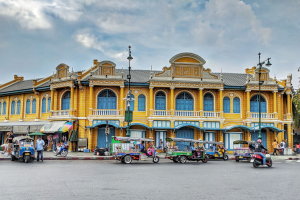
    If you stand in a narrow lane of Old Delhi at dusk, you’ll see it: a green-and-yellow auto-rickshaw pulsing through the evening haze, its driver slipping through traffic with a kind of practised instinct only city living can teach. In suburban Mumbai, the mood shifts but the signature remains — rickshaws clustered outside railway stations, shuttling office-goers home after long commutes, pivoting neatly around potholes and parked scooters. And in Bangkok, the tuk-tuk — neon trim, open sides — cuts jerkily past food stalls and high-rises.

    Across these cities, the rickshaw isn’t just transport; it’s part of the texture of daily life. It’s the background noise, the shorthand for ‘local’, the thing you remember long after the trip. But these freewheeling three-wheelers didn’t originate here, and their journey across Asia isn’t a straight line. To understand why they remain indispensable in some places and have nearly disappeared in others, you have to trace not just their origin but the cultures and economies that shaped them.


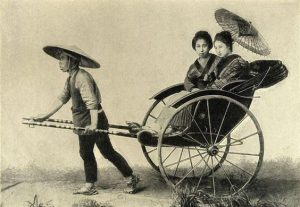
    Japanese rickshaw, jinrikisha / in.pinterest.com


    The rickshaw’s story begins in 19th-century Japan, where the first hand pulled rickshaws — jinrikisha, or ‘human-powered vehicles’ appeared in the late 1860s. They arrived at a moment when cities were expanding, and for a time, the pulled rickshaw was seen as modern, efficient, and almost futuristic. But as Japan industrialized and motor transport took over, the rickshaw’s role faded, eventually becoming a tourist relic rather than a central part of city life. 

    Its afterlife, however, didn’t unfold in Japan. Instead, through trade, labour movement, and colonial influence, the rickshaw spread across Asia and took on new forms. In India, it became the cycle rickshaw and the auto. In Thailand, the tuk-tuk. In the Philippines, a motorcycle-with-sidecar tricycle was influenced in part by Japanese military bikes during the occupation. By the 1970s, three-wheelers had even reached Nigeria, Bangladesh, Sudan, Bahrain, Hong Kong and Yemen.


    In places where cities grew unevenly — dense cores, narrow lanes, informal housing, unpredictable infrastructure — the rickshaw adapted with remarkable agility.


    But survival wasn’t guaranteed everywhere. In countries with strong public transport and formalized urban planning, the rickshaw lost ground. In places where cities grew unevenly — dense cores, narrow lanes, informal housing, unpredictable infrastructure — the rickshaw adapted with remarkable agility. It became affordable when other options were not. It went where buses couldn’t. It filled gaps the state didn’t. Rickshaws in cities like Delhi, Mumbai, Bangkok, Manila became part of the choreography of everyday life and an affordable lifeline for middle class citizens.

    India’s contemporary version, the auto-rickshaw, has its own industrial history. The country’s largest manufacturer is Bajaj Auto, but another key player is Piaggio — an Italian company whose iconic scooters were adapted into three-wheelers decades ago, which today produce CNG, diesel, and electric variants for the Indian market. Hero Motocorp, TVS Motor and Atul Auto were amongst the other companies manufacturing autos for Indian roads. 


    Colorful tuk-tuks in front of a historic building on a bustling Bangkok street. / www.pexels.com


    And then there’s the cultural memory attached to the rickshaw. In India, you see its distinct silhouette appear everywhere — Bollywood chase scenes, political protests, love stories, budget commutes, and in the case of Kolkata’s hand-pulled rickshaws, debates about labour, dignity, and tradition. In Bangkok, the tuk-tuk is practically a national symbol. In Manila, the tricycle is woven into the rhythm of local neighbourhoods. What these versions share is form and function. They belong to cities where informality is a parallel system — messy, flexible, adaptive, unstoppable.

    When you step into a rickshaw, you enter a microcosm of the city. The cramped seat, the negotiation over the fare, the improvisational route — all of it says something about where you are. These vehicles reveal more about urban life than they’re often credited for: how people work, how they move, how they improvise, how public life is negotiated, and how cities manage chaos without ever fully solving it.

    The global shift toward electric mobility is now reshaping this landscape again. In India, the electric rickshaw market is projected to double between 2025 and 2030. Apps such as Ola and Uber now include rickshaws as well as taxis. A machine once dismissed as outdated is now being re-engineered for the future.

    If you look closely, the rickshaw’s survival has never been about nostalgia. It’s about suitability. Cultures that kept the rickshaw alive didn’t preserve it for tradition, they preserved it because it worked. Because it fits their streets, their economies, their pace, their people. A city’s transport isn’t just about engineering; it’s about culture. And in that sense, the rickshaw might be the clearest mirror a city can hold to itself.

  • Language and Our Landscapes

    Here’s a thought experiment for you, dear reader. What springs to mind when you think of a jackal? A vulture? A snake? 

    If your first thoughts are of rapacious, predatory creatures, you aren’t alone. English is brimming with tired metaphors and similes that tar entire species and ecosystems. Here is a brief list, restricted only to the English language: 

    ‘Stupid / lazy donkey’, ‘as dumb as a dodo’, ‘barren desert’, ‘drain the swamp’, ‘greedy pig’, ‘die like a dog’, ‘circling vultures / preying like a vulture’, ‘sly fox’, ‘bird brained’, ‘snake in the grass’, ‘a rat’, and so on. 

    Are any of these accurate? They couldn’t be farther from the truth.


    unsplash.com


    Were the dodos actually dumb? Not at all, says this report from the American Museum of Natural History; in fact, they were fairly intelligent. A real snake in the grass is actually a shy creature mostly looking to avoid human contact. Vultures and jackals are crucial clean-up crews of the landscape. Donkeys, beaten until they collapse under unimaginably heavy loads, are anything but lazy. Dying a dog’s death is particularly brutal for a species that humans domesticated for their own purposes. Are deserts actually deadlands? Of course not, they are biodiverse, flourishing and crucial to the larger ecosystem. And we certainly shouldn’t drain any swamp; wetlands are full of life! 

    Why so serious, you might ask? Why must we rescript such terminology? 


    Such casual misrepresentations help open the gates for governments and corporations to concretify these delicate ecoscapes. Because, for species already teetering on the brink of extinction, these tropes may be the elbow that nudges them over the edge.


    The answer is not just because it is inaccurate, but because language drives thought, and thought drives intent, and intent drives action. Because such casual misrepresentations help open the gates for governments and corporations to concretify these delicate ecoscapes. Because, for species already teetering on the brink of extinction, these tropes may be the elbow that nudges them over the edge. 

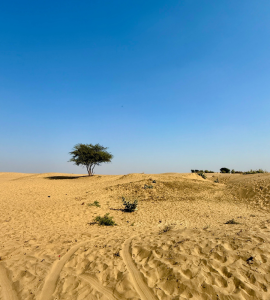
    A concrete example? The government calls most of the deep Thar a ‘wasteland,’ and believes therefore that its resources can be better deployed in other ways. In the ‘dead’ deserts of Rajasthan, vultures are being sliced to death by ‘eco-friendly’ windmills. Meanwhile, the beleaguered ‘bird-brained’ Great Indian Bustard is almost extinct because its homelands in Gujarat have been scooped away by power companies – one estimate suggests 30,000 birds die annually, due to collisions with power lines.  And the bustard itself? It’s just a heavy, slow-witted creature. 


    unsplash.com


    These are actions that would change the fates of entire ecosystems. Considering the climate crisis and its entirely unpredictable weather systems, their existence remains paramount. Yet we continue on the path to shoot ourselves in the foot. It is precisely such an impoverishment of thought has led to the Age of the Anthropocene, that in the words of the author Robert Macfarlane, a time in which “human activity is considered such a powerful influence on the environment, climate and ecology of the planet that it will leave a long-term signature in the strata record.”  

    Language deficit leads to attention deficit. In the words of Wendell Berry, the American farmer and author, “people exploit what they have merely concluded to be of value, but they defend what they love, and to defend what we love we need a particularizing language, for we love what we particularly know.” How we describe the natural world around us makes an enormous difference to our capacity for understanding and imagining non-human nature is depleted. Our relationships with the natural world weaken as a result.

    What we stand on should be what we stand for.