

Dogs found on the street are unsafe and harmful for the people they come in contact with.
That’s an assumption that is now being refuted and dismantled in India. The fact that indigenous dogs can be rescued and adopted as pets is an idea whose time has come (some argue that the practice has been long-standing).
One can also trace this shift in the social sense. While adopting purebred dogs has long been associated with the unwritten rule of positioning oneself within the upper echelons of society, things might be changing. People are beginning to question the aspirational status attributed to adopting exotic, pedigreed dogs, while understanding the real harm of unethical puppy mills.
Across the world too, rescuing is now considered a beneficial practice. Social media pages with a global presence, such as We Rate Dogs and The Dodo, with 6 million and 12.9 million followers respectively, regularly feature stories of rescued animals, including collaborations with celebrities. Matt Damon and Rita Ora are examples of celebrities who have adopted rescued animals. This distinction of being a renowned celebrity with affluence and yet choosing to rescue animals sends a strong message to those who look up to them. After all, it wouldn’t be too bad to do what Christopher Nolan’s Odysseus does!
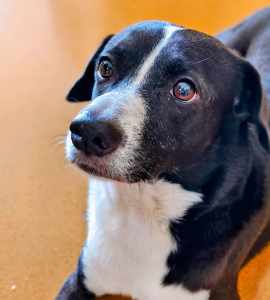
Back in India, the famous Indian stand-up comic and actor Vir Das has been an important voice for these animals, as he uses his platform to remind people that indigenous dogs will provide more love and gratitude than one could ever imagine. Another outspoken and influential figure in the political fraternity is Maneka Gandhi. She is the founder of People for Animals, established in 1992, one of the largest animal welfare organizations in the country.
Similarly, organizations such as Welfare for Stray Dogs (WSD), the Rotary Club of Bombay, and the Knights of Cubbon Park in Bengaluru have been playing an active role in animal rescue. The Rotary Club of Bombay, for instance, has been making short films on the plight of stray dogs, organizing fundraisers to raise awareness regarding the same, and has undertaken the responsibility of feeding more than sixty dogs. Simultaneously, WSD vaccinates, sterilizes, and treats street dogs in Mumbai for free.
For dog lovers, none of this is particularly new. But in August 2025, something changed.
Last year, the Supreme Court of India directed municipal authorities in Delhi and the National Capital Region to capture stray dogs and permanently relocate them to shelters or pounds. The order followed reports of increasing dog-bite cases, including the death of a six-year-old girl from rabies. It sought to empty the capital’s streets of animals that had long inhabited its neighbourhoods alongside human beings.
The order provoked widespread opposition from animal-welfare organizations, caregivers and concerned citizens. Critics argued that permanently confining such a large population of dogs was both inhumane and practically impossible, given the shortage of suitable shelters. There was also fear and apprehension about the dogs being indiscriminately killed behind closed doors. Later that month, the original order was modified by the Supreme Court, allowing healthy dogs to be returned to the areas from which they had been taken after they had been sterilized, vaccinated and dewormed. Dogs infected with rabies or exhibiting aggressive behaviour were excluded from this provision. The Court also directed municipal authorities to establish designated feeding areas for community dogs.
The controversy prompted a larger conversation about humane methods of managing India’s free-ranging dog population. Alongside demands for sustained sterilization and vaccination programs, more voices began advocating the rescue and adoption of homeless animals. Protests against the order were held not only in New Delhi but also in cities across the country, such as Bengaluru and Mumbai, giving the question of adoption renewed urgency.
The “adopt, don’t shop” campaign challenges the practice of purchasing pedigree animals from pet stores and unethical breeders when millions of dogs and cats are already in need of homes. Its message has gradually influenced the way some people choose companion animals. Yet adoption in India also requires us to think more carefully about the language used to describe the dogs living on the country’s streets.
‘Indie’ is commonly used as an umbrella term for Indian street and community dogs. However, many are mixed-ancestry dogs whose physical characteristics have developed over generations of living in particular environments. At the same time, India is home to numerous distinct native breeds whose individual histories are often obscured by the usage of broad labels.
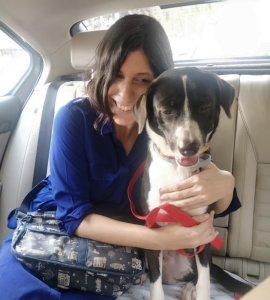
Just as India’s human population cannot be compressed into a single cultural or physical identity, its dogs cannot be adequately represented by one convenient category. The country’s native breeds have been shaped by different climates, landscapes and working relationships with local communities. Karnataka’s athletic Mudhol Hound, for instance, is well adapted to hot and arid terrain, while the thick-coated Bakharwal has traditionally guarded livestock in the Himalayan region. Tamil Nadu’s Rajapalayam and Chippiparai were bred for hunting and protection, while the rare Jonangi, associated with parts of India’s eastern coast, is known for its close relationship with fishing and agricultural communities.
Many of these indigenous breeds are now endangered or routinely overshadowed by imported pedigree breeds. Educating ourselves about them is therefore not simply a matter of choosing Indian dogs as pets. It is also a way of recognizing that these animals have distinct histories,
temperaments and relationships with their ecological surroundings, as well as an important place within India’s cultural heritage.
In Kolkata, the founders of Sienna Café, Rewant Lokesh and Shuli Ghosh, have set an example by rescuing and adopting three dogs — Nimki (aged two), Nabi (four), and Noori (six). Lokesh describes the dogs as “smart, low-maintenance, easy to train and extremely loyal.” Ghosh observes that many people continue to seek pedigree dogs as pets. But not all hope is lost: she has also noticed more families adopting dogs from their neighborhoods and fostering puppies that have been abandoned or injured.
Of course, adoption alone cannot resolve India’s ongoing struggle with animal homelessness, dog bites and rabies. It must be accompanied by well-funded sterilization drives, widespread vaccination, responsible waste disposal and accessible veterinary care. But while such challenges exist, every responsible adoption gives an existing animal the security of a home and stands up against a market that treats living beings as products. To adopt rather than shop is not merely the act of rejecting pedigree as a status symbol, as has been the case for so many affluent homes. The practice also helps cement the notion that companionship need not be manufactured when so many animals are already waiting to be chosen. Maybe they are waiting right outside your home!





Leave a Reply