

In a world where most sports are rooted in home turf traditions — stadiums, hometown crowds, flags waving from local bleachers — Formula 1 is the outlier. It doesn’t belong to one city, or even one country. It moves across the world. Across 24 races and 21 countries every season, Formula 1 transforms global cities into race tracks. One week it’s the glittering harbour of Monaco. The next, the casinos of Las Vegas or the sands of Abu Dhabi. At one point, even Noida, the urban development on the outskirts of the National Capital Region of India.
That geographic churn isn’t just a logistical feat — it’s the very reason F1 has gone from niche motorsport to mainstream spectacle. In fact, no other global sport matches this level of built-in mobility. Cricket may have the IPL, but its stage is largely South Asian. Football has the World Cup, but only once every four years. Tennis tours the globe, yes, but its real energy centres around four Grand Slams — Australia, France, the United Kingdom, and the United States. Formula 1, meanwhile, is a cultural roadshow that never stops moving. That’s what makes it both elusive and magnetic.
F1’s unique selling point isn’t just speed — it’s access by proximity. Even if you’ve never watched a race live, chances are you’ve seen clips of street circuits in Singapore or backdrops of European palaces flashing behind cars moving at 300 km/h. It makes you feel like you’re part of something global.
For cities that host it, the payoff goes beyond tourism. It’s branding. Countries lobby hard to win hosting rights — not just for tourism, but because an F1 weekend places them on the global culture map.
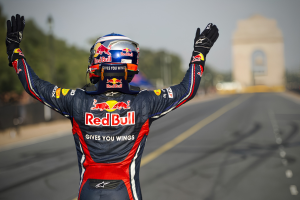
For a brief moment, the Buddh International Circuit outside Delhi put India on the F1 map. From 2011 to 2013, India hosted the Grand Prix. It was a spectacle — complete with red carpets, celebrity turnouts, and roaring engines slicing through Greater Noida. The logistics were imperfect. Ticket prices weren’t cheap. But the intrigue was undeniable.
Then it vanished. Bureaucratic tussles over taxes and permissions shut down the race before it could gain traction. In the end, it wasn’t a lack of interest — it was the state’s inability to align policy with spectacle. Yet, the memory stuck. A whole generation of Indian fans got their first live taste of F1, and even today, there are growing fandoms, motorsport clubs, and homegrown racers building momentum in its wake.
India’s 2028 Comeback Bid
More than ten years after India’s much-vaunted fling with F1 at the Buddh International Circuit, the country is going hammer and tongs at it again. The government, recognizing that circuitous tax loops and regulatory hurdles stymied the holding of more races, is trying to resolve the problem. Sports Minister Mansukh Mandaviya has been in discussions with stakeholders (most prominently representatives from the powerful Adani Group) expected to take over the circuit, and officials from India’s motorsports federation, in order to deal with problems of taxation, regulation, and infrastructure. However, sweeping ministerial statements have been made often enough, and the timeline has already slid forward once, from 2027 to 2028. Meanwhile, F1 CEO Stefano Domenicali has cautioned that the perfect collaborations won’t be possible in the very short term. Therefore, we must wait and watch.
The Kid Who Might Get There Before the Race Does
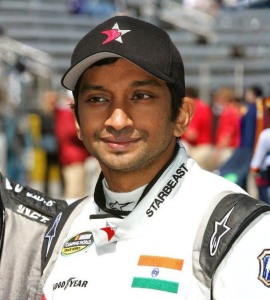
Only two drivers from India have ever raced in a Formula One Grand Prix: Narain Karthikeyan and Karun Chandhok. But now there is Atiqa Mir.
A young, female karting prodigy from Srinagar, Mir has become the first Indian and Asian female racer chosen for the Formula 1 Academy’s ‘Discover Your Drive’ development program (her father is Asif Mir, India’s first national karting champion). She’s since become the first Indian female driver to qualify for the finals of the Rotax Euro Trophy, and the first female racer to win at the Rotax Max Challenge International Trophy in Le Mans. The extraordinary thing is that despite not having a home race or domestic support, India already has an F1-worthy driver — and if Buddh reopens in 2028, Mir may be a face fans recognize before she ever races on home soil.
So how did this hyper-niche European sport, once known for champagne and super yachts, become a fixture on Gen Z’s radar?
The answer lies partly in storytelling. Netflix’s Drive to Survive did more than document the races — it rebranded F1 as a high-stakes human drama. Viewers who didn’t know DRS from a drag strip suddenly had favourite drivers, team rivalries, and opinions about tyre strategy. It made the inaccessible feel intimate.
Fashion, too, has played a part. With race-day outfits going viral and luxury brands turning paddocks into runways, Formula 1 is now an aesthetic in itself. Lewis Hamilton is as much a fashion icon as he is a record-breaking driver. This sport even got Brad Pitt to make a movie about it.
What We’re Really Watching
It’s about cities competing for global attention. It’s about countries using spectacle to announce their arrival. And it’s about fans — from Miami to Monaco to Mumbai — finding belonging in a sport that’s never in the same place twice. As the sport continues to expand, we’re watching soft power in motion. In that way, Formula 1 has become more than a sport. It’s a feeling. And it’s everywhere.
As they say, “Lights out and away we go!”


Leave a Reply