

Something is brewing in the business world.
To understand what that is, let’s angle our lens towards the Indian financial services company, Zerodha. Zerodha’s profits last year were ₹4,237 crore. So why is its co-founder and chief investment officer, Nikhil Kamath, buying creative agencies like BTG (By The Gram) and One Hand Clap?
Up until very recently, brands rented distribution by buying advertising space to flash their latest campaign to would-be consumers; the more you scaled up, the wider the reach. But when the campaign ended and a new one began, the whole model repeated itself, over and over and over again. But that model is changing. Kamath is no longer looking for reach. He’s buying that indefinable thing called taste, and proximity to culture. Different vehicles, same road: to work with the people who already have a room full of listeners, rather than build a room and hope for an audience to show up.
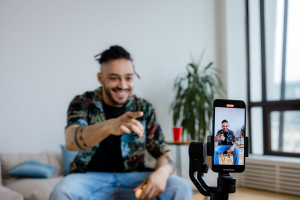
Kamath is hardly alone in this endeavour; much of India’s creator economy is mirroring these strategies too. In 2025, Network18 (a group whose business model was predicated on the old-fashioned TV model) launched Creator18 as a formal push into creator-led advertising. It already has exclusive contracts with over 1,000 creators, a pointed sign that owning creator relationships is as central to a news conglomerate as owning TV channels.
Creators are also becoming investors. Raj Shamani, host of Figuring Out, has backed 11 companies, including becoming an early investor in Wint Wealth. The podcaster and content creator, Ranveer Allahbadia, has moved into a cluster of businesses — Monk Entertainment, Level Supermind, and BigBrainCo — while angel-investing in wellness and fintech startups.
And capital is also flowing the other way round, towards commerce-shaped creator infrastructure rather than the pure content plays. In 2026 so far, the most notable creator-economy deal in India internationally has been Wishlink (a platform enabling creators to monetize through commerce rather than brand deals), which accounted for roughly a third of all Asia-Pacific creator-economy funding this year.
Consolidation is happening from the influencer-agency side too. Good Glamm Group has merged four separate creator-and-content businesses, including Plixxo, Winkl, Vidooly and MissMalini Entertainment, into Good Creator Co. as it looks to build an end-to-end content-to-commerce ecosystem, rather than a series of one-off campaigns. Chtrbox, an agency founded by Varun Duggirala, Roshan Abbas, Gaurav Kapur and others, was acquired by US-based QYOU Media in 2021 to grab a toehold in Indian creator culture, and in 2025 it became the first influencer marketing agency to list on the BSE SME platform.
This isn’t just a domestic phenomenon. Take Publicis, one of the world’s largest advertising holding companies that just spent over $675 million, buying Influential and Captiv8, creator networks spanning 15 million-plus creators. Later’s $250 million acquisition of Mavely, an affiliate platform, did more or less the same thing. Both traditional advertising agencies, both simultaneously concluding that the economics of renting versus owning audience relationships no longer favored the former.
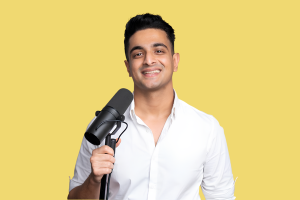
BCG estimates that Indian creators would impact anything between $350–400 billion of consumer spending annually, and that figure is projected to cross $1 trillion by 2030. The government is already on board, with this year’s Union Budget allocating resources to the ‘Orange Economy’ and creator-skilling initiatives, recognizing content as an asset akin to any other form of intellectual property. This is the message that one agency founder was quick to seize upon while speaking to reporters about the Budget. He noted that while renting audiences was an option, brands that invested in building their own media infrastructure would reap disproportionate rewards. Not that it wasn’t obvious already.
After years of brands asking “how do we get people to notice us,” the more interesting question circulating in Indian boardrooms right now seems to be: what do we own that makes people want to listen to us in the first place? The biggest brands of the next decade may not possess the biggest budgets. They may not have the biggest stars. But they’ll be the ones with the best relationship with their audience, one that doesn’t need to be rebuilt over and over again.

Leave a Reply