

What if a chatbot could tutor a child in algebra or in Hindi, at home, and tailored to their exact learning pace? What if it could walk a nervous Japanese student through a class presentation or help a Nigerian teen revise for a national exam, all without judgment or pressure?
This is the promise that artificial intelligence in education keeps hinting at: deeply personalized, scalable learning. In theory, it could solve teacher shortages, bridge urban-rural divides, even offer support when parents can’t. But how that promise plays out looks very different depending on where you are — because education isn’t a one-size-fits-all system. It’s shaped by local languages, cultural values, and access gaps that global AI tools often fail to account for.
In India, education spans extremes: from rote-heavy government schools to elite institutions pushing international-style teaching. Many students still rely on memorisation to clear high-stakes entrance exams like NEET and JEE — ultra-competitive national tests that determine access to medical and engineering colleges for millions. Caste, class, and gender biases often shape who gets quality instruction and who feels seen in a classroom. And while Hindi and English dominate urban curricula, dozens of regional languages remain underserved by mainstream educational tools — digital or otherwise.
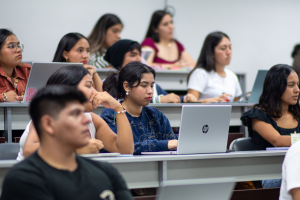
In South Korea, students stay up late at hagwons — after-school tutoring centres — because academic performance is closely tied to university entrance and family pride. In Finland, by contrast, education emphasises curiosity, group work, and minimal homework. In Kenya, overcrowded classrooms mean teachers juggle multiple languages and learning levels. And in the US, education centres on participation and self-expression — but access still heavily depends on zip codes and systemic inequality.
The point is: education is never culturally neutral. It’s shaped by social norms, parental expectations, historical inequities, language politics, and attitudes toward authority. It’s about how you’re taught to learn — whether you’re expected to memorize or question, speak up or stay quiet, work alone or in groups.
So what happens when AI — mostly developed in Western labs — is introduced into this messy, diverse global reality?
AI in education isn’t some distant future. It’s already creeping in: from virtual tutors in Indian edtech apps to AI-generated feedback tools in American classrooms. South Korea has been piloting adaptive AI since 2022. Kenya and Ghana are exploring AI to boost rural access. China is trialling emotion-tracking software in schools — controversially, but ambitiously. But the real question isn’t just about tech infrastructure or screen access. It’s about cultural alignment.
Can a language model trained on Western academic texts truly grasp the pressure-cooker intensity of India’s exam system? Can it understand why a Japanese student might hesitate to ask questions — not out of confusion, but because standing out is discouraged? Would it know why oral storytelling matters as much as textbooks in many African classrooms?
AI might offer infinite knowledge. But whether it understands the classroom it’s entering — that’s the harder lesson.
These aren’t bugs in the system — they are the system. And if AI is going to play a real role in global education, it has to go beyond just speeding things up or improving test scores. It needs to understand how different communities learn, not just what they’re learning.
That’s not to say AI doesn’t belong in the classroom. In fact, if done right, it could be a game-changer. In parts of India, AI tutors are already helping kids in under-resourced schools get the kind of personalised attention that would otherwise be impossible. In the US, some schools are using AI to catch reading struggles early — things a teacher might take months to notice. And in countries where students juggle multiple languages, AI could switch between them on the fly — say, from Hindi to English or Yoruba to French — making learning more accessible for those who are often left behind.
But when AI doesn’t account for cultural context, it can backfire. An AI tutor trained on Western norms might penalise an Indian student for relying on memorisation, or flag a Japanese student as disengaged for not asking enough questions — not realising that both behaviours are shaped by local classroom expectations. A well-meaning algorithm could end up misreading learning styles as learning gaps.
But for any of that to truly work, the tech itself needs to get smarter culturally. It needs to be built with an understanding of the students it’s meant to serve.

That means building more localised datasets. What counts as “correct” or “helpful” feedback can vary drastically across cultures. A prompt that resonates in Nairobi might completely miss the mark in Nagaland. Without datasets that reflect linguistic diversity, socioeconomic realities, and neurodivergent learners, AI risks baking bias into pedagogy — reinforcing what’s familiar rather than what’s fair.
It also means having more diverse teams designing and testing these tools — people who understand the contexts they’re meant to serve. And perhaps most importantly, it calls for deeper conversations about what education should look like in each place — not just what’s easiest to build or scale.
If AI is really going to teach the world, it has to start by learning from it — in all its nuance, noise, and difference.





Leave a Reply