

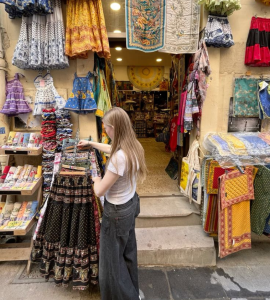
For decades, Indian fashion retail lived in separate worlds. There were market stalls, standalone neighborhood shops and local tailors, where prices were often negotiable. There was a scatter of indie, homegrown stores selling boho chic styles. Somewhat more recently, an explosion of malls has altered the country’s retail-scape.
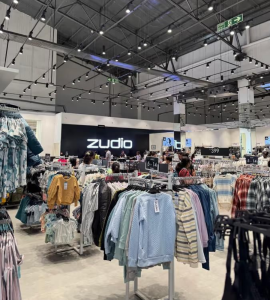
That’s changing though. Over the last decade, a wave of value-fashion retail has swept through Indian cities, offering affordable prices but with all the spit and polish of an upmarket shopping experience: shiny lights, glass-plated windows, air conditioning, constantly-renewing fresh stock, trendy garments, and a guarantee of quality. It’s now one of the fastest-growing corners of Indian consumer business, and it’s shifting not just what people wear, but where and why they choose to buy it. Budget brands like Trends and Zudio are now offering goods at the same price point as the bazaar, but with a vastly fancier shopping experience.
Tata’s Zudio has become the market leader, selling 350 million garments last year alone, with a ceiling price of ₹999 on anything in the store. Reliance, through Isha Ambani’s Reliance Trends and its broader Reliance Retail arm, is pushing just as hard, alongside Dubai-based Landmark Group’s Max Fashion. Vishaal Mega Mart and Tata’s upmarket chain Westside round out the value end, while platforms like Meesho, Flipkart, Nykaa Fashion’s Likha label, and homegrown ethnic-wear players such as Indya are chasing the same mid-income shopper online.
The change has been immense and rapid. Zudio ballooned from seven stores in 2018 to 765 in 2025. Meanwhile, in the same time period, Westside merely doubled its store count.
Clearly then, purchasing power has grown steadily over the past 25 years, and the shoppers who were previously priced out of branded fashion, are now a crucial market. They are aspirational customers, yet value-conscious; and they’ve simply transferred their wallets from the local mom-and-pop shop to posh-looking stores.
Fashion, for a growing number of young, aspirational shoppers, has become closer to routine grocery shopping — pick up a few trendy pieces on impulse because the low cost and easy returns remove the anxiety of buying wrong.
Research done by Deloitte India also gestures to something else. Around 30 percent of people who were polled said that the in-store experience drew them to the offline shopping space. This isn’t just about the ambience (although that was a factor) but also logistics i.e. the availability of a proper fitting room. Therein lies the appeal of stores like Zudio: it isn’t just about the price, it’s equally about how the stores and their sales staff make the shopper feel.
Another driver? The rapid turnover of inventory, the very marker of fast fashion, that is urging customers to the store every few weeks.
Perhaps the biggest shift comes to us via Tier-II and Tier-III cities. Rising disposable incomes, expanding highway infrastructure, and greater digital connectivity are encouraging brands to open stores along regional transport corridors rather than fight for expensive real estate in metros such as Mumbai.
But who will pay the bill for this flood of convenience and affordability?
The mom-and-pop neighborhood stores of course, whose custom is dwindling. Even stores such as Pantaloons, Max, and Lifestyle (the middle tier of organized retail) are being squeezed. And as is the way of all fast fashion, the environmental toll is immense. India’s textile sector is now the third-largest contributor to the country’s dry municipal solid waste, trailing only plastics and paper, with barely a quarter of that waste getting recycled. While some brands are folding sustainability into their supply chains, large-scale change remains a distant prospect.
For now, though, style and savings are winning out over sustainability — especially in India’s smaller towns, where much of the country is only just climbing onto the fast-fashion bandwagon.


Leave a Reply