

For decades, ‘health’ lived in pill bottles — multivitamins in medicine cabinets, fish oil capsules on kitchen counters. Today, that same promise has migrated into cans and bottles lining supermarket shelves. Health has found its way into your beverages and water.
Amongst the biggest names? Pepsi launched its first Prebiotic Cola in the traditional Cola category in 2025. It tastes just like the cola you grew up drinking — sugary, crisp and bubbly. But let’s just say that your classic soda got a bit of a health kick, now claiming to contain only 5 grams of sugar, 30 calories, no artificial sweeteners and 3 grams of prebiotic fiber. This move isn’t new in the ‘functional beverages’ category, but the fact that a legacy brand decided to throw its hat in the ring, is a marker that ‘functional’ has gone mass. It also signals a bigger global shift in how health is consumed today.
Closer to home, Paper Boat launched its Zero Prebiotic Soda in June 2026. The promise (and premise) is the same; health via no added sugar, no aspartame, and 5g of fibre for gut health.
Functional drinks today sit at the crossroads of psychology, economics, and culture. From AG1’s powdered supplement with 75+ vitamins, minerals, probiotics, and superfoods to Gatorade’s ‘super hydration’ lines and sodas that promise gut health, focus, or calm, the category has grown into a multi-billion-dollar industry. Behind these numbers is a deeper story: consumers aren’t just buying hydration; they’re buying health, identity, and reassurance in a can or powder.
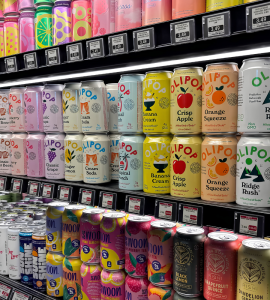
Analysts peg the global functional drinks market at around $150 billion today, on track to nearly double by 2030 — growth that explains why legacy giants like Pepsi and Coca-Cola are racing to repackage sodas with ‘better-for-you’ labels. The real traction, though, has come from buzzy new subcategories: in the U.S., so-called ‘gut-pops’ like Olipop and Poppi moved more than $800 million in retail sales last year, proof that fiber-fortified colas have shifted from niche wellness aisles to mainstream fridges. Gillian Anderson has her own brand brilliantly called G Spot. Even Kin Euphorics, Bella Hadid’s co-founded brand of non-alcoholic, adaptogen-packed blends sells not just a drink, but a new kind of nightlife ritual. It taps into the ‘sober curious‘ movement while the adaptogen market itself is forecast to reach more than $20 billion by 2030. At the top end sits AG1 (Athletic Greens), now valued north of a billion dollars, its subscription model turning micronutrient blends into lifestyle identity.
How Functional Drinks Became a Thing
Gatorade’s invention in 1965 at the University of Florida is often seen as the foundational moment for the category. A team of researchers formulated the drink to help football players avoid dehydration during scorching games.
Fast forward to 2007, and Coca-Cola’s $4.1-billion acquisition of Glacéau (the maker of Vitaminwater) marked the first major corporate embrace of functional drinks. Suddenly, the beverage giants were not just making sodas, but buying into enhanced waters that offered vitamins, minerals, and lifestyle promise.
These weren’t isolated moments—they were the story-behind-the-story. Gatorade demonstrated how beverages could solve a physical problem. Vitaminwater showed that selling wellness could also be selling identity. Together, they paved the way for what we now call ‘soft wellness’: functional drinks that blur the line between health category and cultural lifestyle.
Equity Contrast: Traditional Functional Beverages Left Behind
Across cultures, fermented and functional drinks like Mexico’s tepache, India’s jeera soda and nimbu pani, and Korea’s sikhye have quietly done what billion-dollar startups now market as breakthroughs: nourish, refresh, and comfort.
In Mexico, tepache has been around since pre-Columbian times — a tangy, gently fermented drink made from pineapple peels, raw sugar, and spices. It was never meant to be fancy, just something fizzy and social to share on a hot day.
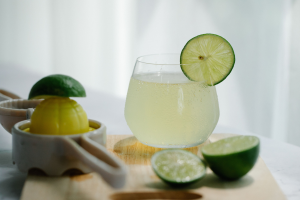
India, meanwhile, has its own roster of everyday coolers. Jeera soda, the unofficial digestive of summer afternoons, starts with a spiced syrup of roasted cumin, black pepper, and chaat masala, splashed into a glass with lemon, mint, ice, and topped off with soda. Then there’s nimbu pani — the most democratic of them all. Fresh lemon squeezed into cold water, a little sugar, a pinch of black salt — as common in household kitchens as it is at roadside stalls. Ironically, it now comes back to us in plastic bottles as PepsiCo’s Nimbooz, marketed like a modern invention. And in Korea, sikhye — a sweet rice-malt punch — has for centuries played the double role of gentle digestive and post-meal dessert.
This idea of drinks as healthful continued into colonial India, whence Britishers turned to fizzy flavored waters in an attempt to deal with the ravaging stomach turmoil they had to deal with. Some sodas were advertised as brightening complexions while simultaneously soothing upset stomachs, a perennial English complaint.
The Broader Cultural Bargain
The irony is striking: what people grew up drinking casually at home now often returns repackaged as premium ‘heritage’ wellness. Turmeric milk becomes ‘golden latte’ in Brooklyn cafés; nimbu pani comes back as a ₹40 bottled lemonade. The question isn’t just whether these drinks work, but who gets the credit, capital, and cultural recognition for knowledge that has always existed in the margins.
Functional drinks reveal a broader cultural bargain: we’ll willingly pay premium prices to sip reassurance. This market doesn’t just sell hydration — it sells carefully curated identity and emotional comfort, branding our health anxieties into bottles. It tells a vivid story: some traditions get repackaged into profits, while others quietly sustain community without recognition.





Leave a Reply