

We’ve all felt it — that sudden spike of adrenaline when a major concert is announced. Group chats light up, ticketing sites crash, and within minutes, timelines are filled with heartbreak and hype. Some people manage to snag their spot. Others are met with frozen screens, payment failures, or the dreaded Sold Out banner. Almost immediately, the black market springs into action — tickets resold at double or triple the original price.
And yet, the shows are packed. India’s concert economy is booming, and Gen Z is driving much of the demand. With limited savings but outsized aspiration, this generation is willing to splurge on live music, treating it not just as an experience, but a cultural milestone.
It wasn’t always like this. Concerts in India were once rare and often hosted in large stadiums or college festivals, with patchy production and minimal media attention. International artists like Shakira (2007) or Bryan Adams (who toured India repeatedly) drew massive crowds, but performances were usually one-offs — seen as novelty events rather than part of a structured touring circuit.
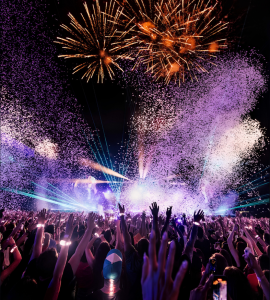
Fast forward to the 2020s, and the shift is stark. The global rise of streaming, social media virality, and India’s booming youth population has turned the country into a tantalising market for global artists and brands alike. The 2026–27 calendar includes artists such as Fred again.., Calvin Harris, Khalid, Chet Faker, The Chainsmokers, French Montana and Gorillaz. They are now part of a new wave of concerts that blur the line between music, luxury experience, and digital spectacle. Production scales have exploded.
Consider the numbers. India’s organised live-events market crossed ₹12,000 crore in 2024, and a 2026 EY-Parthenon and BookMyShow report placed the numbers at nearly ₹13,000 crore today. The premium international touring segment has nearly doubled in scale between 2024 and 2026.
Festival culture has grown alongside it. Events like Lollapalooza India and Sunburn have paved the way for major international lineups, showing promoters that large-scale concerts can succeed. Ticketing platforms and sponsors have stepped up, while a massive, youthful population and rising middle class have created one of the world’s most promising new markets for live music.
So what’s behind this new wave of concert fever? Why are tickets so expensive — and why are people still paying? From international tour logistics and VIP pricing tiers to India’s own infrastructural and economic shifts, the story of live music today is also a story of access, aspiration, and who gets to participate in the global gig economy.
The Aspirational Economy at Play
Part of the reason fans are willing to shell out the big bucks is India’s changing cultural economy. After all, attending a concert is about more than just the music; it is the whole experience, later spun out across reels and stories and posts on Instagram. Fans fly in from across India, spending on hotels, restaurants, transport, having a much larger multiplier effect across the economy. A single performance can transform into a far wider tourism and employment opportunity.
The concert economy is therefore no longer simply about music. It is becoming part of India’s experience economy.
The Real Cost of Bringing It to India
Yet, unlike North America or Europe, India isn’t part of a well-oiled touring circuit. It has only a handful of viable concert cities — Mumbai, Delhi, Bengaluru — and very few plug-and-play venues. This means every show is a logistical patchwork. Organisers often have to build stages, import technical equipment, and arrange elaborate security protocols from scratch.
“In the West, artists recover production costs over 30 to 40 cities. In India, most tours include just one or two dates,” according to industry insiders, division of ticket pricing and logistics — a dynamic often cited by commentators at BookMyShow’s live entertainment division. That means fewer tickets to recoup the same massive costs. From chartered flights to hotels for a hundred-person entourage, from airlifting LED rigs to renting cricket stadiums, every detail adds up.
What’s more, India’s complex permissions ecosystem makes it expensive before the first note is even played. Multiple permits, venue fees, GST, entertainment taxes, and local bureaucracies all inflate the baseline. Many promoters end up working with razor-thin margins and rely on brand partnerships and VIP tiers to turn any profit. Concerts need permissions from police, fire services, municipal bodies, excise and public-health departments. In Maharashtra alone, organisers navigate up to 15 clearances. And permissions can be rescinded at the very last minute.
The shortage of venues is another concern. India still lacks enough arenas capable of hosting large international productions, forcing promoters to retrofit cricket stadiums, racecourses and other multipurpose spaces for concerts. It works, but only as a temporary solution, and expectedly comes with its own obstacles.
An Exclusionary Pricing Economy
That cost eventually reaches the audience.
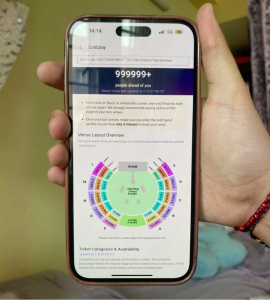
Ticket tiers in India mimic international standards but without the same income elasticity. General admission for big names starts around ₹5,000–7,000, with VIP access running upwards of ₹20,000. When Post Malone performed in Mumbai in 2023, VIP and lounge packages touched nearly ₹50,000. At one of the most talked-about concerts in India in 2025, Coldplay’s Music of the Spheres shows in Mumbai featured pricing tiers ranging from ₹2,500 for basic seated tickets to as high as ₹35,000 for the premium lounges — with VIP and lounge packages reportedly priced around ₹35,000 in certain sections. These higher-tier tickets became lightning rods for social media, as fans scrambled to secure access and influencers shared behind-the-scenes peeks — heightening the sense that not everyone gets to be in the room.
But even the more ‘affordable’ ticket slabs — like the ₹2,500 or ₹4,500 ones, offer little by way of experience. Attendees in these sections are often so far from the stage that the performer is reduced to a distant blur, visible only through giant LED screens. For many, it feels less like being at a concert and more like paying to watch a YouTube livestream in a crowd.
Besides, ticketing platforms haven’t kept pace with the demand. Scalping is rampant, especially through third-party resale on platforms or informal black market networks. What complicates the issue is the lack of regulation. While countries like the UK have attempted legal crackdowns on scalping, India lacks centralized policies or legal frameworks to monitor secondary ticket sales. This creates a free-for-all, where the most desperate (and wealthiest) fans end up paying the most.
Despite the buzz, there’s tension simmering underneath. Smaller organisers struggle to break even. Fans grow disillusioned. And even brands that sponsor shows have begun to rethink ROI (Return on Investment) when online visibility outweighs real-world engagement.
India Has the Audience. Does It Have the Infrastructure?
India is now being compared with Singapore, Bangkok and Tokyo as a South Asian anchor for international tours. The key difference is that India offers scale. Its youthful population, rising incomes and appetite for experiences make it one of the most promising markets for live entertainment.
But established concert hubs also offer something India often lacks: predictability. For international promoters, established venues, clear regulations, reliable infrastructure and professional safety systems can be almost as important as audience size.
India is beginning to address this imbalance. For example, Maharashtra has come up with the idea for a single-window clearance system. Meanwhile, discussions are afoot to spread concert venues to Tier-II and Tier-III markets.
The country has already achieved the hardest part: Fred again.., Calvin Harris, The Lumineers and the growing roster of global acts arriving in 2026 are proof that the country has become a serious touring destination. But as India’s concert economy matures, so must its infrastructure. That means better venues, decentralised circuits, artist-friendly taxation, clearer regulations, and proper resale mechanisms. Until then, the thrill of the live gig will continue to be a privilege — one reserved for those who can afford the hype.




Leave a Reply