

Before Meta handed WhatsApp to Kunal Shah, it spent years trying to decode a puzzle in one of its most crucial markets.
India has WhatsApp’s largest user base. More than 500 million Indians use the app to coordinate family gatherings, organize weddings, negotiate business deals, share homework assignments, forward political opinions and maintain social ties across cities and continents. In many parts of the country, WhatsApp is less a messaging platform than a layer of digital infrastructure woven into everyday life.
So when WhatsApp Pay officially launched in India in November 2020, it seemed poised for market domination.
The logic was straightforward. If people were already spending hours a day on WhatsApp, why would they leave the app to make payments? The future appeared obvious: messaging and commercial transactions would converge in a single interface. India, with its booming digital economy and rapidly growing adoption of the Unified Payments Interface (UPI), seemed like a market ripe for picking.
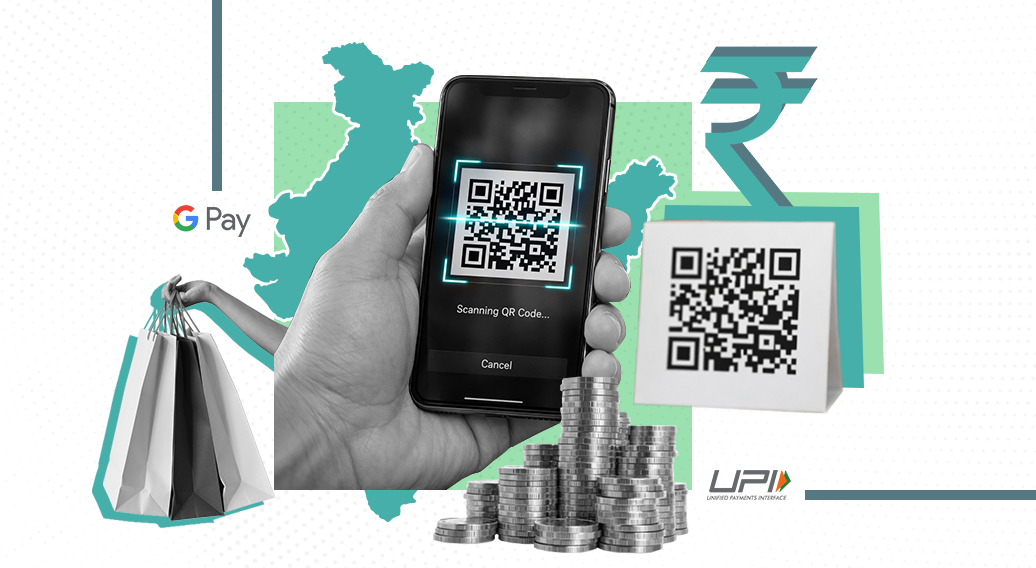
Instead, WhatsApp Pay became one of the most surprising disappointments in India’s fintech story. Years later, the service remains a marginal player. While UPI transactions have exploded into the billions each month, WhatsApp Pay has captured only a tiny fraction of the market. PhonePe and Google Pay dominate the landscape.
The failure offers a revealing lesson about technology, trust and consumer behaviour. It also helps explain why Meta’s recent decision to appoint CRED founder Kunal Shah to lead WhatsApp could prove far more significant than a routine executive reshuffle.
At first glance, WhatsApp Pay’s struggles seem counterintuitive. Technology companies often assume that distribution is the hardest problem to solve. WhatsApp already had distribution on a scale most startups could only dream of. Hundreds of millions of Indians opened the app multiple times a day. But perhaps that was part of the problem.
In India, the most successful financial products tend to create a sense of formality. Whether it is a traditional bank branch, an ATM receipt or a digital payment app, users want cues that signal seriousness and security. PhonePe and Google Pay built interfaces around those expectations.
WhatsApp, on the other hand, was designed for conversation rather than commerce. The same chat window used to send jokes, family photographs and voice notes suddenly became a place where users were expected to transfer money. Paradoxically, WhatsApp’s greatest strength — its intimacy — became its greatest weakness.
Timing did not help.
Around the same period that WhatsApp Pay was being tested and rolled out, India became consumed by the media frenzy surrounding the death of actor Sushant Singh Rajput. Television channels repeatedly broadcast leaked WhatsApp conversations connected to individuals involved in the case, turning private chats into public spectacle.

Of course, there is no evidence that the controversy directly harmed WhatsApp Pay. But trust is rarely shaped by a single event. At a moment when Meta wanted users to view WhatsApp as a secure financial platform, many Indians were watching private messages become national headlines.
Then there was the issue of friction.
Conventional Silicon Valley wisdom holds that reducing friction is always desirable. Yet behavioural psychology suggests otherwise. Financial products often benefit from small rituals that reinforce trust. Authentication screens, PIN confirmations and transaction alerts may appear mundane and even annoying, but they reassure users that their money is being handled carefully. WhatsApp Pay attempted to make payments feel seamless. Paradoxically, sending money started to feel almost too easy.
Meanwhile, competitors were aggressively rewarding users for changing habits. Cashback offers, scratch cards and merchant partnerships transformed routine transactions into miniature games. Google Pay and PhonePe invested heavily in these incentives. WhatsApp Pay largely did not.
That is where Kunal Shah enters the story.
Until recently, Shah was best known within India’s startup ecosystem. His entrepreneurial journey began with FreeCharge, the mobile recharge platform he co-founded in 2010, but grew to become an expert on consumer behaviour, incentives and trust. This would eventually shape CRED, the fintech company he founded in 2018.
On paper, CRED’s premise appeared unusual. The platform initially focused on rewarding users for paying credit-card bills on time. Yet CRED was never really about bill payments. It was an experiment in behavioural design. Shah understood that financial decisions are often driven by emotion as much as utility, and transformed routine financial behaviour into something aspirational.
Whether one loves or hates CRED, the company demonstrated something important: Shah had an unusual ability to understand how people form habits and assign meaning to products. Those skills may be exactly what WhatsApp needs.

Meta’s appointment of Shah comes as the company seeks to transform WhatsApp into something larger than a messaging platform. Meta has not publicly detailed why it chose him for the role. In announcing the appointment, chief executive Mark Zuckerberg praised Shah’s ‘builder mentality’ and ‘global perspective’. Kunal Shah’s appointment suggests Meta finally understands that the next stage of WhatsApp’s evolution may not be a technological problem at all. It may be a behavioural one.
Years after WhatsApp Pay’s disappointing debut in India, Meta appears to be betting that the man who built a career decoding incentives and human psychology can succeed where product features alone could not.
WhatsApp remains India’s digital drawing room. Whether it can become India’s wallet is still an open question. For the first time in years, however, Meta seems to have hired someone whose entire career has been spent studying exactly that problem.




Leave a Reply