

If you’ve ever been inside a breezy, wood-framed house in California or seen suburban homes in Arizona with timber skeletons, you might wonder — why don’t we build like that in India? After all, it’s hot there too. Yet most Indian homes are built with sturdy brick and concrete.
Walk through an American suburb, and you’ll notice something — houses made almost entirely of wood. That didn’t just happen by chance. When early settlers arrived, they were surrounded by forests. Wood was everywhere, easy to work with, and quick to build with. Over time, it simply became the way homes were made. Timber was abundant and incredibly convenient — easy to harvest, transport, and shape into homes using basic tools. In climates ranging from New England’s chill to Florida’s heat, wood also proved to be a decent natural insulator.

And then there’s the maintenance — or lack thereof. In the US, wooden houses have shaped an entire way of living. Unlike their haunted-house image in pop culture, wooden homes are surprisingly practical. They’re easy to tweak, expand, and fix, which helped popularize weekend renovations and DIY culture. Over the years, everything from building codes to home improvement stores evolved to support this wooden home model.
Now shift the lens to India, and the picture changes. With high temperatures for much of the year, Indian homes have to deal with heat differently. That’s why brick and concrete are everywhere — these materials stay cooler through the day, offering relief without needing constant air-conditioning. If you’ve ever walked into a cement-walled Indian home on a hot afternoon and felt that cool rush, you’ve experienced the science at work.
It’s not just about heat. Indian cities are built to endure. Brick and concrete withstand heavy rain, pests, and even the occasional festival-induced firecracker incident. For Indians, a solid ‘pakka’ home is associated with security, permanence, and status. Given that clay, sand, and cement are readily available materials, this construction style makes practical sense.
But there is another, perhaps less salubrious reason too. Building concrete homes is generally harder and more time-consuming than building wooden ones. Concrete itself requires heavy machinery, specialized mixing and curing processes, and crucially, skilled masonry labor. Labor, of course, is abundant in India, and often undercompensated.
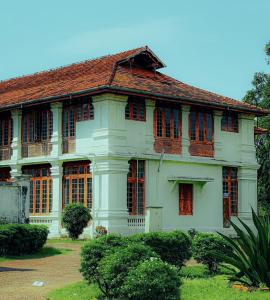
Meanwhile, over in the USA, prefabricated timber frames can be erected quickly, often in a matter of weeks, leading to lower labor costs.
The next time you walk through an American suburb or fly up the elevator in an Indian apartment block, look beyond the paint and the floor plans. The walls around you, the floor beneath you, they’re all telling a story — about the landscapes people inherited, the economies they built, and the futures they imagined





Leave a Reply