

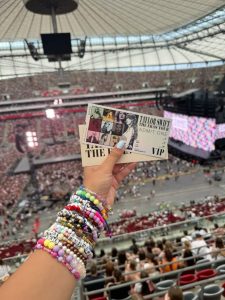
A Taylor Swift friendship bracelet costs almost nothing to make. A few inches of elastic and a handful of plastic beads, the kind of thing you might find in a school art room. It takes minutes to assemble and can be replaced for under a dollar. Yet, for thousands of fans, it becomes one of the most carefully kept objects they own, worn, traded, photographed, and preserved.
Its value has very little to do with the materials it is made from. It comes from what the bracelet represents, a concert, a community, a memory, or simply a relationship with an artist and her music. Once you notice that, you begin to see the same pattern elsewhere. People buy vinyl records they rarely play, carry tote bags advertising cafés they have already visited, hunt for limited-edition collectibles that spend their lives on shelves, and pay extra for special editions of books they already own in digital form.
The question is not why these objects exist. It is why they seem to matter more at a moment when so much of culture has become intangible.
The obvious explanation is identity. A cap or a tote or a tour hoodie is a social signal, a way of saying something about who you are and what you care about without saying it aloud. There is truth in this. Objects have always announced affiliation, university sweatshirts, football scarves, band T-shirts from the 1970s, none of this is new.
What identity signalling does not explain is the timing. Merchandise has, in the last decade, escaped its traditional domains and become the default move for almost every kind of cultural producer, from stand-up comedians to independent coffee shops, from literary journals to software companies, from newsletters to museum gift shops that now account for a meaningful share of institutional revenue. People who already have access to the music are buying the vinyl. People who stream every episode are buying the cast’s branded candles. Something structural changed, and the identity argument, on its own, does not account for it.
To explain the timing, we have to start with what changed.
For most of the twentieth century, the relationship between culture and ownership was straightforward. If you wanted music, you bought it, a record, then a cassette, then a CD. If you wanted a film, you bought or rented it. If you wanted to read something, you bought the magazine or the book. Culture was scarce in a particular sense, access required a financial transaction that produced a physical object, and the object and the experience arrived together.
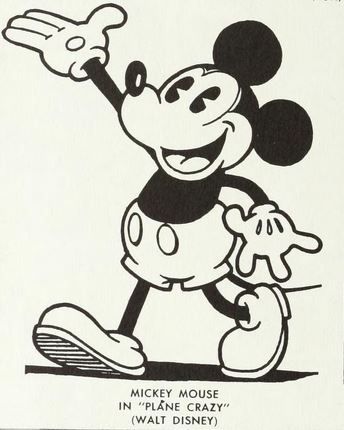
Merchandise existed alongside all of this, of course. Walt Disney began licensing Mickey Mouse’s image in 1929, and by the mid-1930s that licensing was generating hundreds of thousands of dollars annually. Rock bands have sold T-shirts since the 1970s. But merch operated at the edges of culture, an appendage to the main transaction. You bought the album, the T-shirt was optional.
Then, over roughly a decade beginning in the early 2010s, the relationship between culture and ownership began to reverse. Music moved to streaming, films and television moved to subscription services, journalism moved online and then into newsletters, video games shifted toward digital licenses and live service models, photographs moved to clouds, and even books acquired a second form that lived in a device, one the platform could alter or restrict under certain conditions.
Access became cheap and ownership became complicated, often without anyone quite noticing the shift. You do not own your Spotify library. If the service changes its terms or loses the licensing rights to something you love, it disappears. What you have is access, not possession. The relationship with culture became real but left no object behind.
Streaming is convenient, often affordable, and has genuinely expanded access to culture around the world. But it produced a vacuum alongside those gains. For the first time, non-ownership became the dominant mode of consuming culture rather than the exception. Radio and libraries had always offered access without possession, but they were the margins. Streaming became the default, and something moved in to fill the space that physical ownership had vacated.
The bracelet is a tangible anchor for a relationship with a song, a community, a version of yourself that stood in an arena and felt something. That matters, because plenty of people buy merch without attending events, without even a fixed memory to attach to the object. What they are buying is not a record of something that happened. It is evidence of something they belong to.
The consumer psychologist Russell Belk spent decades arguing that people experience their possessions as literal extensions of their identity, a theory he published in the Journal of Consumer Research in 1988 and the field has drawn on ever since. Kavita M., a counsellor who works with young adults, puts it more plainly, “Objects help us navigate social worlds and anchor feelings that would otherwise stay invisible.” A stream can carry enormous meaning and leave no trace in the physical world. An object carries that meaning outward, into a room,or onto a shelf, across a decade.
Objects age in ways that streams do not. They can be touched and lost and found again. A scratched vinyl record carries history, a worn tour hoodie carries memory. This may also explain what initially seems like a paradox, vinyl sales have grown for eighteen consecutive years in the United States, reaching $1.4 billion in 2024, levels not seen since the mid-1980s, in an era when music has never been more accessible. The people buying records are not doing so primarily because the audio quality is superior, a claim that tends to be overstated. They are doing so because a record is something you can own. It exists in space, it can be shelved and retrieved and held. At a moment when the rest of your library is a column of text in an app, a record is the music made tangible.
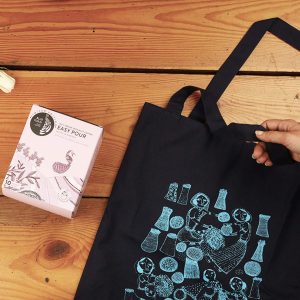
The same logic runs through special editions of books in the Kindle era, through photocards and plushies in fandoms built on streaming platforms, through the café tote bag and the podcast mug and the newsletter’s branded notebook. The content is often free, or close to it. The object is the part you can keep.
What makes this moment different from earlier eras of merchandising is not that merch exists but that scarcity has moved.
In the twentieth century, scarcity lived in the media itself. A limited pressing of an album was rare, but the album was already a finite, physical thing. Today, producing and distributing a song costs almost nothing. Scarcity has been manufactured elsewhere, in tour merchandise available only at the venue on the night, in blind boxes where the figure inside is unknown until opened, in numbered editions, exclusive colourways, and drops announced with forty-eight hours’ notice and sold out within minutes. The mechanism is one luxury brands have used for decades, but it has migrated into categories that once had no pretension to exclusivity at all.
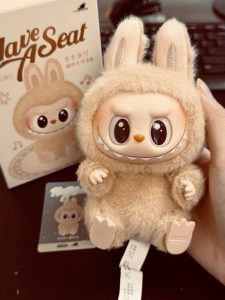
The Labubu makes this visible. A designer toy created by the Hong Kong artist Kasing Lung and sold by the Chinese company Pop Mart in blind boxes, it became one of the more improbable cultural objects of the mid-2020s, with some limited editions selling on secondary markets for several times their retail price. There are Labubu collectors in Delhi, Jakarta, São Paulo, and London. The toy is not licensed from a film or a band, and it is not a souvenir of any particular experience. Owning it is the experience. The object has become its own event. Merch began as the residue of an experience, and in some of its most contemporary forms, has become the experience itself.
In India, this shift has arrived with particular speed. For decades, the country’s merchandising ecosystem was largely confined to cricket and Bollywood licensing, categories with existing infrastructure and mass audiences. What has changed is who is in the business of selling objects. Prateek Kuhad releases vinyl, Blue Tokai sells canvas tote bags, Stand-up comedians sell tour hoodies, and independent creators launch stationery, journals, and apparel. This is not India catching up to something Western. It is India participating in the same structural shift, where audiences that once consumed culture and moved on are now looking for something to hold. The coffee is the content. The tote is the proof you were there.
This is why the most effective creator merchandise does not look like corporate merchandise. It does not push a logo. It encodes a reference, an in-joke, a lyric, or a specific moment, things that mean something only to people who were paying attention. The object functions as a credential, telling anyone who recognises it that you were in on this, and telling the person wearing it something more private. It tells them that this mattered enough to keep.
It would be easy to read all of this as a story about loss, as though we owned our culture and then surrendered it to subscriptions, and the hoodies are compensation. That reading misses what is actually happening. People are not buying merch because they are grieving. They are buying it because they have become more deliberate about what they choose to possess. A library of CDs owned by someone who half-listened to most of them is not obviously a richer relationship with music than a Spotify account and one carefully chosen vinyl that means something real. What has changed is the selectivity, not the impulse to own.
We once bought culture itself because access required it. Now access is cheap and widely available, and what we choose to own is the object that stands in for a relationship, the thing that makes a fleeting experience tangible and a digital affiliation visible. The friendship bracelet is the only part of that night the fan can carry home and still have in ten years. That is what we are paying for. Not the song, but proof that it mattered to us.


Leave a Reply