

On any given night in India’s metros, you’ll meet two kinds of people who use dating apps. There’s the first group — swiping late into the night, looking for something light and fleeting. These are the people for whom a date might mean drinks, a long walk, or just another chat on the app itself. Then there’s a second, very different group — families and individuals browsing Shaadi.com or Bharat Matrimony, sorting profiles by caste, profession, or income bracket. Both groups are active, both are growing. But between them is… almost nothing.
This stark split explains why some of the world’s biggest dating apps — Hinge, Bumble, Grindr, Tinder, have recently scaled back or exited India altogether. Their promise of a single ‘catch-all’ platform for romance never fit comfortably with the social realities of Indian love and marriage.
India’s digital dating scene is not small – the online dating app market was projected to reach USD 1.42 billion by 2030. But most of the engagement sits at two extremes. Apps like Tinder and Bumble thrive among users seeking casual connections. As one 27-year-old Mumbai user put it, “Everyone knows these apps are for hooking up first, and maybe something more if it works out.”
On the other hand, matrimonial platforms like Shaadi.com, Bharat Matrimony, and Jeevansathi, segment users by caste, religion, profession, and even salary. Shaadi.com, for example, offers filters for ‘business families’, ‘defence officers’, or ‘income above ₹1 crore’. Some newer services go further, asking for offer letters or salary slips as proof of social standing. Here, the expectation is explicit: serious, marriage-oriented matchmaking shaped by long-standing social hierarchies.
The result? If you want casual fun, you know which apps to open. If you want marriage, you know which portals to join. The middle ground — slow dating, open-ended relationships, or simply ‘seeing where it goes’ — is still culturally thin.
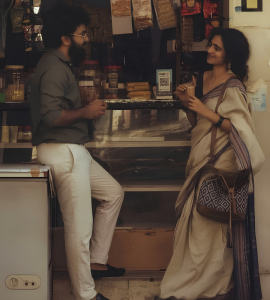
Dating apps like Hinge were built on the idea of self-directed romantic discovery: you browse profiles, chat, and meet without family oversight. In the U.S. or Europe, where dating outside family mediation has decades of precedent, this works. In India, where marriage remains closely tied to family, caste, and community networks, swiping can feel unserious if your goal is long-term partnership.
That tension plays out in subtle ways. Even well-educated, urban Indians often feel pressure to justify relationships in traditional terms once they turn serious. Parents are still gatekeepers for many marriages. Without a cultural bridge from casual dating to family-approved commitment, global apps struggle to retain users beyond a certain age or stage of life.
India’s marriage market is famously granular. There are apps and services for specific castes, for alumni of elite colleges, for high-income professionals, and for non-resident Indians seeking partners abroad. Each is a carefully carved niche that understands its users’ expectations.
Global dating apps, by contrast, try to be universal. Their swipe-left, swipe-right interface flattens difference into personal choice, assuming that chemistry and conversation are enough. But in India, choice is only part of the equation. Family approval, social compatibility, and community expectations remain powerful forces, making a single “everything app” feel mismatched.
This cultural reality has business consequences. User engagement on casual-dating apps can be intense — heavy swiping and short bursts of activity — but often lacks the long-term monetization that subscription-based matrimonial sites enjoy. Families often maintain paid profiles on Shaadi.com or Bharat Matrimony for months or even years, which gives those services a steady stream of subscription income. Dating apps run on a thinner margin. Most rely on advertising or small monthly fees from users who can swipe intensely for a few weeks and then disappear, leaving their revenue far less predictable.
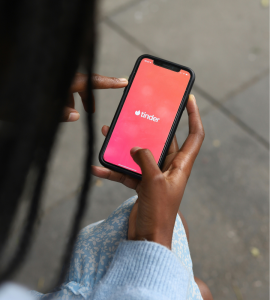
Safety concerns add to the strain. Even with photo verification or ‘women-first’ messaging, many women say they face unwanted messages, or harassment. That discourages them from staying on the platform and limits growth.
Some Indian startups are trying to bridge the gap. Apps like Aisle and TrulyMadly market themselves as spaces for ‘serious dating’, offering detailed profiles, curated communities, and a slower pace that suggests commitment without moving straight to arranged marriage. Others like HiHi use invitations and background checks to create curated networks. But these are still niche players, and none yet match the scale of either Tinder’s casual dominance or Shaadi.com’s matrimonial reach.
This landscape suggests that success in India requires specificity — whether it’s a platform for tech people in Bengaluru, working professionals in Mumbai, or a particular linguistic or caste group. The lesson may be that in India, romance is too diverse, too structured, and too negotiated for a single global template.
Dating apps aren’t slowing their flow in India because people aren’t dating. They faltered because Indian society already offers strong, culturally specific digital ecosystems for both ends of the romantic spectrum — casual flings and family-approved matches. Until an app can bridge that structural and cultural gap, the space between will remain stubbornly narrow.


Leave a Reply