

It begins with a notification. Your food has arrived and the guard approves your visitor. Your domestic worker has checked in at the main gate and a package has been collected on your behalf. Someone has entered the building and someone else has just left.
There was a time when this would have all felt odd or otherworldly. But none of this feels remarkable anymore, which is precisely the point.
Across urban India, millions of people now move through apartment complexes, workplaces, and neighborhoods mediated by apps. Visitors are logged, deliveries are tracked, staff attendance is recorded, and CCTV feeds stream directly to smartphones. Every movement generates data. Most of the people generating it do not think of what is happening as surveillance. They think of it as convenience, and that distinction, small as it seems, may explain one of the most consequential shifts in how Indian cities now function. Surveillance has not arrived as an imposition. It has arrived as a service.
The platforms behind this shift are not household names in the West, but their scale is significant. MyGate, founded in Bengaluru in 2016, now serves over 25,000 apartment complexes across India and has raised more than $80 million from investors including Tiger Global and Tencent. NoBrokerHood, whose parent company NoBroker has taken in over $200 million in funding including backing from Google, operates across tens of thousands more. Together, the two platforms are active in over 40,000 urban residential complexes. A loose American analogue might be Amazon’s Ring combined with an HOA management app, but these platforms go further in scope and deeper into daily life.

The pitch is straightforward enough. Cities are larger than they were a generation ago. Apartment complexes house thousands of residents who may never learn each other’s names. Families are geographically dispersed. Elderly parents increasingly live alone in buildings where their children can check in on them from another city. The ability to know, in real time, who is at the gate and when the domestic staff arrives offers genuine reassurance to people whose lives are structured around exactly these anxieties.
In that sense, these systems solve real problems. The question is what else they do.
Here is something the platforms do not advertise. When a resident checks whether the driver has left or whether the grocery delivery has been collected, they are not simply receiving information. They are also producing it. The timestamp of that check, the frequency of those queries, the pattern of who you approve and how quickly you respond, all of it accumulates into a behavioral record whose uses are not defined by you, and not fully disclosed to you either. The resident monitoring the delivery is also being monitored. The gate, as it turns out, watches both ways.
This is where the experience diverges depending on where you stand. For residents, the app is a dashboard. You can see who arrived and when they left, approve or deny entry with a tap, and operate, in the language of the platform, from a position of control. For the people being logged on the other side of that dashboard, the experience is something else entirely. Domestic workers, drivers, cooks, and delivery staff are photographed, timed, and rated as a routine function of building operations, often without meaningful consent and often without any real understanding of what is being collected or where it goes.
“I just press my thumb every day and go,” says Shanta, a domestic worker in Gurgaon. She is referring to the biometric attendance system used to register workers entering the society. “They told us a few years ago that without police registration and putting my thumb impression, I could not work in any of the societies.”
A 2023 investigation found that 14 domestic workers interviewed across complexes using these apps did not fully understand the features being applied to them. MyGate’s platform includes a rating mechanism through which residents can score workers on punctuality, attitude, and quality of service, but workers cannot see their own ratings and have no equivalent ability to rate their employers. MyGate’s co-founder compared this to employees using ID cards at corporate offices, though office employees generally know what is being tracked, have HR protections, and work within legal frameworks that domestic workers in India largely do not.
Workers, in this system, are not its least important participants. They are its most visible ones, the part of the data economy that has been made fully legible while having the least say in the terms. But to stop the analysis there is to miss the larger transformation. The workers are the sharpest illustration of an asymmetry that runs through the whole system. Residents are also inside it. They have simply been given a more comfortable position from which to experience that fact.
“People don’t think of it as surveillance,” says Udbhav M, a digital rights advocate. “They think of it as safety, as modern living. But convenience and control often travel together.”
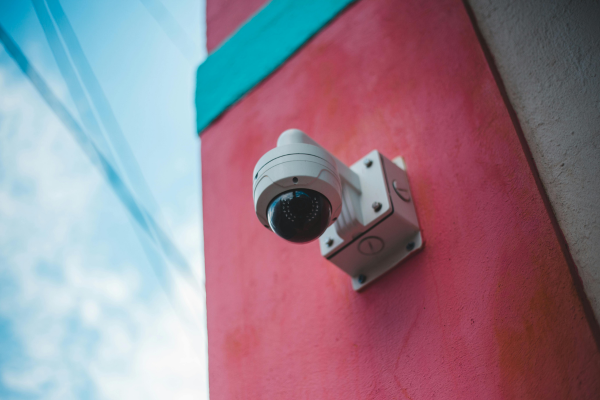
The Internet Freedom Foundation, a Delhi-based digital rights organization, has flagged excessive data collection, inadequate transparency, and poor consent protocols across residential management platforms. In several documented cases, apps stored location histories and facial recognition scans of workers who had no knowledge this was happening and no mechanism to access, correct, or delete the records. There are no unions negotiating data rights for domestic workers and no sector-specific regulation governing how a housing app may use a cook’s biometric information. The legal frameworks that might create accountability simply do not yet exist at the scale the technology has already reached.
What makes this more than a story about labor rights or data privacy is the question of how it happened so smoothly. Nobody announced a new surveillance regime for urban India. There was no public debate, no moment when residents collectively decided this was the kind of city they wanted to live in. The technology arrived packaged as a lifestyle upgrade and was adopted accordingly.
Part of the answer is speed. The platforms grew faster than any regulatory conversation could keep pace with. Part of it is framing, given that these are security apps rather than surveillance apps, and the distinction matters psychologically even if it is technically thin. And part of it is something more fundamental about what happened to trust.
A generation ago, trust between a resident and a domestic worker was, at least in theory, interpersonal. You knew the person who cleaned your house. They knew you. The relationship had texture even when it was unequal. Today that trust is increasingly outsourced to infrastructure, to the timestamp, the notification, the platform, and the record it keeps on everyone’s behalf.
That substitution has happened quietly and largely without examination, not just in how residents relate to workers but in how everyone inside these systems relates to everyone else. So, the neighbor you have never met, the delivery worker you will never see, and the guard whose name you do not know, all of them are now mediated by an app that turns presence into data and data into a sense of control.
“I like knowing who’s coming in,” says Rakesh, a resident of a high-rise in Pune. “It gives me peace of mind.” He pauses. “But yeah, we never really asked the workers if they were okay with it.”
That admission is more telling than it might seem. The failure to ask is not an oversight so much as a structural assumption built into these platforms, that some people are the users of the system and others are simply what the system runs on. The more interesting question, the one the platforms have no incentive to raise, is whether that distinction is as stable as it appears, and whether the residents who feel like they are watching have fully reckoned with how much they are also being seen.
The cameras at the gate are not going anywhere. MyGate alone processes over a billion check-in events annually. The infrastructure is being built at a pace that makes after-the-fact regulation very difficult, while the cultural habits forming around it are more durable still.
What lingers is the habit of trading the right to not be seen for safety. A whole architecture of trust has been rebuilt around the premise that knowing is the same as understanding, that the record is the relationship.
The gate watches. It logs and timestamps and notifies. What it cannot do is ask whether any of this was what anyone actually wanted. And who knows what the answer to that question would have been.



Leave a Reply