

There’s a culture building around a form of tourism that we don’t see much in advertisements. If your hairline needs a boost, you’re likely to head to Turkey. If you want glowing glass skin, you find yourself in South Korea. If you’re hoping to perfect your smile, you’ll probably find yourself in Albania. And if you’re looking to shave the rough edges off your nose, you’ll likely be flying to India. Welcome to the world of medical tourism for aesthetic procedures.
There’s nothing really new about medical tourism itself. What has changed though are people’s perceptions of it; patients are now far more open about flying around the globe just for an elective aesthetic procedure that might have drawn frowns earlier.
But what does this mean for the healthcare profession? And how does this impact the healthcare of those who are residents of these medical tourism hubs — are they getting left behind?
Roll out the red carpet
Governments have always welcomed medical tourists, with countries opening up their borders, and private hospitals opening up premium suites. Profits soar when patients from around the world pay their bills in foreign currencies. The medical aesthetics market was estimated to stand at 82 billion USD in 2024, and is projected to double in size to 143 billion USD by 2030.
And yet, for most people the world over, even basic healthcare is expensive. For cosmetic procedures, those costs escalate further. A hair transplant costs, on average, $13,000 in the US. In contrast, a trip to Turkey, including the flights, accommodation, and the procedure itself, could cost as little as $3,400, with a reputable clinic involved. That cost driver alone can be lucrative enough for people to consider it a viable option, regardless of the risks involved.
But this isn’t a story just about Turkey. Malaysia, South Korea, Thailand, Colombia, Mexico and India are well positioned as destination countries for aesthetic medical tourists. India, for example, is doubling down on the opportunity, with e-medical visas for medical tourists in place for nearly 170 countries, and a possibility of visas on arrival in the offing.
India’s edge in medical tourism lies of course in its affordability for international travelers, including those of Indian origin residing in the US, UK and Canada — treatments typically run 60–80% less than in the US or Europe — combined with over 57 JCI-accredited hospitals. The other enormous advantage is India’s facility with English; medical staff fluent in the language are an enormous draw for Westerners, and help ease the language barrier. It’s important to note that India caters to a swathe of visitors; around 88% of arrivals are from neighbouring South Asia especially Bangladesh, the Middle East, Africa, and Central Asia.
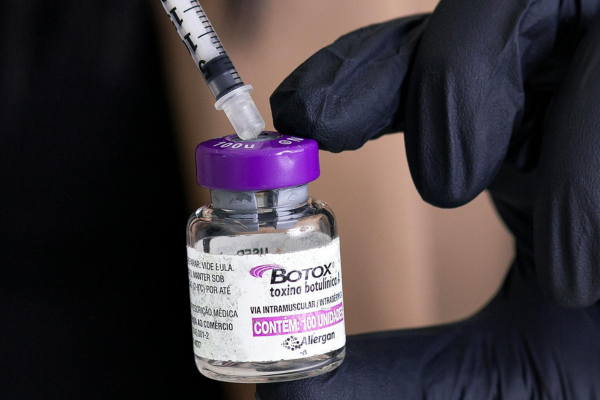
The country is already uniquely positioned as an aesthetic wellness destination through traditional Ayurveda and yoga retreats — Kerala, for instance, is internationally-known for its serene retreats offering holistic healing. Perhaps it’s no wonder then that a 2023 survey found that India is ranked second and third in rhinoplasty and liposuction procedures, and is well on its way to dominate in the fields of liposuction, rhinoplasty, Botox, fillers and semi-permanent makeup.
This is further strengthened by the government’s Heal in India initiative which emphasizes the country as a premier destination for integrated and holistic healthcare, for both complex medical procedures as well as aesthetic ones. As a result, India’s aesthetic healthcare market is estimated to reach approximately US$ 3.02 billion by 2030.
A new hierarchy
The low-cost-high-convenience model to achieve a certain set of beauty standards is attractive enough for people the world over to give it at least one go, especially since this was once available only to the super rich or the celebrities. With packages and services that can manage the end-to-end coordination for a medical tourist, that level of privilege is now available to anyone who can afford it. And affording it is simply getting easier, with time.
The tide is shifting even in countries like India, where there is now a surge in aesthetic procedures away from the big metros. Tier 2 cities are slowly increasing their access to quality aesthetic health care. Perhaps there will soon come a time when international visitors will fly into Patna for its specialized liposuction services!
Sure, this is a boon for visitors, but there’s a growing concern for the residents of these destination countries and how this medical tourism boon is reshaping the face of domestic healthcare, particularly for developing countries.
Since most of the medical tourism for aesthetic procedures is centered around private healthcare, the boost in the sector becomes lopsided, with public healthcare lagging.
Public healthcare tends to rural and urban populations at a highly subsidized rate, but is largely underfunded and as a result, suffers from overcrowding and large wait times, owing to the quantity of the population it has to service.
In Malaysia, for example, private healthcare is now reserved for the wealthy and for the tourists, while local populations must rely on underfunded public healthcare. Thailand is seeing an active brain drain from the public sector to the private sector, as doctors choose lucrative financial options over the rigor of public healthcare systems. Yes, healthcare is noble work, but privilege now dictates the quality of it.
While India’s policy push for medical tourism does emphasize on the need to safeguard domestic healthcare first, there is already a yawning economic divide when it comes to access to top-tier healthcare. Aesthetic medical tourism would be simply unthinkable for most of the population.
Taking a Stand
Healthcare has always been a service industry. But it has also always been distinguished as a calling, or an honorable career, because of what healthcare professionals do: they heal. Much like teaching, the ‘for profit’ consideration is culturally expected to be secondary to the actual act of service they provide through their skills.
However, when profits are booming from treating patients with only vanity concerns, it begs the question – what about those without these privileges? And perhaps this is the biggest unwanted cultural shift for destination countries in medical tourism i.e. an even greater gulf between the haves and have-nots.
More people than ever before are choosing to have these aesthetic procedures. And certainly their growing accessibility is reducing the gap between the haves and have-nots in the aesthetics department. But maybe it’s time we asked if the only ones benefiting from any growing healthcare system are those who access it on-demand and not on-necessity.





Leave a Reply