

Anyone who has grown up in India knows the scrap dealer, India’s OG recycler. Every neighbourhood depended upon his small store to offload their old newspapers, malfunctioning appliances, used plastic and glass bottles, old vessels and torn clothes. In return, customers got a small fee, while their discarded items were sent ahead to be repurposed and resold. The dealer enabled the circular economy well before it became a global buzzword for environmental protection.
According to the United States Environmental Protection Agency, the point of a circular economy is to keep materials and products in circulation for as long as possible. “A circular economy reduces material use, redesigns materials and products to be less resource intensive, and recaptures ‘waste’, or material that was previously considered to be a waste, as a resource that can serve (as feedstock) to manufacture new materials and products”.
In many ways, this is how an older India functioned. Clothes that children outgrew were handed down to cousins, knives were sharpened (a loudly-hawking knife sharpener would cycle round once a week), faded brass and copper vessels were polished by the kalaiwala, the cobbler sewed up the torn sole, and everybody ‘knew a guy‘ who would fix the leaky fridge, the creaking fan. The tail end of this cycle was, of course, the scrap dealer, who would gather items at the end of their lives and set them up for another life cycle.
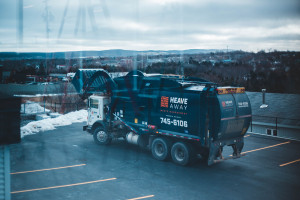
In doing so, he performed a crucial role. Urban India generates over 150,000 tons of waste each day, and the formal garbage collection and disposal systems are simply not equipped to manage it fully. The scrap dealer serves as the initial point in the recycling chain, alongside ragpickers operating within the same ecosystem. He gathers waste from households and commercial establishments, often in areas inaccessible to municipal collection vehicles, and sorts materials such as paper, plastic, metal, and glass before selling them onward to recyclers who transform them into new goods.
The informal waste sector provides employment to more than 2 million individuals, many of whom belong to marginalized communities, and is valued at approximately $13 billion annually. According to a study by the Centre for Science and Environment, scrap dealers are responsible for recycling over 40 per cent of Delhi’s plastic waste. This sector reduces municipal expenditure on waste disposal, prevents materials from reaching landfills, and lowers pollution and emissions associated with producing goods from raw materials.
But as society grows ever more prosperous, fast fashion enters our style lexicon, and delivery apps make ordering more and more things smooth as silk, India’s traditional economy has tilted to become a throwaway economy instead. People consume far more nowadays, while the use of plastic in everything, even clothes, has grown proportionately, and landfills grow ever taller and more toxic. In the modern-day hustle-and-bustle of urban living, with office-going nuclear families, the connection with the scrap dealer is slowly being severed.
Thankfully, a generation of entrepreneurs has stepped in to help.
ScrapUncle, which was featured on Shark Tank India, provides doorstep collection services at pre-established rates; the company has raised ₹22 crore to develop a structured, technology-enabled logistics network. The Kabadiwala, born in Bhopal and now in 15 Indian cities, has digitized the traditional scrap network through app-based bookings and tracking systems. Maharashtra’s ScrapJi is a far cry from fulfilling its mission to make India trash-free by 2030, but the initiative is laudable. Its AI-driven pricing intelligence folds in local scrap dealers, with the aim of transforming them into organized operators rather than replacing them entirely.
Behind these consumer-facing applications lies a broader infrastructure layer. Kabadiwala Connect, based in Chennai, maps the urban informal waste ecosystem. Using ICT and IoT based technology, the organization integrates informal actors into the formal waste management system.
And in Ambikapur, Chhattisgarh, at the Garbage Café, you can pay for your meals with garbage. One kilogram of plastic earns a full lunch or dinner, while 500 grams is exchanged for breakfast. “More the waste, better the taste” is their slogan. The program, financed by the municipality, looks to provide food to those in need while simultaneously removing plastic from public spaces.
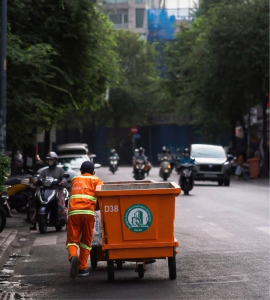
Yet, we must strike a cautionary note here. If digital platforms were to simply bypass the traditional waste dealer and the scrap-picker, it would lead to the evisceration of jobs of an already marginalized group. However, if they succeed in integrating them through fair pricing, digital payments, safer working conditions, and a formal role within the supply chain, it could represent one of the more quietly inclusive technological developments in the country.
Early signs are encouraging. Many of these initiatives are designed to formalize and empower existing collectors rather than replace them. The scale of the raddiwala may now be accompanied by a digital interface, but the fundamental role remains unchanged: turning waste to wealth.




Leave a Reply