

Every so often, a post goes viral on X. It’s usually some variation of “No, this is not New York! Can you believe this is Secunderabad / Ajmer / insert name of smaller city in India.” The post is always accompanied by a photograph or video of sweeping glass-fronted skyscrapers (usually a mall or office building), meant as a marker of progress and confidence in a flourishing contemporary India, an India that has risen in power and splendor on the global stage.
Such towers certainly seem to be in fashion now. Across India, commercial builders are erecting 30-40-floor buildings fronted with sheets of glass, with names like Utopia, World Towers, Bellissimo and Royale. The tall, cloud-kissing structures, together with their exotic names, are telling. They gesture at luxury and a sort of utopian Western ideal that stands at odds with the chaotic city streets.
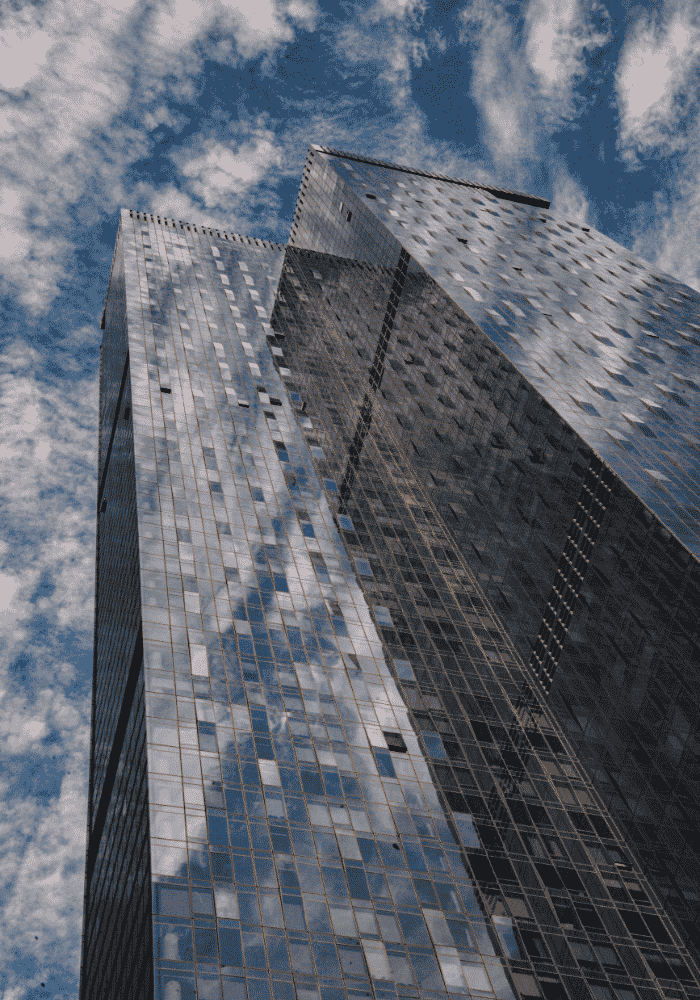
It makes sense that the style was first adopted by big-city corporations aiming to project power, confidence, and wealth. Glass-swathed structures appealed to businesses trying to evoke the dynamism and grand ambitions of technology-forward futurists, perhaps appropriate for a country that has laid tremendous emphasis on scientific development since the Nehruvian era. Large panes of flawless glass were also once extremely expensive to make and insulate, so a glass-fronted home or storefront signalled (and still signals) wealth, sophistication, and access to premium views.
Yet, for a country with a long tradition of local architecture, why do we still copy-paste this global template? Its suitability in sun-drenched cities is questionable. Glass acts as a greenhouse, baking in the sun’s heat and forcing air conditioning to work harder and harder. The UK’s High-Rise Buildings: Energy and Density project analyzed energy consumption data from hundreds of buildings. It found that electricity use soars by two and a half per cent, and that, on average, carbon emissions from air-conditioned offices are 60% higher than from those that are not. These are steep numbers, especially for a country wracked with heatwaves, and economic and climate instability.
Meanwhile, traditional Indian architecture, locally appropriate and climate-resilient, languishes on the margins. For instance, deep overhangs cut out the harshness of the sun’s rays. Jaalis, netted screens, reduce the sun’s glare while allowing for cross-ventilation.
Yet all is not lost. The fully glazed facade, once corporate India’s shorthand for progress, is slowly being seen as a liability, with a swathe of Indian architects marrying modern structural engineering with ancient Indian architectural wisdom.
The jaali, in particular, is staging quite the comeback. Most famously, Microsoft’s Noida office uses latticed screens and arches, reminiscent of the Taj Mahal. Sanjay Puri Architects designed a Jaipur office tower that blends jaali walls with glass frontage to rethink the aesthetics of a modern office. Similarly, the headquarters of Punjab Kesari newspaper in New Delhi fuses a distinct jaali design with contemporary office aesthetics.

None of this implies in any way that glass must be banished from Indian architecture. The problem comes when the effects of glass frontages are not mitigated in environment-friendly ways.
The deeper issue is cultural. India’s construction industry sits at a crossroads, torn between conspicuous consumption and the demands of energy-efficiency rules. Resolving that tension means reconsidering what we consider prestigious. A building that stays cool through intelligent design is far more sophisticated than one that stays cool only because an air conditioner is working at its limits.
For decades we assumed that looking forward meant looking outward. The better path may be to look back, at our own climate and architectural inheritance. The jaali, the courtyard and the deep verandah were never primitive. They were solutions, refined over centuries by people who couldn’t simply turn up the air conditioning. Our cities deserve buildings that are as smart as that.





Leave a Reply