

Everyone immediately recognizes a French film. But what does an Indian cinematic aesthetic look like? Now that answer is far too big, too plural, and too contradictory to fit one scheme.
Let us first consider French film. That French film has its own distinctive palette is obvious, but it is not because France is culturally singular. Rather, it came about because of the French New Wave movement, a small, cohesive group of filmmakers and critics who first set out a shared theory of cinema: natural light, jump cuts, location shooting, a cool, desaturated urban look, philosophical dialogue instead of plot. The group, including Jean-Luc Godard, Alain Resnais, Agnès Varda, André Bazin, Jacques Demy, François Truffaut, Éric Rohmer, Claude Chabrol, Jacques Rivette, Chris Marker, was deeply influential. Even sixty years on, filmmakers from Claire Denis to Olivier Assayas to Céline Sciamma are still working within that grammar, either extending it or pushing back against it. That is not ‘French’ culture necessarily; it is the pull of one movement, kept alive because French film culture is small and centralized enough.
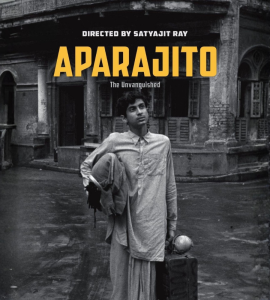
India on the other hand, never had one defined canonical film movement. Even though Bollywood’s sweeping influence may suggest a homogenous Indian culture, it represents only a fraction of the totality of the country’s cinema. Instead, India has a series of regional and historical visual dialects — Mughal grandeur, Bengali lyricism, Tamil modernism, Deccan gothic, Bombay maximalism.
You might think the simple explanation is the country’s immense geographical diversity. You would be right, but that is only one part of a much wider story. Each region has developed its own distinct film tradition — Bengali, Telugu, Malayali — complete with its own circle of critics, financiers and audiences. These traditions have evolved largely in parallel, shaped not only by language but also by distinct theatrical histories and cultural inheritances.
Bollywood is kitschy and hyperbolic. For example, one of Hindi cinema’s greatest spectacles, Mughal-e-Azam draws its visual grammar from Mughal court painting. Its marble halls, jewel-toned costumes, and candlelit mirrors form an Indo-Persian dreamscape that defined cinematic opulence long before CGI. The film’s grandeur wasn’t just aesthetic; it was architectural, a world was built from the grammar of Mughal architecture itself: symmetry, excess, and devotion.
Malayalam cinema holds two temperaments at once — Adoor Gopalakrishnan’s slow, decaying feudal Kerala and Lijo Jose Pellissery’s swirling, operatic chaos — yet both speak the same visual language, rooted in ritual, water, and waiting.
Tamil cinema’s aesthetic has always been more architectural than ornamental — geometry, light, and precision. Mani Ratnam (in films such as Alaipayuthey and Kaatru Veliyidai) made the modern South Indian city cinematic: trains, glass, rain, blue filters, and human intimacy against motion.
Meanwhile, Bengal’s cinema has always looked like literature feels — rhythmic, intimate, poetic. In Charulata, Satyajit Ray turned Tagore’s 19th-century prose into light and shadow — embroidered curtains, quiet gestures, emotional precision.
In Tumbbad, a film set in the Deccan region of Maharashtra, the monsoon itself becomes a character. Decaying Maharashtrian mansions collapse under greed; rain and myth mix until you can’t tell which is more alive. This is the Indian Gothic — where darkness is domestic, where horror seeps from architecture and inheritance. Western gothic lives in castles; Indian gothic lives in attics, temples, and forgotten wells.
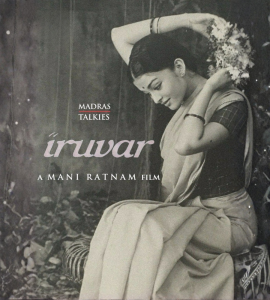
To understand Indian cinema visually is to understand that it has no single center. Mumbai glamour, Chennai modernism, Kolkata lyricism, Kerala austerity — each forms a language of image, rooted in geography, history, and art. If French cinema is color-coded precision, Indian cinema is painterly chaos with intent — every excess justified, every stillness loaded.
For a global audience used to Indian cinema as ‘spectacle,’ the truth is richer: a cinema that moves between temple and nightclub, miniature painting and neon alley, myth and modernism — and somehow makes them all speak the same emotional tongue.



Leave a Reply