

In 2025, Tesla finally made its way to India — a move that might have made headlines five years ago. But the EV giant’s entry today feels less like a disruption and more like a negotiation. That’s because India’s electric vehicle market has already begun shaping itself — Tata Motors, once the uncontested leader in India’s EV race, is now losing ground to smaller, savvier competitors offering cars that are not just cheaper, but smarter for Indian roads, Indian families, and Indian needs. What’s unfolding isn’t just a commercial shift. It’s a cultural one.
Car design often carries the illusion of universality — that a good car is a good car anywhere. And that’s certainly true, but with several caveats. From ground clearance to boot space, climate control to infotainment systems, what makes a car desirable in one country can make it unusable in another.

Consider the Ferrari on a Mumbai road. Its low ground clearance may glide across California highways, but it stands no chance against Mumbai’s monsoons, twisting lanes and cratered roads. Rolls-Royce, once the epitome of British motoring, designed cars for narrow lanes and polished roads. In contrast, Indian-designed cars have evolved with wider tires, sturdier builds, and suspensions that can absorb the chaos of Indian streets.
Even in the EV segment, the same technology lands with very different expectations. In the US, EVs often represent luxury, climate consciousness, or cutting-edge innovation. In India, the story is different. Here, EVs are a necessity — affordable alternatives to fast-depleting traditional fuel sources, nimble enough for cramped streets, and reliable during power outages. It’s partly a status symbol, partly survival and convenience.
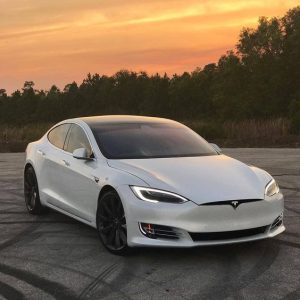
Tesla’s challenge in India isn’t just its steep prices. It is relevance. Much of India isn’t waiting for a sleek, autonomous sedan that parks itself. It wants affordable two-wheelers that can get a delivery driver through peak traffic. It wants compact EVs with fast charging and low maintenance — not high-performance vehicles that speak the language of excess.
This is why Tata’s early dominance made sense. The Nexon EV and Tiago EV offered what the average middle-class Indian buyer needed: space, affordability, and just enough prestige. But now, newer companies like MG and BYD are gaining traction with designs that are even more tuned to Indian priorities — fast-charging capabilities, infotainment that supports regional languages, and intuitive tech that works even when internet signals are patchy.
The way we move says a lot about the way we live. In the US, a car is an extension of personal identity — performance, design, even political alignment (a Prius vs. a pickup). In India, a car is often a family resource — expected to seat five comfortably, store luggage for road trips, handle rural and urban roads alike, and still be fuel-efficient.
Even basic design elements reflect this. American cars rarely prioritize back seat comfort because they’re built for individual or couple travel. Indian cars often offer more legroom at the back because elders, children, and even extended family are part of everyday mobility. Features like air conditioning vents in the back, larger glove compartments, or higher seating all stem from this very different sense of who a car is for.
The same holds true for infotainment systems. In the US, it’s about seamless integration with Apple CarPlay and Spotify. In India, it’s about dual SIM support, offline navigation, and the ability to play WhatsApp voice notes off a pen drive.
If there’s one lesson from the surge of EVs, it’s this: adoption is not just about access — it’s about adaptation. Technology may be global, but its success often hinges on how local it’s willing to become.
The real competition in India’s EV market isn’t just about who offers better range or faster charging. It’s about who listens better — to the needs of delivery drivers, joint families, rural schoolteachers, and young professionals trying to survive on increasingly tight budgets.
Tesla may be a tech icon, but in India, it now competes with something far more powerful: cultural intelligence. And for that, engineering alone won’t be enough.





Leave a Reply