

Here’s a thought experiment for you, dear reader. What springs to mind when you think of a jackal? A vulture? A snake?
If your first thoughts are of rapacious, predatory creatures, you aren’t alone. English is brimming with tired metaphors and similes that tar entire species and ecosystems. Here is a brief list, restricted only to the English language:
‘Stupid / lazy donkey’, ‘as dumb as a dodo’, ‘barren desert’, ‘drain the swamp’, ‘greedy pig’, ‘die like a dog’, ‘circling vultures / preying like a vulture’, ‘sly fox’, ‘bird brained’, ‘snake in the grass’, ‘a rat’, and so on.
Are any of these accurate? They couldn’t be farther from the truth.
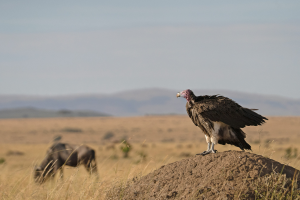
Were the dodos actually dumb? Not at all, says this report from the American Museum of Natural History; in fact, they were fairly intelligent. A real snake in the grass is actually a shy creature mostly looking to avoid human contact. Vultures and jackals are crucial clean-up crews of the landscape. Donkeys, beaten until they collapse under unimaginably heavy loads, are anything but lazy. Dying a dog’s death is particularly brutal for a species that humans domesticated for their own purposes. Are deserts actually deadlands? Of course not, they are biodiverse, flourishing and crucial to the larger ecosystem. And we certainly shouldn’t drain any swamp; wetlands are full of life!
Why so serious, you might ask? Why must we rescript such terminology?
The answer is not just because it is inaccurate, but because language drives thought, and thought drives intent, and intent drives action. Because such casual misrepresentations help open the gates for governments and corporations to concretify these delicate ecoscapes. Because, for species already teetering on the brink of extinction, these tropes may be the elbow that nudges them over the edge.
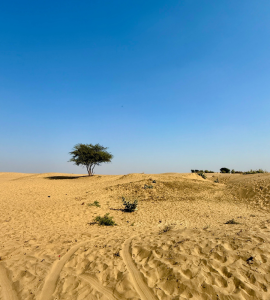
A concrete example? The government calls most of the deep Thar a ‘wasteland,’ and believes therefore that its resources can be better deployed in other ways. In the ‘dead’ deserts of Rajasthan, vultures are being sliced to death by ‘eco-friendly’ windmills. Meanwhile, the beleaguered ‘bird-brained’ Great Indian Bustard is almost extinct because its homelands in Gujarat have been scooped away by power companies – one estimate suggests 30,000 birds die annually, due to collisions with power lines. And the bustard itself? It’s just a heavy, slow-witted creature.
These are actions that would change the fates of entire ecosystems. Considering the climate crisis and its entirely unpredictable weather systems, their existence remains paramount. Yet we continue on the path to shoot ourselves in the foot. It is precisely such an impoverishment of thought has led to the Age of the Anthropocene, that in the words of the author Robert Macfarlane, a time in which “human activity is considered such a powerful influence on the environment, climate and ecology of the planet that it will leave a long-term signature in the strata record.”
Language deficit leads to attention deficit. In the words of Wendell Berry, the American farmer and author, “people exploit what they have merely concluded to be of value, but they defend what they love, and to defend what we love we need a particularizing language, for we love what we particularly know.” How we describe the natural world around us makes an enormous difference to our capacity for understanding and imagining non-human nature is depleted. Our relationships with the natural world weaken as a result.
What we stand on should be what we stand for.





Leave a Reply