

In 2024, an enormous crowd sways to Prateek Kuhad’s dulcet tones under a cerulean March sky. In 2025, Jasleen Royal belted her heart out at the D Y Patil Stadium, in a soft Mumbai gloaming. In 2026, on a cool Bengaluru night, Neyhal sang soft serenades on a stage in Phoenix Market City. The connection between all three? They all opened for international superstars – Ed Sheeran, Coldplay and Michael Learns to Rock.
India’s contribution to global music for a long time was to provide a fleeting taste of its diverse soundscape before the main event took center stage. However, that function has changed in recent years, slowly transforming into something far more significant. For many Indian artists, opening for international superstars isn’t just a gig — it’s a test of talent, of taste, and, perhaps unfairly, of legitimacy.
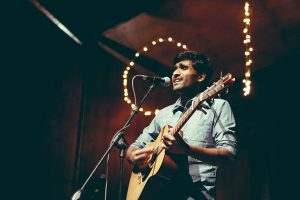
These moments are framed by the media as breakthroughs for the Indian musicians, as an indication that Indian music is at last breaking onto the international scene. Are these musical introductions more about looks than potential, though?
Theoretically, opening acts are an opportunity for audiences to discover local talent and a nod to local importance. In practice, they’re often a litmus test for whether an artist can carry the weight of audience expectation before a stadium erupts for someone else. Can they impress an impatient crowd that’s mostly there for the headliner?
It’s not just about being good — all the performers are good, perhaps even better than the headlining act. It’s about being palatable and accessible. Global enough to fit — yet distinct enough to represent something ‘authentically Indian’. That tension is both the promise and the peril of opening for international names in India. You’re seen, but are you really heard?
But where are they now? Let’s track their trajectories. Divine’s pre-Post Malone slot felt like a full-circle moment — the homegrown rapper whose music once echoed in Mumbai’s gullies now centre stage at a mega gig. But Divine was already a star. Did opening for Post change anything? Probably not.
Similarly, when Anuv Jain opened for Ed Sheeran, it sparked chatter — was his mellow, acoustic vibe a safe choice? Did it widen his base or simply reaffirm what his fans already knew?
But Divine and Anuv were already stars in India. Lesser-known performers frequently return to local circuits, their international prominence swiftly forgotten. For them, the slot turns into a line in their biography; it’s remarkable, sure, but it’s not always revolutionary.
Similarly, when Anuv Jain opened for Ed Sheeran, it sparked chatter — was his mellow, acoustic vibe a safe choice? Did it widen his base or simply reaffirm what his fans already knew?
But Divine and Anuv were already stars in India. Lesser-known performers frequently return to local circuits, their international prominence swiftly forgotten. For them, the slot turns into a line in their biography; it’s remarkable, sure, but it’s not always revolutionary.
Opening for a global name means infrastructure, press, a larger-than-usual audience. It’s a fast pass into a moment that might take years to build otherwise. But it also reveals a deeper anxiety: that Indian artists are still waiting to be validated from the outside. That recognition must come with a stamp — global, Western, verified.
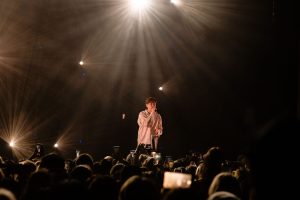
The irony? India’s music culture has never been more expansive. From Tamil hip-hop to Punjabi pop, indie electronica to regional folk revivals — the real sonic revolutions aren’t happening in stadiums. They’re happening in private rooms, on YouTube, at intimate gigs where language and geography matter less than vibe.
Still, the question remains. In the end, do opening acts matter?
Yes, of course they do. But their evolving status is a mixed blessing. They don’t promise longevity; instead, they offer visibility. And whether that moment becomes a movement depends less on who you open for, and even more on the artist’s next step.
In a country as culturally dense and musically diverse as India, perhaps the real test isn’t opening for the world — it’s opening up the world to us. On our own terms.



Leave a Reply