

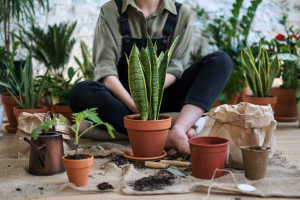
If you’ve lived through the pandemic, you’ve probably seen this on your Instagram. A woman bent over in quiet communion with her aloe plant, a man proudly displaying a small basket of tomatoes harvested from his terrace garden.
During the lockdowns, terrace and balcony gardening stopped being a niche hobby and became a default ritual. And what started as a response to confinement quietly settled into a regular hobby, long after those locks were keyed open.
But this isn’t a story just about terrace gardening. Now that life has tumbled back to the rugger-tugger of normalcy, now that we are back to being pressed for time (and money), who really has the time for a hobby?
Pottery, embroidery, and yes, even kitchen gardening (all practices that previous generations of Indian women carried out as part of the slog of their daily life) are now being shown on our phone screens as somewhat elite antidotes to modern living.
In fact, such hobbies, ostensibly opposing a capitalist society, have always simply mirrored it. During the Industrial Revolution, the hobby was seen as a productive way for the working classes to spend their leisure time; the privileged classes were convinced that without a virtuous use of their time, workers would descend into – horror of horrors – idleness! Drunkenness! Immoral activities! The hobby became a moralistic, socially-approved task.
Several years later, the economist Thorstein Veblen’s text, The Theory of the Leisure Class, argued that in fact, ruling classes have always distinguished themselves through economically unproductive pursuits, while manual labor remained the task of those they considered ‘below’ them. He called this performance of idleness ‘conspicuous leisure’.
Veblen would have been amused to discover that he is in fact, an Instagram darling today, quoted across reel after reel. Or perhaps he might shudder to see the similarity between our societal and intellectual patterns.
For many Indians nowadays, leisure has been entirely conscripted into work. Today’s gig economy is partly at fault. Contentment is never enough, and so we must strive for more, bigger, better always. Our free time is spent learning AI tools to level up at the office, or working with freelance clients on the weekend, or transforming our pets into Instagram stars. At one time, the biggest flex was to be busy, and what you did in your leisure time would, even indirectly, help build skills that would swell your productivity.
The economy builds a further tier onto this – crippled by rising prices and growing unemployment, do we even have a choice but to hustle?
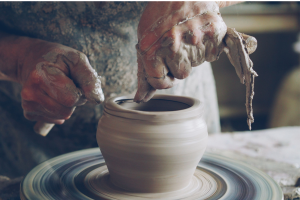
So what does it say then when we see actress and model Manushi Chhillar sharing a video of herself gingerly shaping a pot on a potter’s wheel, in between shoots? Or that Meghan, the Duchess of Sussex, has an entire show on Netflix focused on entertaining wealthy friends by color-marbling silk scarves, or crafting elegant floral arrangements with flowers grown in her enviable garden?
Critics who lambasted her show as being out of touch are missing the point. The point is the conspicuous leisure – being able to live the ‘slow life’, to create pretty objects for no noticeable financial gain, to be able to do nothing useful with her spare time. She can afford these pastimes. Can we?
The pottery wheel and the calligraphy brush are not just hobbies. They are announcements. They say: I have discretionary income. I have unscheduled Saturday mornings. I have a home with a terrace.
None of this is to diss on pleasure. To celebrate beauty and profundity, to draw calm from chaos, and to halt the unbearable hurtling of our days often gives us the mental capacity to carry our lives forward. At a time when communication is frequently reduced to chattering heads on screens and meaningless nubs of emojis, old-fashioned social connection is powerful in itself. It is perhaps the essence of human experience. And sometimes, it is all just for fun, and even that is reason enough. But the question remains still – who amongst us today, can afford this?





Leave a Reply