

Ask most Indians when podcasts ‘arrived’ here, and you’ll get shrugs rather than a date. There was no single Serial moment, no viral true-crime season that pulled a whole country into earbuds overnight — the medium crept in sideways, through WhatsApp forwards and YouTube autoplays, in a dozen languages, for years. That quietness is exactly what confused the industry watchers who, back in 2019, were predicting India’s podcast breakout on the strength of rising smartphone usage, affordable data, and a growing appetite for niche content.
Several years later, the boom they expected did show up, just not in the form they expected. Unlike the US or UK, where podcasts are a culture-shaping industry with breakout stars, bestseller lists, and lucrative ad deals, India’s podcast space works differently, shaped by language, intimacy, and a different kind of podcaster.
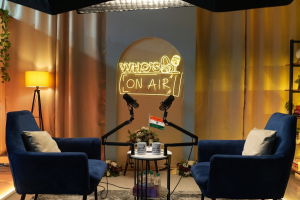
The US might have true crime junkies and wellness obsessives. India, on the other hand, is known for its motivational talks, gastronomic explainers, cricket commentary, and financial advice.
Take The Musafir Stories, a travel podcast hosted by Saif Omar and Faiza Khan, that highlights underrated travel destinations. Or The Real Food Podcast, hosted by Vikram Doctor, that travels across the gamut of Indian food. These shows do not have glossy production values with enormous studio budgets. But to the listener, they feel personal and intimate.
Part of the issue is infrastructure. In the U.S., a podcaster might monetize through ads, subscriptions, merchandise, and live shows. In India, many podcasts are labours of love. Ad rates are low, brand partnerships are limited, and platforms prioritize big names. English-language podcasts dominate the homepage, often skewing male, urban, and elite.
But that’s changing. Platforms like Spotify and HT Smartcast are investing in original Indian programming. Audiobooks and fiction serials are gaining traction. And homegrown networks like Suno India and Maed in India are building space for queer voices, rural stories, and investigative reporting. It’s worth remembering that our podcast history reaches back to at least 2015 when Audiomatic, launched by Tariq Ansari and Rajesh Tahil, India’s first podcast network, was launched.
There’s also a reshaping of the format itself. In India, a successful podcast isn’t always audio-only. Many popular shows are visual-first — published on YouTube with video, clips, and subtitles. Think The Ranveer Show, enormously popular, marrying interviews with TED Talk energy. Or Table 1, where host Vir Sanghvi discusses the country’s restaurant-scape with chefs and restaurateurs. This video-podcast hybrid reflects how Indian audiences move across platforms. It also speaks to the fact that the most successful podcasts are personality-driven.
Over 75% of new internet users now prefer their ‘radio’ in regional languages, fuelling a surge in Hindi, Tamil, Telugu, and Marathi audiobooks alongside a new genre of television-quality ‘Audio Cinema’ micro-dramas, with the market itself projected to reach $1.1 billion by late 2026. Kuku FM, India’s leading vernacular audio platform for audiobooks, personal finance, and self-help since 2018, embodies that shift — it secured $85 million in Series C funding led by Granite Asia in late 2025/early 2026.
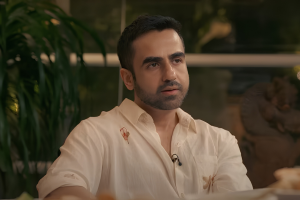
Entrepreneur Nikhil Kamath, host of the podcast WTF Is...
Today’s most popular shows — Figuring Out with Raj Shamani, The Ranveer Show, WTF is with Nikhil Kamath, Finshots Daily, The Seen and the Unseen, and The Desi Crime Podcast — skew heavily toward business and self-improvement advice rather than the true-crime and prestige-narrative genres that dominate in the US, confirming that India’s audio boom is building its own template rather than importing one.
So what makes a podcast work in India? It’s rarely just audio quality or celebrity guests. It’s voice. It’s relatability. It’s rhythm, tone, and a certain unpolished intimacy. A host who sounds like someone you know. A story that reminds you of something your cousin once said. In a culture built on oral history, podcasts that work here often feel like a phone call, not a broadcast.
Will India ever have its own Serial moment? Why does it even need to? The podcast future here is intimate, multilingual, video-first, hybridized, hyperlocal. And that’s not a shortcoming. That’s the sound of a new audio language.

Leave a Reply