

Walk into any mall in India, and chances are, you’ll be greeted by a somewhat odd sight. Toy stores are choc-a-bloc with adults (and not necessarily accompanied by any children either). Look even closer. You’ll spot a dangling charm clipped on to even the most fashionable handbag. Across the aisle, the fancy cafe has a shelf heaving with Ludo, chess and Snakes and Ladders.
This, the reversion of adult pastimes into child-like games, is ‘kidulting’ and in India, it is having a genuine cultural moment.
If any one object symbolizes this shift, it’s the Labubu. The odd-looking doll-like figure created by Hong Kong artist Kasing Lung and sold through Chinese toy giant Pop Mart has become a global obsession. Bollywood actress Urvashi Rautela boasts the dubious achievement of being the first actress in the world to clip four Labubu dolls onto her bag. Even Amitabh Bachchan hopped onto the zeitgeist by posting a photograph of one hanging in his car.
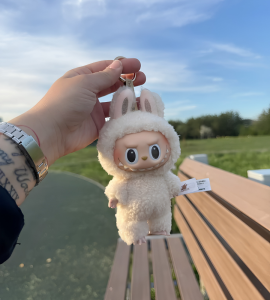
It’s gone beyond the Labubu too. Bag charms are now a dime-a-dozen, a micro-trend attributed to Gen Z (but spotted slung across the bags of millennials and Gen X as well. Widen the wave a little, and you’ll see adults drawn to plush toys — ‘stuffies’ — as objects of comfort rather than nostalgia alone.
These toys and figurines have become more than cute add-ons: they’re conversation starters, comfort objects, identity tags. In a world still spinning from a pandemic, economic anxiety, and endless war headlines, kidulting is becoming more about how we’re coping with burnout. This isn’t new. Every time the world has faced upheaval, our lifestyles have shifted too, quietly absorbing the mood of the moment.
A quieter strand of the kidulting movement is the boom in miniatures — dollhouses, book nooks, and dioramas aimed at adults. Take a gander at Etsy India, and you’ll find hundreds of wizarding toys and dioramas targeted squarely at Potterheads who are willing to spend up to ₹ 23,000 for a hand-made Harry Potter diorama of Gryffindor’s common room.
And board games, once relegated to childhood shenanigans, have become so embedded in India’s culture-scape that someone has even built a website that gathers together every board game cafe, board game communities and publishers, and stores, in cities ranging from Chennai and Mysuru to Pune and Mumbai.
Globally, dollhousing has grown into quite an industry. The UK’s Kensington Dollhouse Company builds exquisite dollhouses on private commission for adult collectors, with open-handed buyers willing to pay anything from up to £100,000 for one. The global dollhouse market, estimated near $1.2 billion, is projected to roughly double within a decade thanks to new generations of adult collectors.
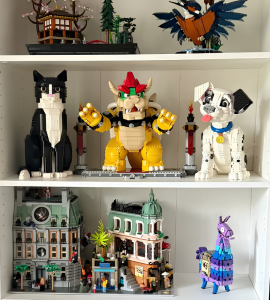
Then there’s LEGO, which has spent decades building one of toydom’s most devoted adult fanbases — so devoted that hobbyists have their own acronym, AFOL: Adult Fan of LEGO. In India, LEGO Collector’s Week 2026 celebrated the country’s growing community of adult collectors. Bengaluru’s John Seemon, for instance, owns more than 400,000 pieces.
While the bag charms might appeal to a more fashion-forward section of consumers, LEGO appeals to a different instinct: a slow, structured, screen-free task with a clear end — rare in a phone-dominated routine.
Most explainers on kidulting lapse into nostalgia and suggest that adults are seeking a wisp of their pre-lapsarian history, trying to recreate the simple joys of childhood play. Psychologists believe that it can genuinely lower anxiety. That framing lands hard in India, where conversations about burnout and mental health have opened up considerably in just a few years. A Labubu on a bag or a half-built dollhouse isn’t just a purchase; it’s a small, low-cost act of self-care that needs no explaining to anyone.
So if you’re wondering why even the busiest professionals are buying dollhouses or clipping toys to their luxury bags, maybe it’s not about taste at all. Maybe it’s just one more way we’re all trying to make sense of a world that keeps shifting under our feet — one toy at a time.





Leave a Reply