

Away from the bedlam of Mumbai’s trafficked streets lies a tiny pocket of peace. This is the Edenic Aarey Forest, buffer to the Sanjay Gandhi National Park, and home to a variety of wildlife and a rich mosaic of independent indigenous groups. These ethnic minorities are amongst Mumbai’s first residents; the city grew itself around them. But up until now, they have largely been written out of the annals of the city’s history.
Some heritage groups are working to change that. GoHalluHallu (the name translates to ‘walk softly’, in Marathi) is handing all the power back to the city’s tribal residents — fossicking through the forest for foraged produce with Vanitatai, a forest resident; learning the ways of traditional Warli art with Dinesh.
Meanwhile, within the teal forests of Uttarakhand, Village Ways, a social initiative, have empowered the local people of the land to set up their own homestays and trekking operations.
But let’s shift the narrative further afield.
Steam rises from a geothermal valley in Rotorua just after sunrise. The air smells faintly of minerals. A Māori guide stands at the edge of a pool that has been bubbling for longer than any recorded history. He doesn’t point to the steam or recount a legend on demand. He begins with something simpler — the name of the valley, the river it connects to, the lineage it carries, the responsibility it asks of people who walk through it. Before you realise it, the landscape is no longer scenery. It is a teacher.
What is happening in all these places is slow but inevitable. Around the world, Indigenous communities are beginning to decide how visitors encounter their land, their stories, and their knowledge. Travel used to mediate those things through brochures, guidebooks, and outsiders’ interpretations. Now, in more places each year, communities are setting the terms themselves.
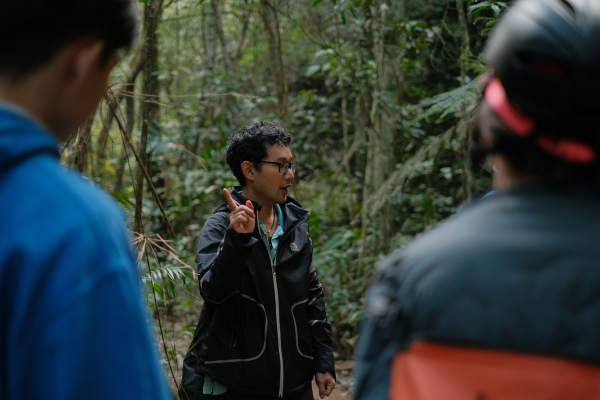
Over the past decade, Indigenous-led tourism has gained ground in places as varied as the Arctic, Aotearoa New Zealand, Canada, the Amazon, and communities across Asia and the Pacific. While each story is shaped by its own history, culture, and landscape, they are all twined together by a common thread: local communities are taking the lead in deciding how their homelands, traditions, and knowledge are presented to visitors.
Consider the Sámi in northern Scandinavia. Their tours are often small by design. A herder might explain how reindeer behaviour signals seasonal change or how migration routes have shifted with warming temperatures. The focus is on reading the land, not entertaining visitors. In Canada, some First Nations groups, such as the Takaya Group, run canoe journeys and cultural stays that fund language revitalization or community programs.
In the Amazon, certain river routes are now managed by the tribes who have always lived along them. Visitors learn why parts of the forest must stay untouched, or why certain trees matter more for the long-term health of the ecosystem than they do for photography.
Three forces conspired to bring this about. The first was climatic: as the climate crisis looms larger, knowledge accumulated over centuries of close observation has acquired a new market value, one that models and satellites cannot easily replicate. The second was a shift in what travelers actually want. Global tourism has produced a strong backlash: visitors are hungry for something that feels, however loosely defined, ‘authentic’. The third owed less to consumer taste than to law and politics. Decades of litigation, treaty negotiation and activism have handed many Indigenous communities greater control over their own land and the stories told about it. Tourism became one of the few spaces where these threads could meet. Not as an extraction, but as an exchange.
Indigenous-led travel asks visitors to slow down. It asks them to learn something about how a place thinks. It shifts the focus from “what can I see here?” to “what responsibilities does this landscape carry, and how did people learn them over centuries?”
This isn’t a romantic return to tradition. It is a different way of being a guest. When a Sámi guide explains weather patterns or a Māori guide traces whakapapa through a valley, the knowledge is not being performed. It is being offered with context and care. The traveller becomes part of a conversation rather than a spectator.
Mainstream tourism often moves quickly. It repeats the same script from Bali to Barcelona: highlights, photo points, curated authenticity. Even sustainability programs frequently centre convenience for visitors.
Indigenous-led travel moves differently. It listens first. It builds around consent, not access. It emphasises land over itinerary. And because communities decide what can be shared and what stays within, the boundary between public and sacred remains intact.
In Canada, the federal government has established an Indigenous Tourism Destination Fund, arguing that Indigenous tourism advances both economic development and reconciliation. Recent investments have focused on Indigenous-owned visitor experiences and community-led tourism enterprises
The numbers add up too. The New Zealand Government recently reported that Māori tourism businesses contributed NZ$1.2 billion to the economy in 2023, up from NZ$975 million in 2018. There were 3,595 Māori tourism businesses, employing more than 15,000 people.
The rise of Indigenous-led travel is part of a larger rebalancing in global culture. The world is beginning to understand that land is not neutral. It holds memory, responsibility, and history. And the people best positioned to interpret it are the communities that have never forgotten these things.
Travel is changing because travelers are changing. Many want context, not just access. Continuity, not just novelty. Encounters that feel grounded in care rather than consumption. Indigenous communities are offering that, but on their own terms.
As climate change accelerates and questions of belonging, identity, and land rights become more urgent, this form of travel may become one of the clearest ways the world learns from Indigenous knowledge rather than merely visiting it. The future of travel may not be defined by new destinations, but by who we allow to guide us through the places we think we already know.
If tourism is a global conversation, this is the moment the microphone shifts.





Leave a Reply