

At first glance, it looks simple: you’re fishing off a quiet dock, decorating a tiny cottage, planting pumpkins that will bloom tomorrow. There’s no timer ticking, no leaderboard to climb. Yet millions of people log into worlds like Animal Crossing, Stardew Valley, and Cozy Grove every single day.
What began as a niche pastime has quietly become one of gaming’s biggest cultural shifts. The genre now has a name — cozy gaming, and a following that cuts across age and gender. In one informal survey of Animal Crossing: New Horizons, out of 700 players, 92% of them said they played every day, describing it as a small ritual that helped give their days shape when everything else felt uncertain. Across the U.S., the gender balance in gaming is now nearly even with 46% of players being women. Yet the public perception of gaming still skews male, largely because mobile and cozy games, where women form a quiet majority have rarely been recognized as their own thriving subculture.
Cozy games sit at that intersection: calm, creative, and quietly universal, attracting players who aren’t chasing victory but a soothing sense of rhythm. Unlike traditional titles built around progress and performance, these games are built around care. You fish, you decorate, you cook, you water plants. You tend to small digital worlds that grow on their own time.
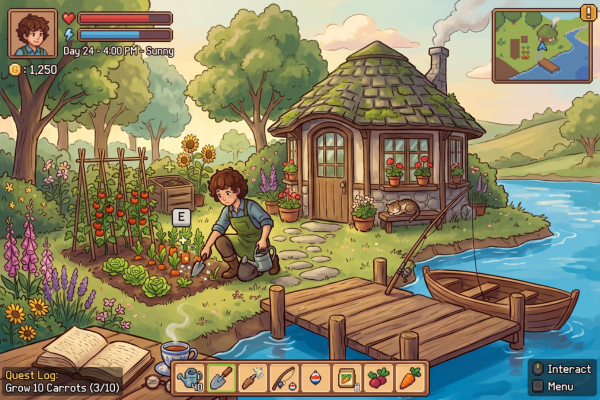
That manageable calm has made cozy gaming more than just entertainment. It’s become an emotional ritual for a generation navigating burnout, climate dread, and economic uncertainty. An example? That elusive millennial dream, running your own bookshop, can finally be achieved without all the heartbreak of actual bookkeeping. “Stock your tiny bookshop with different books and items, set up shop in scenic locations, and run your cosy second-hand bookshop while getting to know the locals,” explains the website for Tiny Bookshop. How to resist?
Besides, the pandemic rocketed rents for a swathe of younger people, nudging them to move in with their families; is it any wonder that they are turning to virtual homes, setting them up exactly as they wish? In Homescapes, for instance, you play as Austin the butler, the most benign of any online character, as he slowly furnishes his wealthy family’s mansion. Not only does this offer a level of control that users might not possess in reality, it’s also (let’s be honest) far easier to paint a virtual wall than wallpaper a real one.
But this isn’t just about soothing stress, it’s much bigger than that. Cozy gaming harks back to a much older lineage of ‘healing’ practices, from Japanese iyashikei anime to bonsai tending and miniature-making. The screen may have changed, but the impulse stays the same: to bring order to an unruly universe, to nurture something.
This shift is also reshaping the very definition of who a gamer supposedly is. Men are just as drawn to the quiet collectability of Cozy Grove or Unpacking as women are to the meditative loops of Stardew Valley. These games don’t make you lose points for slowing down. Instead, they reward you for it.
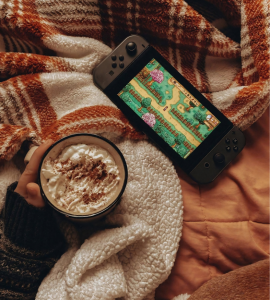
Online communities have found cozy titles to be a more expressive place, like ‘The Gaymers’, a queer-led collective within gaming culture. It is in these pastel, low-stakes worlds that players can experiment with fashion, design, and even gender expression, exploring sides of themselves they might not be able to reveal offline. Besides, those with disabilities might find the gentler pacing of such games more forgiving.
The numbers echo the cultural mood. Mobile gaming now makes up nearly half of global gaming revenue — about $92 billion in 2024. And this particular genre is worth an estimated $973 million, and projected to grow 6.5% annually through 2032.
Still, the best way to understand cozy gaming isn’t through market reports but through ritual. Every game in this genre revolves around small acts of repetition: you unpack, you tidy, you clean, you slice. Over time, those loops form a steady rhythm that real life lacks. These games offer predictability within progress, and permission to rest when needed.
In a culture that constantly gamifies productivity — tracking steps, sleep, and work — cozy gaming flips the script. It’s gaming without the grind. It’s digital space as an emotional space. In that sense, the rise of soft games isn’t about escape; it’s about recalibration.





Leave a Reply