

Twenty years ago, chocolate was synonymous with Cadbury’s dairy milk bars.
Oh, how the times have changed!
Walk into a good bakery or a boutique grocer in any major Indian city today and there’s a new kind of chocolate on the shelf — slender bars wrapped in textured paper, stamped with words like ‘single origin’, ‘70% Kerala’, or ‘tree-to-bar’.
India is at an interesting inflection point right now. The country’s chocolate market is growing quickly (valued at US$ 2.9 billion in 2025) and is expanding every year. But as India grows more adventurous, the craft corner of that market is growing even faster. Auroville’s Mason & Co is often credited as an early catalyst, and brands like Naviluna in Mysuru, Pascati in Mumbai (one of the few certified organic brands in India), and Soklet in Coimbatore, Subko Cacao and many more have adopted the same philosophy.
The rise of craft chocolate in India didn’t happen overnight. It began quietly with small producers who wanted to work with Indian cacao rather than imported beans. In states like Kerala and Tamil Nadu, cacao has been grown for decades, mostly sold to large manufacturers. But in the last few years, independent makers have not only embraced a bean-to-bar approach, they’ve stepped it up to tree-to-bar. “We have complete control over the process, right from the harvest stage, which is why we call it tree-to-bar, not-bean-to-bar”, explains Akhil Grandhi of Bon Fiction chocolate.
These chocolates are made in small batches. The process isn’t just technical; it’s personal. Makers are involved in growing, picking, roasting, tasting, and tweaking. It’s slower and far more expensive than mass market chocolate, which is why artisanal bars often cost more. But the promise is different: flavour with context. And the flavors are often Indian. Take for instance, Paul & Mike’s Pistachio and Idukki Cardamom chocolate, or their Thandai chocolate. Or take Soklet’s Desi Rabdi or Bhut Jolokia Chile bars. Or even take Bombay Sweet Shop’s kaju katli and dark chocolate ganache? All whimsical, singular confections that could only be created in India.
A further sign of the times is that this tiny corner of the chocolate world has also absorbed larger wellness trends. And so you’ll find organic, vegan and sugar free concoctions on the shelf as well. “Post Covid, a tremendous shift started taking place,” says Krishna Prasad S, founder of Soothy’s Chocolate, “People started reading labels and becoming more aware of what they eat.” Soothy’s is about to launch a brand new sugar-free chocolate, sweetened with a protein element sourced from Africa.
“Everybody is now moving away from refined sugar,” echoes Rukshin Anklesaria at Ambriona. “Nowadays, my bestseller online is my 90% dark chocolate.” Certainly an unusual choice for a country with an insatiable sweet tooth.
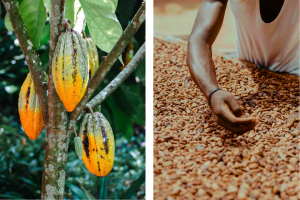
What makes this movement culturally important is that it repositions chocolate from a foreign luxury to a distinctly local craft. For decades, India’s idea of premium chocolate came from Europe – Swiss or Belgian usually. To many consumers, ‘good chocolate’ meant foreign chocolate. Artisanal makers are inverting that. “This has been our focus, trying to build an association around Indian cacao, in the same way that we associate chocolate with Switzerland or Belgium,” says Chaitanya Muppala of Manam Chocolate, another pioneering craft chocolate house. “We also want to remind people that cacao doesn’t grow in Europe, it grows here, and we can make world class global standard specialty craft chocolate from India.”
Krishna Prasad S agrees. “The next big thing will come from here,” he says. Soothy’s itself is poised to launch in the USA next month, ready with its range of milk and dark chocolates.
“We need to embrace our complexity and not reduce ourselves to the usual outside-in view of elephants and palaces,” says Muppala. “I believe that moment of reckoning is here and we can no longer stereotype ourselves. We have the perfect storm of upwardly-mobile, aspirational, well-traveled consumers (at least in tier one urban Indian cities).”
Muppala would know. Manam has opened a slew of spaces across India, from The Chocolate Karkhana and Chocolate Beverage Bar in Hyderabad, to a Chocolate Experience space in New Delhi, a pop up at Mumbai’s Galeries Lafayette, and a beverage bar in New Delhi along the way. Similarly, Subko Cacao has opened The Cacao Mill in Mumbai, an experiential chocolate factory. The time for fine flavor cacao is clearly now.
And although all specialty chocolatiers are well-versed in the frou frou talk of ‘sustainable’ and ‘community centric’, not everyone walks the talk. “We were always very clear that we wanted to build something sustainable and meaningful,” says Muppala. “This is not about a photo op, going to a village and taking pictures. For it to be sustainable, everybody in the value chain has to make money. Global profit pooling in cacao is alarmingly skewed. About 80% goes to the manufacturer and retailer, about 8% to the trader and only about 6% to farmer.”
At the consumer level, the change is tied to something much broader: India’s growing curiosity about food. The same audience that embraced specialty coffee, sourdough, and regional cheeses is now paying attention to cacao, so much that India even held its own Cacao and Craft Chocolate Festival. No small feat for a country that once used the word ‘chocolate’ interchangeably with ‘Cadbury’.
Still, the movement has its challenges. India’s heat makes chocolate notoriously hard to produce, store, and ship. Small makers spend more on climate control, packaging, and quality checks than big brands ever need to. Pricing remains a barrier: an artisanal bar can cost five or six times more than a mass-market one. And the market, however swiftly it is growing, is still nascent.
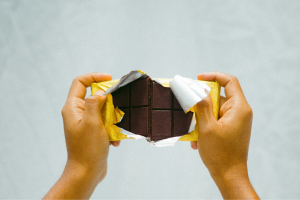
But despite these hurdles, the arc is clear. India is developing a chocolate culture of its own — one that values skill, local agriculture, and flavour that’s not afraid to be complex. The real story isn’t that India now makes good artisanal chocolate. It’s that consumers can finally taste the difference — and care enough to choose it. As food cultures mature, people start looking beyond sweetness and convenience. They look for origin, ethics, craft, connection. And that’s when an everyday product becomes something more than a treat. It becomes a reflection of how a country eats, pays attention, and grows.





Leave a Reply