

For a long time, the modern souvenir followed a reliable formula. A fridge magnet, a keychain, or a miniature monument reduced to something that could fit in a carry-on and sit quietly on a shelf back home, marking the fact that you had been somewhere else.
That formula is losing ground, and what is replacing it is stranger and, in some ways, more interesting.
Travelers are coming home from Japan with FamilyMart socks, from Paris with drugstore skincare, and from supermarkets in countries whose language they barely speak carrying bags full of snacks, spices, and pantry staples they have no recipe for yet. These are objects that were never designed to be souvenirs. They were designed to be used.
Davneet S. noticed it on a recent trip to Paris. “I came back with skincare,” he says, “and not the fancy kind, the drugstore kind. At the store I kept meeting other travelers doing the same thing, buying for themselves and for people back home. It’s a thing now, apparently.”
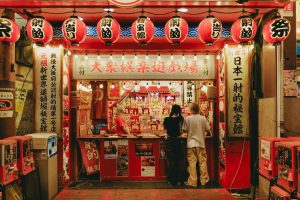
He is not alone in noticing. Ankita S., who traveled to South Korea last year, found that what people asked her to bring back had shifted noticeably from previous trips. Sheet masks, specific ramen flavors, and convenience store basics, items so inexpensive that the requests surprised her at first. “That stuff is so cheap,” she says, “but it was also interesting.” Her sister wanted something entirely different, a Japanese kitchen knife with the kind of reputation that has earned a devoted following among serious cooks. The price was very different. The logic was the same.
Part of what has made this shift visible is the internet. A generation ago, most visitors had little idea what people in another country actually bought at the supermarket or pharmacy. Today, those recommendations circulate constantly through travel forums, social media, and videos that linger over the shelves of ordinary grocery stores. Convenience stores, neighborhood pharmacies, and supermarkets have become destinations in their own right, and the products on their shelves have joined museums and restaurants as things worth seeking out.
Japan offers one of the clearest illustrations of where this can lead. FamilyMart, one of the country’s largest convenience store chains, launched its Convenience Wear clothing line in 2021 with Tokyo designer Hiromichi Ochiai of Facetasm. The line’s striped crew socks, priced at 390 yen, or about $2.50, quickly became a bestseller and have since sold more than 20 million pairs. Their appeal lies almost entirely in the fact that they were never intended for tourists at all.
The regional KitKat arrived at a similar destination by a different route. Its name, pronounced in Japanese, sounds close to “kitto katsu”, or “you will surely win,” leading students to exchange the chocolate before entrance exams long before Nestlé embraced the association. The company eventually built campaigns around the custom and expanded its range of regional flavors, tying varieties to places such as Kyoto and Okinawa. In the process, the chocolate bar became something else as well, an edible reminder of travel that could be carried home and shared.
Which raises the question of why any of this matters, why the object we carry back from a trip carries meaning at all.
The literary scholar Susan Stewart argued in On Longing that souvenirs stand in for experiences that cannot themselves be transported. You cannot bring home the atmosphere of a Tokyo convenience store or an afternoon spent wandering Parisian pharmacies, so you bring back something that points toward those experiences instead. What has changed is not the underlying impulse but the objects people trust to do that work.
Anthropologist Simi K. argues that souvenirs do social work beyond simple remembrance. “Without the object, the trip remains an experience in the traveler’s head,” she says. “The souvenir gives it a physical form that can be passed to someone else.”

A fridge magnet points to a place. A tube of moisturizer or a pair of socks points to how people actually live there.
The French sociologist Marcel Mauss would likely have recognized the social logic beneath the trend. In The Gift, published in 1925, he argued that gifts help create and maintain relationships through acts of exchange. A souvenir is not only a reminder for the traveler. It is also a way of including someone else in the journey, of returning with something that says they were remembered.
India has long had its own version of this practice, even if it has rarely been described in those terms. People return from Pune with Shrewsbury biscuits, from Kerala with banana chips, or from holidays with sweets divided among relatives and colleagues. The gesture often matters more than the object itself. A tin of biscuits is meant to be opened and shared around a table rather than displayed on a shelf.
That is what the new souvenir seems to be doing everywhere. The memory stays active through use rather than display. Increasingly, the objects people choose to bring home are not the ones made to represent a place. They are the ones that already belonged there.



Leave a Reply