

There is a certain pattern that keeps repeating itself in our current cultural moment. We are now often looking backward with a strange ache, for the bygone days of our youth or childhood. For some generations, it is about time periods that they have not even witnessed.
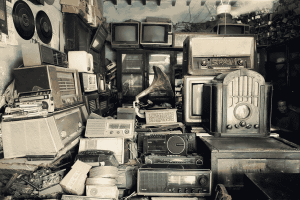
Gen Z and millennials are looking at time periods that cut across each other, the 1980s, the 1990s and even the 2000s, and after a while it becomes difficult to keep track of which time period people are yearning for. These eras were marked by landline telephone calls, physical media that one could own (cassettes, DVDs), and the absence of portable screens to get addicted to. The television, of course, was making its presence felt across households during this period. Yet, this longing might have given birth to a nostalgia machine, a cultural feedback loop wherein memories are continually recycled and sold back to us.
The passing of the music legend Dolly Parton triggered a wave of reminiscence. The September 7th cover of The New Yorker illustrated this grief with a painting of Dolly Parton. An era had come to an end. Just a while before she passed, Bonnie Tyler, whose hit song Total Eclipse of the Heart has achieved legendary status over several decades, had died. Not only do losses like these leave a void, but they spark acts of remembrance that play out online. With Parton’s passing, people weren’t just playing her songs, such as 9 to 5 or I Will Always Love You (a major debate surfaced regarding who sang it better: Parton or Whitney Houston?). The internet was also abuzz with deep dives on Jolene. Listeners attempted to decode the lyrics and asked questions. Who was Jolene? What point did the song make about rivalry among women and vulnerability? Articles were written, and reels were made. This could make one think about the late-1990s boyband that produced I Want It That Way. Not only was the song popular at the time of its release, it also regained some meaning, as it was instrumental in providing one of the most memorable cold opens on Brooklyn Nine-Nine. If you didn’t hear it from the horse’s mouth, chances are you heard it somewhere else, at some other time.
In India, the nostalgia machine works in its own unique ways, as it is loaded with cultural references best known to Indian audiences. While pop stars from the West have their space among elite groups in India, nostalgia is also about the collective memory of growing up in the late 1990s and 2000s, and idolizing television stars along with film stars, of course. These examples could include being nostalgic about Javed Jaffrey’s hilarious Hindi commentary on the Japanese game show Takeshi’s Castle, which used to air on Pogo. Children would huddle in front of television sets to watch cartoons such as Oswald and Noddy, all dubbed in Hindi. There was also space for Disney shows like Shararat, a story about three generations of fairies with magical powers living among humans.
It was also the phase in which some songs that existed outside the realm of films were immensely popular. Today, actors who were involved in the production of these shows and songs frequently take to social media platforms to reconnect with audiences. Nina Sarkar’s Instagram bio reads, “Yep, I’m the OG Leja Leja Re Girl.” Leja Leja, for the uninitiated, was a song sung by Shreya Ghoshal as part of an album titled Ustad & The Divas. Hazel Crowney, who played the lead in the film Mera Pehla Pehla Pyaar, more popularly referred to as MP3, recently spoke about her alleged disappearance after starring in it.
Another prominent example is that of Shruti Seth, who played the confused teenage fairy Jia in Shararat alongside the film and television icon Farida Jalal. Seth often interacts with her fans online, sharing memories from the show, but is also firm in her stance about reminding viewers that aging is a natural process, and that they should expect their childhood celebrity crushes to change with time. This dynamic also leads us to another important question: is there a resistance to letting our childhood stars grow old? When audiences react with shock to an actor’s changing appearance, it might not really be about them, but about a refusal to confront the very essence of mortality.
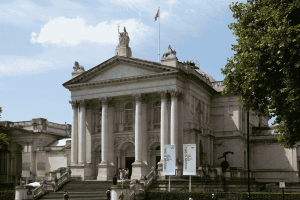
Nostalgia is also not limited to the realm of popular culture, but is a force that museums have tapped into time and again. In the United Kingdom, Tate Britain is revisiting a version of the past. While speaking about his curation for the exhibition titled The 90s: Art and Fashion, fashion editor Edward Enninful found himself reflecting on the spirit of the era. He mentioned that the 1990s represented a unique moment of undiluted creative freedom. reflected on the limited number of magazines that existed then. Art directors and stylists were also fewer, and it took as many as six months to process ideas, and weeks went by before they were executed! Alas, do people possess that kind of time these days? There is always pressure to increase one’s output and work within tight deadlines, and a slower pace is something creatives in particular might be yearning for in contemporary times.
At the end of the day, nostalgia might be less about a particular era because people long for many eras all at once. It is more about what the era might represent when compared to our present. We project our desires onto the past because it gives off the impression of a time period in which human creativity flourished without machines interfering in the process. Perhaps the weather was better and the skies were bluer. People are kinder to past political climates too, as the current one feels almost inimical to our existence. Life was centered on physical spaces and was not confined to consuming content endlessly on digital devices. Sometimes the nostalgia machine is run by big players, which might prod you to create an AI image of yourself, but it can take much less than that to trigger our senses. The scent of a perfume that is no longer formulated, shades of cool-toned, frosted lipsticks that looked almost like liquid silver and are no longer in vogue, or the opening chords of an old song: maybe some of these things are just enough to turn back the clock, even if it’s for a few seconds.



Leave a Reply