

For all the chatter around Best of the Best, for the fusillade of comments directed at representation and nationality and the quality of dance and the offensiveness of parts of the humor, something still remains unsaid. Something rather significant, something that’s been a long time coming.
We’re talking of course about changing ideas of masculinity within the Indian diaspora. Let’s review the evidence.
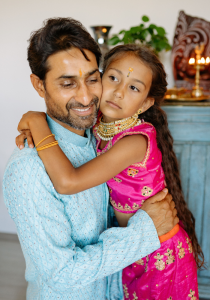
Best of the Best is a film in which the father figure is almost non-existent, or shown only in passing. The most prominent men of the film are Arjun (played by Chaneil Kular) and Ronak (played by Ankur Rathee). Arjun is Maya’s (Maitreyi Ramakrishnan) love interest, and although she teases him for being an ‘incel’ in school, he is the emotional core of the film, a man not afraid of showing his vulnerabilities. In an inversion of stereotype, Maya is afraid of showing her feelings. Arjun, on the other hand, craves a public display of affection.
And the very fact that Ronak, who is Anjali’s (Priyanka Kedia) love interest, is the lead dancer is a counter to South Asian masculine stereotypes. Dance, after all, is one activity where South Asian men’s bodies, expressiveness, and desirability get to be visible and celebrated. Joy and expressiveness are celebrated, not castigated.
To understand why this pivot is so significant, it helps to remember what it is shifting from.
For generations, the entire idea of South Asian masculinity in the diaspora was built on a particular template. The bedrock of that template was the boilerplate idea of masculinity; the man was seen as the provider for the family, typically as an engineer, doctor or lawyer, sternly hewing to societal traditions, and expecting his children to follow in his footsteps. Patriarchy frowned upon male vulnerability, creative ambition and open affection – these were meant to be doled out in teaspoons; they could never be the full meal.
Living in a Western diaspora added another layer of complication to this, by way of systemic racism and discrimination. Dr. Miraj Desai, in an article entitled Why Are South Asian Men ‘Angry’?, explained that “being and feeling invisible regularly deprives people of nourishment, warmth, and just basic human recognition. I don’t think people realize how much this has impacted the Desi community in this country, on multiple levels (cultural, social, economic, psychological, relational, etc.). Further, post-9/11 racism and racial profiling did a lot of harm to this community, much of which has not fully healed, as it lives on to this day.”
Moving away from this is an extraordinary vibe shift. The new diaspora man is funny and creative and entirely himself, and happily, popular media is reflecting this.
Another recent example? Never Have I Ever in which Ramakrishnan’s father is gentle, loving, understanding – although very dead. The trope of the stern immigrant dad, cracking the whip on his recalcitrant daughter, seems to be fading away entirely.
These didn’t spring from the blue either. Their antecedents were born of shows like The Big Sick starring Kumail Nanjiani, who redefines South Asian masculinity by moving towards vulnerability and edging away from patriarchal arranged marriage norms pushed on to him by his traditional parents. The Big Sick and Master of None put immigrant parents and their sons’ relationships with them on screen with warmth and specificity. The jokes make the subject feel permissible, and the sincerity underneath is what lands.
Master of None’s second episode, in which the protagonist examines his relationship with his stern parents, became an enormous cultural moment for the South Asian diaspora, with publications such as Buzzfeed asking 11 first-generation kids how they felt about the ‘Parents’ episode.
And comedians such as Russell Peters have used humor to question why his father, and by extrapolation, men of his generation, were emotionally distant and unavailable. Humor became a safe route for discussing complicated topics.
Meanwhile, the podcast, Almost Macho, is framed around the question “What is the definition of a modern man?”, stating that this was a conversation about shedding scripts about ‘male’ values, identity, marriage, money, fatherhood, and legacy. An episode on fathers addresses the topic directly: it covers respect built on fear, the inexpressive parental figure, and work stress transforming into anger at home, and it speaks about fatherhood in India and the diaspora. It is a clear example of men reexamining their own fathers while trying to parent differently.
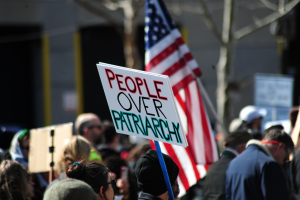
That’s not to say that toxic masculinity doesn’t rear its ugly head every so often; it absolutely does, and sometimes men such as Aziz Ansari perform progressiveness on screen, and fall short in reality. Besides, many of the positive examples fall squarely on the shoulders of privileged, cis-het males, while representations of queer South Asian males are still sidelined.
It is easy to over-read a cultural moment. Still, progress is progress. The conversation around masculinity has certainly changed course: it is mainstream and increasingly open. Whether behavior in homes, marriages and families has changed to match is harder to know. The honest claim is that South Asian men have gained a vocabulary, a set of images and an audience. What they do with them is still being written.



Leave a Reply