

For decades, Indian food in the United States meant a familiar but monolithic roster: butter chicken, tikka masala, a biryani perhaps and a basket of naan. An entire country was condensed into a sort of greatest hits menu that was replicated over and over again. Change came on the backs of restaurants such as Semma and Bungalow NYC, restlessly cosmopolitan, cleaving to familiar Indian ingredients and styles while infusing them with a touch of whimsy.
And now, another wave is gathering strength.
Diners, as well as chefs, are beginning to understand that there is no such thing as Indian food: the cuisine is vast, nuanced and complex, hewing to geography, climate and community. Take the souring agent, for instance. Depending on where in India you travel to, your dish may get its mouth-puckering tang from tomato, kokum fruit, a squeeze of lime, a large lemon, or tamarind. Or take the coconut; whether it is freshly grated, milked, ground into a paste, dry roasted or transformed into oil tells you what part of the country you are in.
This is an understanding that comes from those who are well-traveled and curious about food. Equally, that curiosity is being built thanks to the ubiquity of social media; TikTok and Instagram are spreading the knowledge of regional cuisines with far greater ease than before. And for the diaspora, perhaps there is a deeper interest in their own communities’ foods, and pride in flaunting them. And as India’s cultural influence has ballooned in the United States, the American gastro-scape has shifted with it. As a result, a wave of relatively new restaurants offer menus that narrow their focus to one region, state or community rather than ‘Indian food’ as a whole.
“What’s driving this new growth is a generation of chefs that have stopped asking for permission; now we’re really cooking,” says Roni Mazumdar, CEO of Unapologetic Foods. “We’re cooking the food of our grandmothers’ kitchens, from specific villages, states and communities, and diners can taste that conviction; it isn’t a diaspora thing.”
“Today’s young chefs from various regions of India are deeply inspired to represent their heritage,” echoes Eric McCarthy, the multiple Michelin star-winning Executive Chef and owner of Malvan NYC and Indian Table NYC. “This movement benefits everyone, as it allows people around the world to experience unique, authentic flavors they may have never heard of or tried, all without having to travel to India.”
In many ways, the multicultural mosaic of New York is the perfect setting for the gastro-curious. Although, “New York might be where it caught fire first, because this city rewards risk, but it’s not staying here”, explains Mazumdar. “You can see it trickling out in Chicago, Houston, the Bay Area, and even smaller cities, like Philadelphia. Regional Indian food isn’t a trend, it’s a long overdue correction.”
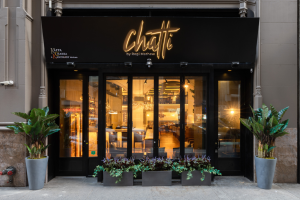
At Chatti, for instance, Chef Regi Mathew (Founder Partner at NYC’s Chatti, and Culinary Director and Partner of the massively popular Kappa Chakka Kandhari in Bengaluru and Chennai) has brought the micro-cuisine of Kerala’s toddy shops: basic, unshowy eateries serving spice-sluiced Kerala cooking to be drunk with local palm toddy (to put out the fire of the dishes). The menu embraces meat and seafood alike, serving Malayali favorites such as beef fry, the chile-garlic calamari and jackfruit cutlets armored with coconut. The popular Prawn Pouch, prawns steamed in banana leaf with coconut masala and tamarind, is his mother’s recipe.
In Brooklyn, Indian Table NYC took an equally specific approach to Goa. Chef McCarthy, Goan born and bred, sought to sustain the state’s culinary cultures with his chicken cafreal, ros omelette, pork sorpotel, fish curry and crab cutlets.
The prolific Chef McCarthy next turned his attention to the charms of the Konkan coast.
“Coming from Goa, one of India’s most vibrant coastal regions, I wanted to introduce authentic Goan cuisine, with its distinct food culture and way of life, to NYC,” says the chef. “After establishing Indian Table as the first successful Goan restaurant in Brooklyn, I moved on to my next project, Malvan. Malvani (Maharashtrian) cuisine is the food I grew up eating, and its rich history and culture inspired me to elevate and showcase it on a higher level.”
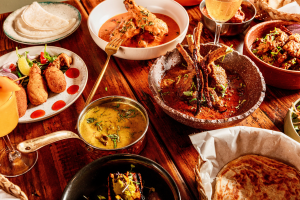
A typical Malvani dish uses tart kokum fruit to cut the richness of the coconut and tame the heat of the spices; from this marriage are born dishes such as Crab Curry, or Khekdyache Kalwan, a traditional crab curry, a nuanced blend of toasted coconut paste, coastal masala, tamarind, and kokum syrup.
At Vatan, meanwhile, a bevy of vegetarian dishes come together in an all-you-can-eat thali. Its Gujarat-inspired décor helps turn the meal into an encounter with a particular food culture and its accompanying aesthetic world.
At Biryani Bol, the focus is entirely on biryanis – chicken, goat and vegetable. And kebabs are the marquee item, tenting the menu at Kebabwala, a restaurant that draws inspiration from Mumbai’s Bademiya and the informal, late-night culture of roadside kebab stalls.
These are a mere smattering of a far larger subset of Indian restaurants. And taken together, they speak to something particular: that the country’s food no longer needs to cater only to the diaspora (or homesick Indian travelers) nor be translated to a Western audience.
“At Chatti, our intention from the beginning was to appeal to a much broader audience,” explains Chef Mathew. “Someone who has never been to Kerala may not have any personal nostalgia for a toddy shop, but they can understand the idea of coming together over good food, drinks and conversation. That is why we chose toddy shop culture as the lens through which to present Kerala. It gives people who are unfamiliar with the cuisine a way into it.”
One of Chatti’s most compelling ideas is its focus on ‘touchings’, the small, flavor-packed dishes traditionally served along with toddy. After all, Chef Mathew asks, if Spanish tapas can become an international culinary language, why can’t Kerala’s touchings achieve the same recognition?




Leave a Reply