

Everybody knows what an IKEA store contains, right? Wrong. On Sunday, September 27, 2026, the Swedish chain opened the doors of its Worli outlet to a design and culture festival that brought together live music by artists like Ankur and the Ghalat family, TV personalities, interactive design workshops, and a plethora of food. The events were free, but cannily enough, anyone attending was required to sign up as an ‘IKEA Family’ member.
IKEA has cottoned on to a trend that is slowly growing in select retail circles i.e., privileging the building of a community space over more overt attempts at traditional sales. This is a deliberate shift happening across India’s premium retail landscape, and it mirrors a global trend flagged in The State of Fashion 2026 report. As consumers tire of attention-grabbing content, they are drawn to brands that reflect their shifting identities and offer emotional connections. Fashion brands are responding by entering well-being-adjacent third spaces.
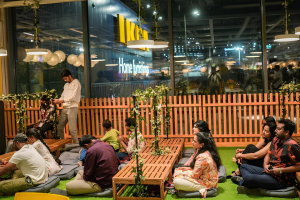
Ray Oldenburg, the sociologist who coined the term ‘third place,’ meant it as an in-between spot, neither home nor work. Cafés, community centers, and neighborhood addas have always played this role in Indian cities. The difference now is that retail brands are deliberately inking this into their business plans.
The reason is simple. Online shopping has captured much of the traditional market: this report states that by the end of the decade, more than one in ten retail dollars and one in four non-grocery retail dollars are expected to be spent online. Knowledgeable consumers are also shying away from fast fashion, and trying economic times are elbowing them to re-evaluate their spending habits.
Building an offline community, rather than a black-and-white transactional space, helps consumers see brands as more than just a store. Such a community is built on storytelling, rather than discounting or volume. People are suspicious of manufactured virality, turning instead to authenticity. A space you’ve spent time in, met people in, and formed a memory around is far harder to forget, and far easier to promise your loyalty to.
IKEA’s event may be a one-off one, but Indian brands have long been inching toward the same idea. Nicobar, for instance, hosts everything from wine and cheese events to creative visualisation workshops, as part of their Voyager membership program that curates small, intimate, special events, both virtual and in-person. Good Earth hosts wellness sessions, festive suppers, and regional craft pop-ups across its stores. Blue Tokai isn’t just an artisanal coffee shop; it brings people together for coffee tasting workshops, art therapy, even runs. And Subculture by Subko is a dedicated cultural arm of the cafe, that collaborates with visual artists, designers, musicians, and social changemakers through workshops, live sessions, and merchandise, in an attempt to cultivate the cultural ‘underground’ of the subcontinent.
Brands are not altruistic. Such communities also act as feedback channels for them, helping companies learn what customers want and, in some cases, even co-create new designs, an approach LEGO pioneered with its Ideas platform. Marketing is easier, since potential customers are already baked in. And when economies dip, a trusting community will be far more likely to pledge loyalty to those brands.
This playbook isn’t for everyone. Fast fashion players and high-volume everyday retail brands don’t have the margins or brand equity to justify converting square footage, or budget, into lounge space and community events. It works specifically for brands built on storytelling, design, and premium positioning, where the story itself is worth showing up for.
So the real question for Indian brand-builders isn’t whether to have a store. It’s whether that store, or that pop-up in someone else’s space, gives someone a reason to stay even after they’ve decided not to buy.

Leave a Reply