

For years, India’s cultural scene seemed to revolve around a few obvious cities: Mumbai, Delhi, Bengaluru, usually. Now, that map, once so sharply etched, is blurring.
Take Guwahati, for instance. Guns N’ Roses will take the stage there later this year, followed by Gorillaz in 2027. Post Malone performed last year. Or take Kochi instead, now an international contemporary art destination thanks to its Biennale. Meanwhile, writers are flocking to writers’ retreats in hill stations such as Satkhol and Panchgani. Khoj’s itinerant programmes have moved between cities including Delhi, Mysore and Kolkata, creating opportunities for experimental art outside the usual institutional circuits. For those with a creative bent of mind, the tug of peaceful, fog-shrouded verdant landscapes is strong, offering something a smoke-choked, trafficked city never could.
These are not isolated incidents. Bundled together, they gesture at a larger shift, that India’s creative life is beginning to move beyond the cities that once seemed to have a monopoly on it.
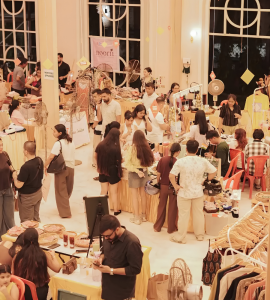
These fresh geographies are equally magnets for entrepreneurs. According to DPIIT figures, 51% of recognised startups are now based in Tier-2 and Tier-3 cities, while hiring in these regions is growing faster than in metro centres, a signal that India’s entrepreneurial energy isn’t confined to the big names anymore. Take KDEM’s Beyond Bengaluru Startup Grid, an alliance of tech clusters in Mysuru, Mangaluru and Hubballi that runs “Techceleration” expos and mentorship events. This is tech made for local ecosystems, rather than simply an extension of metro incubators.
Then there are cultural initiatives that use place itself as part of the creative experience. Pop-up cultural nodes such as Preet Nagar, a refurbished literary township in Punjab, revive multicultural gathering and creative practice in a setting that feels intentional, physical and richly layered.
The same siren call pulls the entertainment industry. In cities like Surat, Jaipur, Mysuru and Guwahati, the appetite for live experiences, from stand-up comedy and college festivals to indie music nights and international concerts, is growing. Platforms such as TribeVibe and Sunburn are taking concerts and shows into cities that were once peripheral to the live-events circuit.
Think of Ajmer, not as a stopover on the Jaipur route, but as a place of possibility, where you wander into a courtyard gallery, find a café crowding poetry nights, and book into artist residencies fostered by the local arts council. While this may look like a flavour of nostalgic rebranding, it is actually a rethink of what creative geography can look like. But this is more than simply about feeling a vibe. There are hard numbers baked into these decisions.
Affordability is a large part of the equation. Salaries can be 25–30% lower and rents around 50% cheaper than in metros, making coworking spaces, studios, cafés and creative venues more sustainable.
Then there is the talent reversal. Professionals are returning home, and they are bringing ambition with them. TeamLease has estimated hundreds of thousands of tech professionals working in Tier-2 and Tier-3 cities, including places such as Indore and Kochi. The result is an ecosystem where people can build companies, creative practices and communities without necessarily relocating to one of the country’s established hubs.
And finally, there is community. State-backed clusters, Smart City investments and networks such as TiE Mysuru are building infrastructure around existing local talent. Cultural organizations and independent initiatives are doing the same thing from the other direction, creating spaces where writers, artists, entrepreneurs and audiences can find one another.
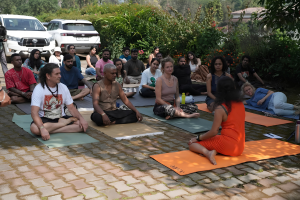
What emerges is a cultural vernacular that does not need to imitate the metro. It can be deeply local while remaining porous to the world. An outsider does not necessarily arrive as a tourist passing through, but as someone invited into the visible fabric of the place.
That is perhaps the most interesting part of the shift. Cultural exchange is no longer always about taking local ideas to a global city. Increasingly, people are travelling in the opposite direction, towards places where local histories, landscapes and communities become part of the creative process.
Of course, this does not mean that the metros are being displaced. They remain major centres of capital, institutions, media and opportunity. And this is a very good thing. A more decentralized system allows different parts of the country to develop in organic ways, rather than stamping every cultural hub as a version of Mumbai or Bengaluru.
The metros still matter. But the future of culture in India may already be happening on main streets, in converted havelis, hilltop writing retreats, local coworking hubs and concert grounds in cities you once simply passed through. And that is a different kind of map altogether.


Leave a Reply