

What is the magic ingredient that can turn some innocent basketballs, footballs and a hockey stick into an acrimonious debate about women, beauty and sport? Why, it’s the actress Sydney Sweeney of course.
The latest campaign for sports prediction company (a euphemism for a betting platform) Novig, features Sweeney, appearing in various states of undress while pretending to play different sports. The gear mentioned above is strategically positioned to cover her body. The joke, apparently, is that she is interested in “just sports”: no clothes, no distractions, just the game.
Actual sportswomen did not find it funny.
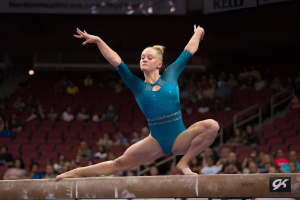
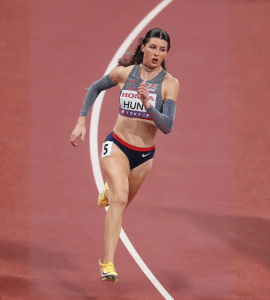
Former NCAA gymnast Gracie Kramer responded on social media with a video of herself flipping, running, boxing and playing soccer and baseball, writing: “This is what a woman in sports looks like.” Australian swimmer Lani Pallister posted footage of her training, racing and collecting medals. Boxer Skye Nicholson told Sweeney to “stop sexualising women in sport.” Sprinter Amy Hunt, speaking to the BBC after competing at the Ultimate Championships, pointed to Melissa Jefferson-Wooden’s 21.47-second 200m victory and said: “21.4. Muscles. Hard work, blood, sweat, tears.”
Recently-retired Olympic champion Ariarne Titmus was more direct. She called the campaign a “kick in the face” to women who have dedicated their lives to their sport and questioned why women’s bodies are still being monetized and sexualized in sport.
The anger was palpable and understandable. Women athletes have spent decades fighting to have their bodies seen not as beautiful objects but as instruments capable of extraordinary physical achievement. Female gymnasts have consistently pushed back against regressive game rules that require scanty uniforms. Across sports, women have had to negotiate an uncomfortable double standard in which their bodies are scrutinized almost as much as their performances.
Then there is the larger question about beauty standards themselves. Sweeney is a blonde, blue-eyed, conventionally attractive woman whose genes have been brought up in an earlier, equally questionable advertisement for jeans in which she starred. That ideal has long been privileged by mainstream culture, while larger bodies, darker skin and features outside Eurocentric beauty standards are often nudged to the sidelines as less desirable. Critics have pointed out that celebrating Sweeney’s appearance as the central attraction of a campaign about women and sport sits awkwardly within that history.
And Sweeney herself is hardly a naive bystander. She approached Novig, has a financial stake in the company and has dug her feet in the ground over all the criticism. All this is true.
Still, there is something strange about how much oxygen we are allowing a silly ad that has clearly been made to create a kerfuffle.
Let’s be very clear. Sydney Sweeney has not set women’s sport back; she can’t. All she has done is make a provocative endorsement for a gambling company (a questionable choice in itself). The women responding to it are absolutely brilliant, competing at the highest levels of their sports, breaking records, winning medals, training through injuries and building careers across disciplines.
The ESPN Body Issue, which featured nude male and female athletes, understood something that has entirely evaded this campaign. Those photographs worked because the body was evidence of what an athlete could do. The stars of those pages showed off a multiplicity of body types by athletes of various races. Whether they were handsome or beautiful was besides the point; what they looked like was strong.
The women responding to Sweeney are saying the same thing; that their bodies are remarkable because of what they can do, not what they look like.
And perhaps that is where the conversation should end. Sweeney is young and beautiful and she uses it to great advantage. She is also an adult who has every right to participate in whatever ad campaign she chooses. Equally, all criticism of that campaign is legitimate. But women’s sport has become far too significant to let a gambling advertisement define the conversation around it.
The real story is the woman running 200 meters in 21.47 seconds. The gymnast throwing herself through the air. The swimmer training before dawn. The boxer stepping into the ring. The athletes who have spent their lives making their bodies stronger, faster and more capable. They are the ones really worth caring about.





Leave a Reply