

You notice it in small, familiar ways. You open Netflix for something mindless, and somehow the anime recommendations outnumber everything else. At the bookstore, the manga section has quietly ballooned into its own landscape. Even in everyday conversations, the references slip in: a coworker comparing their work ethic to a Naruto arc, a teenager at the café arguing about the emotional peak of Attack on Titan, a friend admitting that Your Name ruined them more than any live-action film this decade.
Anime was something a handful of kids watched after school, tucked between Toonami slots and Pokémon reruns. Somewhere between then and now, those after-school curiosities became one of the world’s most widely shared emotional languages. What used to be niche fandom is now mainstream grammar — shaping taste, storytelling, humor, and even how global audiences understand heroism, grief, power, and love.
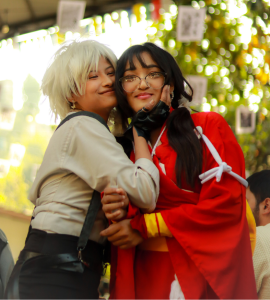
The scale of that shift is staggering when you look closely. The anime market, valued at over $30 billion in 2023, is projected to climb toward $60 billion by 2030. More than half of that revenue already comes from outside Japan. Netflix says that more than half of its global subscribers, over 150 million households, watch anime. Suddenly it’s not that anime became big; it’s that it quietly became one of the biggest cultural forces in the world.
And what’s interesting is how different this rise looks compared to the Western giants that defined global animation for decades. Disney’s empire was built on neat morality — fairytales with clear lines, emotional clarity, a formula polished into inevitability.
Anime grew through a different philosophy entirely. It leans into tonal messiness: grief next to slapstick, 300-episode emotional arcs, worlds that break their own rules but somehow still make emotional sense. Veteran creators of long-running series like Dragon Ball and One Piece often point out that global audiences don’t mind unpredictability; they crave it. The twisty, chaotic anime logic isn’t a hurdle — it’s part of the pleasure.
What anime understands, perhaps better than any other global form, is that modern audiences are living emotionally complex lives. Western entertainment still defaults to emotional tidiness; anime expects emotional contradiction. It lets its characters be absurd and profound in the same breath. It gives us villains with backstories so tragic they feel inevitable, and heroes who fail for years before they win anything. In an era defined by uncertainty, that elasticity feels truer than the comforting predictability of traditional Western arcs.
Japan recognized the power of this aesthetic early. The government’s ‘Cool Japan’ initiative treated anime, manga, and kawaii culture not as fringe entertainment, but as cultural exports worthy of national investment. After World War II, Japan rebuilt its identity, visually and economically, through soft power: cute mascots, charming anthropomorphism, approachable design, and eventually the global emotional worlds of anime.
The shift from militaristic imagery to gentle iconography wasn’t accidental; it was a rebranding that worked. Kawaii aesthetics softened international perception, and anime gave the world an emotional language rooted in that gentleness.
But anime’s rise isn’t just about cultural diplomacy — it’s about who is allowed to be a fan. Gender politics shape that conversation quietly. Western culture mocks “Disney adults,” a term almost always aimed at women, coded as childish or unserious. Meanwhile, adult men debating Naruto power levels or crying over One Piece are celebrated with a kind of ironic respect. The asymmetry is telling: women’s fandom is infantilized; men’s fandom is legitimized. Anime complicates that calculus. It offers emotional intensity without stigma, and action without machismo. Even with its own complicated gender tropes, anime bridges a cultural gap Western media has never fully reconciled.
Then there’s the generational span. Few mediums manage to connect teenagers, millennials, and older fans with equal appeal. But anime does. A 14-year-old diving into Jujutsu Kaisen can bond with a 40-year-old who watched Cowboy Bebop in college. A parent and child can both love Spirited Away, for completely different reasons. Anime carries the rare ability to feel timeless and contemporary at once — often because its emotional logic isn’t age-bound. It speaks to longing, ambition, friendship, existential dread, and resilience in ways that stay relevant across decades.
Nowhere is that more visible than in India which is now, rather astonishingly, the third-largest anime audience after Japan and USA. The signal isn’t confined to metro multiplexes: when Demon Slayer: Infinity Castle opened in September 2025, it outgrossed every prior anime release in the country within a day and pushed into tier-2 and tier-3 towns that had never booked an animated title before, some cinemas even running 5 a.m. shows once reserved for Bollywood tentpoles.
This unprecedented crush of cinema-goers was primed by streaming platforms such as Netflix (of course) and Crunchyroll’s catalogue of 800-plus titles. Many of their shows are dubbed in regional languages, further easing accessibility into spaces that might have dismissed such shows earlier. In 2025, a viral wave of Ghibli-style AI art engulfed Indian social media, which didn’t hurt anime’s ambitions either.
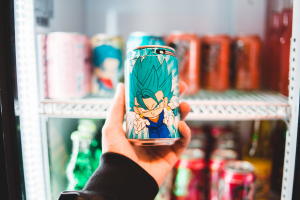
Economically, anime has become an ecosystem: games, conventions, films, merchandise, soundtracks, collectibles, cosplays, cafés, streaming subcultures. Nowhere is that more evident than in Tier II and Tier III cities. Nagpur has created its own cosplay convention while Jaipur, Bhubaneswar, Silchar, Guwahati and Vijayawada are thick with fan communities, perhaps even more so than in the metros. Comic Con hosted its first-ever event at Guwahati in November 2025 and then went to Jaipur in January 2026.
With over 118 million active viewers and a market projected to grow past 13% annually through 2030, India is shifting from consumer to collaborator, with domestic studios already pairing Indian mythology with Japanese animation craft to build homegrown IP for a global audience.
And while the numbers may inspire surprise, the true marvel comes from the fact that a seemingly disparate narrative tradition has become the center of gravity of Indian cities and towns.
Anime didn’t achieve that by softening itself for global appeal. It did the opposite. It stayed rooted in Japanese sensibilities — its pacing, its emotional velocity, its aesthetics while trusting that global viewers would meet it halfway. And they did.





Leave a Reply