

A pop group is never just a pop group.
Always, it is in some way, a reflection of the economy, of the society of its time.
Take Indipop for example. Its emergence in the 1990s and early 2000s was inextricably linked to the economic liberalization of India in 1991 that ushered in a whole new age of consumerism. Color TV and cable (MTV!) entered homes with fanfare, and McDonald’s and Domino’s outlets popped up across major metros. Kids began hankering after Reebok and Nike shoes, and the ‘mushroom’ haircut became the style du jour.
Before liberalization, India’s music scene largely revolved around the film industry, with actors lip syncing vocals sung by professional singers. Indipop, on the other hand, passed the mike to the singers themselves.

MTV and Channel [V] (the local MTV) imported a fresh grammar of Western self-expression to an India still mired in some way in socialism. Indipop music videos were shot like slick Vogue fashion editorials and entire personas were created around the singers (Bally Sagoo, for instance or Alisha Chinai). The music changed too, fusing Western styles such as hip hop and reggae with Indian vocals. In short, Indipop was cool.
This was the context in which VIVA was born — India’s first all-female pop group. Their breakout hit, Hum Naye Geet Sunayein (Let’s sing new songs) was equal parts girl power and bubblegum gloss, calculated to appeal to the urban, English-educated, upper-and-middle-class — the same demographic that benefited first and most visibly from economic reform. They were, in some ways, the Spice Girls of India.
Something similar is happening again.
W.i.S.H. — launched by Sony Music India in 2024 with their single Lazeez — is being pitched to the country as India’s answer to K-pop and J-pop. The band is built on a K-pop-style playbook of voice training, choreography, and export-ready branding. The aim now though? To export I-Pop to an increasingly-globalized world, rather than import a musical aesthetic.
And then there’s Gilithigreams. Launched in 2026, the four-member group from Arunachal Pradesh calls itself India’s first A-pop act. It is a self-funded group from a region rich in musical discourse (but largely written out of mainstream media). Gilithigreams represents a step beyond; big opportunities reaching past the metros, thanks to the democratizing platforms of streaming services and social media.
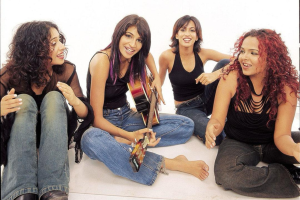
No matter which decade we choose though a girl group is one of pop culture’s most efficient shorthands for a country’s economic mood. Whether the economy is opening up or growing even further, it is pointing young women towards a path of (marketable) self expression. And voila! A girl group appears. VIVA appeared together with the optimism of early liberalization. W.i.S.H. and Gilithigreams are part of an India negotiating its next chapter of growth, digital access, and regional visibility. The resemblances in all cases are striking: although the momentum of growth is slowing, there is strong macroeconomic stability sitting.
Different decades and different soundtracks but the instinct stays the same: a widening economy, and pop culture selling the current moment back to us as a song.



Leave a Reply