

The city is often the wildest space. Take Mumbai, for instance. Corpulent canines loll in front of stores, hoping for a spare snip of food, clowders of cats prowl atop crumbling city walls, pigeons and crows alight on kitchen windows, kites swoop screeching from treetops, and bats flit past buildings in search of an abandoned piece of fruit.
And yet, a stroll down a London lane might reveal, at most, an ambulatory fox, slipping quickly behind a garbage can. Similarly, in Chicago, an aggressive gull might swipe the sandwich from your unsuspecting hands, but that would be the extent of your encounter with any free-living wildlife.
None of this is an accident of geography or climate. It is the visible result of three very different cultures of thought, about which creatures belong in public spaces — and India’s cities are now the site of a fierce legal and societal battle over whether that older, more porous relationship between humans and animals can survive.
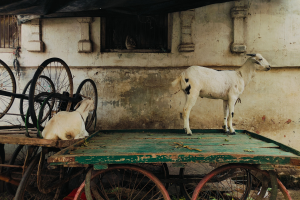
Britain has a genuine, long-standing enthusiasm for wildlife — birdwatching is one of its most popular pastimes; gardens are landscaped to attract hedgehogs and songbirds; and shy foxes have become more common visitors on suburban doorsteps, elbowed into the city by increasing urbanization. But this affection runs alongside rigid classificatory lines: not all animals are equal. A fox in a film is charming, a fox in the backyard is a pest, and a fox in the country is merely prey to be hunted. A pet dog is charming, a hunting dog is fine, and a free-roaming dog is something to be whisked into a shelter.
This after all is the same culture that gave us the Kennel Club, made dog ownership a default idea, and a matter of canine pedigree. Formal breeding, like the codification of fox hunting as an aristocratic pursuit, helped cement the idea that an animal’s worth is related solely to some specific human purpose or owner. An animal without a collar and/or pedigree and/or landowner’s sign-off simply had no justification within the system. Throughout much of the Western world therefore, it is normal to think anyone who lets an animal outside the home without supervision is neglectful or even cruel.
This is reflected in the broader North American approach to urban space; it is designed to be legible and orderly. An owner-less animal disrupts that legibility. It is a ‘stray’ a term that by definition frames the free-roaming bird or animal as out of place. Municipal codes treat unaccompanied animals as a public-safety problem resolved through capture, shelters, and historically euthanasia. Consequently, the public realm in the American city is remarkably animal-free by world standards. This after all, is the age of the Anthropocene, a new human-dominant geological time in which people have altered the environment in titanic ways.
Meanwhile, in India, it is virtually impossible to thread your way through the streets without glimpsing a wandering cow or two, a posse of puppies. This human-animal coexistence has lasted, somewhat fitfully, through the centuries, and was upended mostly thanks to colonization, when the British attempted to impose the British classificatory system on India in 1813, terming free-living dogs as ‘pariahs’, subject to impoundment and slaughter.
When the slaughter began in Mumbai, residents rose in revolt. Hindus and Jains held caring for stray dogs and other living creatures as an act of piety. But the Parsis were the angriest of all (their eschatology held the dog sacred), and soon all citizens – Hindus, Jains, Ismaili Muslims – led by the normally peaceable Parsi community, surged against the colonials in an incident later called the Bombay Dog Riots.
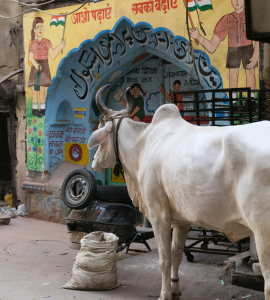
This tenuous co-existence continued until much later. Under national policy dating to 2001, all dogs were legally entitled to life in public spaces.
But in 2025, something changed. Both in July 2025, when the Bombay High Court enforced a ban on feeding pigeons at Mumbai’s historic kabutarkhanas, citing health hazards, and in August, when the Supreme Court ordered that all stray dogs in Delhi be rounded up and permanently institutionalized, thanks to the spectre of rabies (a spectre largely debunked by a close scrutiny of government reports).
So what is the message? That animals are a menace, a nuisance, an eyesore, a threat. Which is the same tune that was played by the British.
Ever since, the country hasn’t always been particularly kind to animals. There are sudden rashes of intolerance; newspapers are clamorous with heart-crippling incidents of stray dogs being poisoned, starved, and beaten to death.
And yet, the world has constantly opened up oases, treating human-animal coexistence as something to accommodate rather than eliminate.
In Rio, animal-friendly drinking fountains have been installed in all parks and squares. Dubai has piloted an experiment with AI-enabled feeding stations for stray cats. In Italy, many centuries-old public fountains are designed with low spouts and shallow basins, allowing for animals to drink from them, alongside humans.
This then might be the most modern thing of all. To learn lessons about sharing the city with other creatures might help incubate an ethos of mutual tolerance. An ethos that might well be a stepping stone towards a more environmentally-diverse planet, one in which all flora, fauna and humans can co-exist more peacefully.





Leave a Reply