

On a quiet Tuesday evening in Melbourne, the hum of conversation at a corner bar is occasionally broken by the crisp click of chess pieces. At the back table, two strangers sit across a checkered board, brows furrowed, drinks half-finished. They don’t know each other’s names yet, but that doesn’t seem to matter. A knight moves. A pawn falls. A friendship begins.
This is not an anomaly. Across cities from New York to Nairobi, from Berlin to Bengaluru, chess is staging a quiet comeback — not as a game of dusty libraries or elite tournaments, but as a social ritual. In a world hyper-saturated with curated personas and digital fatigue, people are turning to something oddly analog and beautifully old-school to find each other.
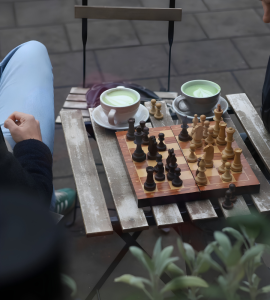
The pandemic cracked something open in us. As lockdowns forced people indoors and interactions onto screens, many turned to puzzles and games. Among them, chess surged.
The unexpected catalyst? The Queen’s Gambit. Netflix’s limited series dropped like a well-placed bishop, unleashing a global obsession. The show made chess sexy. Not just cerebral and not just for men. Suddenly, the most unlikely people were buying boards, watching openings on YouTube, and setting up accounts on Chess.com.
It was more than a trend. It was an emotional shift. Chess offered the opposite of small talk: deep, silent focus. A way to be together without performance. It wasn’t long before people wanted to play in person again.
In Melbourne, chess nights have popped up in wine bars and indie bookstores. In London, players gather in Hyde Park with nothing more than travel boards and thermoses of tea. Brooklyn has blitz nights and Berlin has rooftop tournaments. These aren’t competitive clubs with ranking systems — they’re spaces of soft connection. Think run club, but for introverts. Therapy, but with pawns.
Sitting across a stranger with a shared purpose silences the usual anxieties of “What do I say next?” The board speaks for you. Your personality leaks out in moves: bold, cautious, curious, chaotic.
India’s relationship with chess goes way back — over a millennium, in fact. The game’s predecessor, chaturanga, was born on Indian soil. And yet, for decades, the cultural imagination surrounding chess in India was split between two poles: dusty coaching centres and dazzling prodigies.
Now, that’s changing.
Chennai remains the heartbeat, producing grandmasters like a factory line. But the newer pulse is looser, more accessible. Mumbai has chess cafes. Delhi has pop-up tournaments in public parks. In Bengaluru, techies meet after hours over a chessboard instead of beers. These are not future Vishwanath Anands — they’re creatives, freelancers, students, and retirees, finding a moment of flow in a frenzied world.
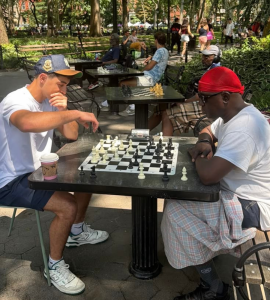
What’s unfolding is more than nostalgia for a game — it’s a cultural realignment. Social chess clubs are an antidote to overstimulation. They’re not asking you to be funny, hot, successful, or interesting. You just have to show up, be present, and think.
Urban life is lonely. Not for lack of people, but for lack of pause. Chess forces a pause. It’s a rebellion against multitasking. A statement that connection doesn’t have to be loud or performative.
As city dwellers seek out more intentional ways to relate — to themselves, to each other — expect to see more boards in bars, more pawns in parks, and more people sitting down to play.




Leave a Reply