

“British people are truly the most evil people in history. They are Thanos. Britain is Thanos. They owe 43 trillion to India. We colonized the world.”
British actress Jameela Jamil’s most recent hot take has flown around the Internet like a tornado.
Jamil made the remark during a podcast episode with Blakely Thornton and Justin. A bit OTT? Perhaps. Clumsily phrased? Sure. But to face days of racist backlash? To be called the Most Annoying Woman on the Internet? To be told to return to India (Jamil is British)? To be used as proof that multiculturalism has failed?
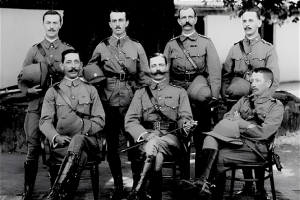
There were enough people primed to dislike Jamil even before the colonialism remark swept social media discourse; she has been barbed by plenty of criticism about hijacking the body positivity movement while being a conventionally attractive women, and even for exaggerating claims about her poor health. But it is unclear why, in this day and age, her remarks about colonial Britain are considered even remotely controversial.
Were all British people evil? Of course not! Was British colonialism evil? Indisputably. Reams and reams of history attest to it. Old and new scholarship has substantiated the fact that at the very least, the empire was staggeringly extractive – the renowned economist, Utsa Patnaik calculated that Britain drained a total of nearly $45 trillion from India during the period 1765 to 1938 (a number that is 17 times more than the GDP of the UK today).
And this isn’t even remotely a post-colonial idea. Strains of dissent were threaded through British politics even during colonialism, in Britain itself, (although of course they sat on the margins of radicalism, never quite converting the country to a comprehensive rejection of empire.)
So why was 2026 Britain up in arms about this? Presumably, one was Jamil’s unfortunate use of the present tense, and the mixing up of ‘we’ and ‘they’ (Jamil is of course a British citizen) which she elaborates was just a conversational gambit as part of a chatty podcast rather than an academically-turgid remark.
Some attribute this gale of rage to the fact that British pedagogy has always painted colonialism with somewhat roseate hues, casting controversial figures such as Winston Churchill as towering statesmen. In India, of course, he is looked upon with somewhat less tolerant eyes.
The argument against Jamil appears to be that all empires are evil, and as empires go, Britain’s was the least evil, animated as it was by a desire for profit, rather than darker ambitions such as Nazi Germany’s. Critics blather that even within Europe’s imperial age, the British record was not singularly worse than that of France, they while the atrocities committed under Leopold II in the Congo stand in a category of their own.
This is a POV that grew perhaps from a very particular way of perceiving history. Historian Priya Satia writes in her Time’s Monster: History, Conscience and Britain’s Empire, “In public memory, redemptive myths about colonial upliftment persistently mask the empire’s abysmal history of looting and pillage, policy-driven famines, brutal crushing of rebellion, torture, concentration camps, aerial policing, and everyday racism and humiliation.”

And at least some of the vitriol is not about a quibble about the scale of historical atrocities. Jamil writes on her blog that, “I was subjected to 9 days straight and counting of threats of physical and sexual violence… and the most racist abuse I’ve ever encountered. This was not just private, this was on open forums like Twitter and Reddit, and in comments sections across the net. An angry patron of right wing media, even screamed for me to “Fuck off back to India” from his car, in the street.”
Which begs the question – who is considered truly British? Jameela Jamil was born in the UK and has Indian descent; her own parents, she claims, have faced the direct reverberations of colonialism. Does the color of her skin position her as an easy target? After all, her words were rooted in fact. Would William Dalrymple for instance, the popular anticolonial historian who resides in Delhi, be accosted by a wild-eyed Londoner, screaming at him to go back to India?
Jamil’s innocuous remark has ironically reignited a debate on colonialism. “This chaos has unearthed damning parts of the British legacy to those who would not otherwise have known,” she writes.
This is no bad thing. Patriotism includes having the courage to face the grimmer parts of a country’s history, to accept that it wasn’t necessarily a perfumed blossom-strewn path, that it was instead responsible for colossal bloodletting and extraordinary brutality. As Jamil eloquently writes, “It is because I love Britain, that I can hold it to a higher standard. It is because I know we can do and be better that I do not shy away from its past. It is my forever home.”




Leave a Reply