

India invented yoga, but the biggest yoga attire brands aren’t Indian. Indian royalty were bedecked in jewels for millennia, yet Cartier came to define luxury jewelry. Banarasi silk, Kanjeevaram weaves, and Pashmina are centuries deep, but fashion’s power centers still sit in Milan, Paris, and New York.
A new generation of Indian creatives is out to invert that pattern — not by imitating the West, and not by wrapping products in heritage as decoration, but by building a visual language that is unmistakably Indian and fluent on the world stage all at once.
From Service Provider to Source
Indian luxury has hit a watershed moment. Designers showcasing craft-led, India-proud collections at London and New York fashion weeks are distilling heritage techniques and savoir-faire into pieces that speak globally while staying rooted — deconstructed silhouettes, handmade embellishments, playful tailoring, upcycled mill surplus, narratives built around human psychology. The ambition is structural: reposition India from a creative-services hub to the source of finished, globally credible goods that are still distinctly ‘Made in India’.
Packaging and design is going through a parallel shift. Across beauty, food, spirits, and accessories, brands and studios are rethinking what ‘premium’ and ‘Indian’ look like — a change in typography, color, and materials driven as much by consumer psychology and market economics as by taste. Underneath it is a broader cultural confidence: Indian brands building for India, from India, without asking anyone else’s permission.
Consumer behavior backs this up. A growing share of Indian shoppers — 36%, against 23% who still favor imported brands — now say they prefer homegrown beauty products, reversing a decades-long assumption that foreign origin signaled quality. Shoppers are reading labels, expecting evidence behind claims, and choosing brands built at home — both design-conscious urban millennials and Gen Z.
The more significant question these brands are answering isn’t simply about aesthetics; instead, it’s about identity and self-definition. In short, what makes us Indian without leaning on cliché?
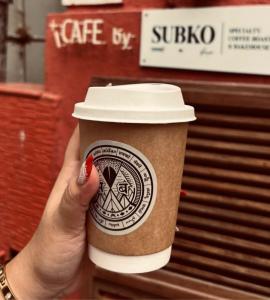
Bombay Sweet Shop and Subko are doing similarly inventive work in food and beverage: Bombay Sweet Shop reimagines traditional sweets through maximalist aesthetics inspired by Mumbai’s Art Deco buildings and green spaces. Meanwhile, Paper Boat built an entire food brand around the nostalgia of growing up in 1980s and 1990s India. And this extends beyond food brands — Nappa Dori‘s elegant leather-ware stems from distinctly Indian sensibilities but is equally at home in a boardroom in New York.
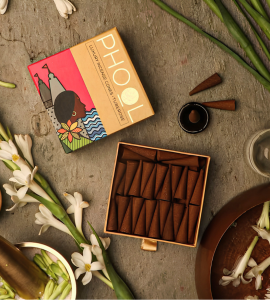
It would be easy to assume Indian brands are simply importing Western, white-space-heavy minimalism. Instead, Indian premium minimalism has developed its own dialect — bold typography, assertive color, restrained detail. Typography is doing much of the heavy lifting industry-wide. Bold, simple lettering and tight palettes deliver legibility and a sense of quality almost instantly. Subko layers Devanagari, English, and Urdu in a layout inspired by vintage Bollywood posters, reflecting the subcontinent’s linguistic range. Paper Boat’s hand-drawn lettering was an early signal of this approach. Mumbai beauty brand Project Qaafi, launched in 2024, takes its name from a phrase meaning ‘not too much, not too little, just enough’. Rather than dropping Devanagari script onto a label as a cultural flourish, it builds the geometry of Indian scripts into its own custom letterforms.
But this is an opportunity that pushes past Indian borders. The 35.4 million-strong global Indian diaspora—with $381 billion in buying power in the US alone is looking for contemporary Indian design coupled with Indian story-telling rather than milquetoast copies of Western style. The proof? Indie sneaker brands Gully Labs and Thaely have drawn long queues in San Francisco and Dubai. The global South Asian diaspora’s love for homegrown brands like Comet stems from a craving for fresh, culturally resonant streetwear.
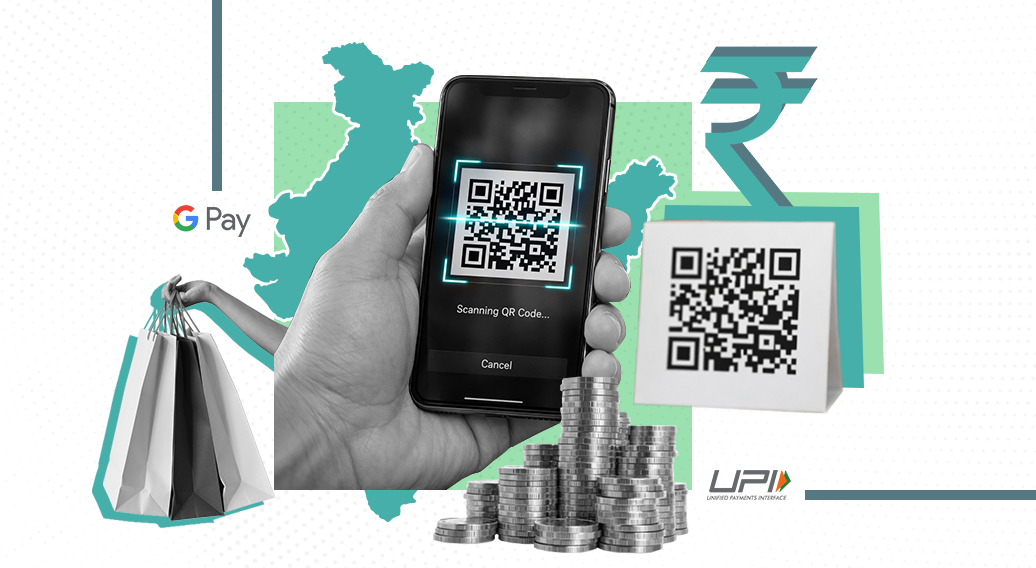
None of this is happening in isolation. It’s paired with a sustainability push and a technology layer — QR codes, NFC tags, and RFID increasingly built into labels to carry origin stories, loyalty programs, and authentication for higher-end goods.
The design shift and the market shift are telling the same story from two angles: Indian brands no longer need to borrow someone else’s visual language to be taken seriously. They’re building their own — global in fluency, local in soul — and shoppers are responding.



Leave a Reply