

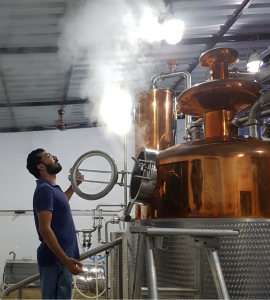
Back in the 2020s, Rahul Mehra was often met with disinterest when introducing his craft gin in an already-saturated UK market. But the minute he told bartenders and restaurant owners that it was made in India, with Indian botanicals, their ears would prick up. “There was always a follow-up question though. Are you sure this is made in India and not elsewhere?” remembers Mehra, co-founder of the Goa-based Third Eye Distillery. It’s the parent company of Stranger & Sons, a craft gin celebrated for blending juniper with nine Indian botanicals such as Gondhoraj lemons, black pepper, mace, and coriander.
Cut to 2026, Stranger & Sons is now available in about 20 international markets, including the UK, Australia, Italy, Singapore, UAE and Thailand. They also launched in the US three months ago, with their export revenue rising from 5% in 2020 to 25% of the total revenue today.
Other Indian craft gins such as Jaisalmer Indian Craft Gin, Hapusa Himalayan Dry Gin, Jin JiJi, among others, are also starting to find favor in global markets. Jigger & Pony, Atlas and The Bar Square in Singapore, bars at The Savoy and The Connaught luxury hotels in the UK, the Gin Run in Thailand all stock Indian craft gins.
What is driving their success? Indigenous botanicals, excellent craftsmanship, good storytelling and placement of the gin in discerning markets.
Even a decade ago, the gin market in India was lacklustre. Today, these craft gins have made a significant mark not just within India but also in the global market. “That’s quite commendable, especially because India was not known to produce quality liquor, with the exception of some whiskies,” says Rehan Guha, a chef and F&B entrepreneur who runs Oxymorons, a 30-seater craft cocktail bar in Hyderabad.
The greatest appeal of these gins comes from the local botanicals they are infused with i.e. cardamom, Palash flowers, Khasi mandarin and pine-smoked tea, for example. “The international appeal of these gins is largely driven by ‘brand India’, which is globally recognized for agriculture, spice trade and botanical diversity,” explains Mehra.
“The botanicals also lend the spirits their distinct flavour”, says Yangdup Lama. Lama is one of India’s finest mixologists, often travelling the world for his work. These gins (and the cocktails that use them) feel brighter, more aromatic and often more spice-forward than classic London Dry expressions, giving them a unique identity globally.
“For instance, in the United Kingdom, which is already crowded with similar-tasting gins from the country, it is the novelty of our craft gin that distinguishes us from the others,” says Anand Virmani, co-founder of Nao Spirits & Beverages, and widely regarded as making the first Indian craft gin in 2017. Their Hapusa, a sipping gin, has locally-foraged Himalayan juniper berries, Gondhoraj lime, turmeric, mango and ginger.
These brewers, however, didn’t target the diaspora, conventionally thought of as an easy entry point, nor the supermarket shelf space. They went straight for premium cocktail bars, Michelin-starred restaurants, luxury hotels and specialist spirit retailers, adds Guha.
“Indian spirits are succeeding through advocacy,” he explains. At these bars and restaurants, bartenders play a crucial role in explaining what makes these spirits distinctive, encouraging customers to pay for a more elevated drinking experience.
The gin houses also learnt crucial lessons from their predecessors. When Karan Bilimoria launched Cobra beer in the UK in 1989, he successfully chose curry houses for distributing his beer. “But he also became pigeonholed by that association. We didn’t want that,” explains Virmani.
Jin Jiji craft gin was first launched in the US in 2019. It was then launched in the UK, Australia, Singapore and 13 other foreign markets before coming to India in 2023. It’s distilled with foraged Himalayan juniper, Darjeeling tea and tulsi leaves in the small town of Kashipur in Uttarakhand.
The spirit comes in a sleek, tall bottle that has the Devnagiri script and motifs inspired by Indian design. Superior packaging has also helped craft gins make a mark in the international market, says Guha.
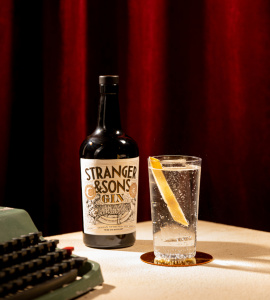
Stranger & Sons has a jungle-inspired illustrated label that illustrates its nine botanicals. When consumers finish the bottle, the scene on the front is mirrored on the inside of the back label. Hapusa is made of blue-black glass with a squat taper neck, mimicking the snowline of the Himalayas.
As the global gin market grows, the category may prove to be a pathfinder for other Indian alcohol. Rum, feni and vodka producers are already walking down the same path. If they succeed, India could become known not just as a producer of whisky, but as one of the world’s most distinctive sources of premium spirits.





Leave a Reply