

Women’s sports have seen a surge in viewership over the past few years, reopening the conversation on gender equality in sports — namely, what real equality would look like. The upcoming Los Angeles Olympics (LA28) is a case in point: 26 mixed-gender events are on the medal roster, up from 20 at Paris 2024 and 18 at Tokyo 2020. For the first time, LA28 will feature mixed-gender competition in golf, gymnastics, and the 4x100m relay.
Mixed-gender team sports aren’t new. Tennis has had mixed doubles at the Grand Slam level since 1892 — India’s own Sania Mirza built much of her career around it, winning majors alongside partners like Mahesh Bhupathi and Rohan Bopanna. Badminton had introduced Olympic mixed doubles by 1996. Shooting, gymnastics, equestrian sports, and rally car racing have featured direct men vs women competitions almost since their inception.
And so we ask — are the barriers to mixed-gender play in other sports systemic, physiological, or ideological?
Mixed gender sports or co-ed sports have long been a part of the school sports landscape. However, for sports like baseball, football, or even cricket, they tend to be curtailed around puberty, or before players can reach the under-16 or under-18 levels.
Yet, an instructive 2018 review in Sport, Education and Society found that well-structured mixed environments can reduce gender stereotyping and build mutual respect. Other studies suggest girls in mixed settings take on leadership roles more readily and report greater confidence than peers in segregated ones. A mixed environment is instructive in other ways too, perhaps revealing that merit in sports is not gender-based.

Safety is the other major deterrent, especially in contact sports. Inequality doesn’t stay outside the game — the attitudes boys absorb growing up come with them onto the field. And, combat sports like wrestling or kabaddi, where winning involves physically overpowering an opponent, can easily be warped to reinforce harmful stereotypes about masculine dominance and control.
In India, this strategy has been put to the test already. The Mixed Gender Football League (2023–24) in Chennai and Madhya Pradesh’s Samaveshi Cup, built leadership and strategy among young girls while boosting their confidence to push back against the idea that sports aren’t a ‘natural’ hobby for them. Traditional Indian mallakhamb and kho-kho exhibitions have also experimented with mixed teams at the grassroots.
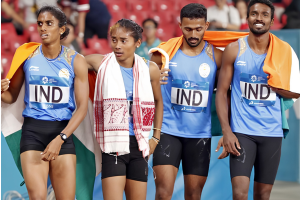
Ultimate frisbee has long operated as a mixed contact sport without major issues. The mixed 4x400m relay, introduced at the 2019 World Championships and later the Olympics, quickly became one of track and field’s most tactically interesting events, since teams must strategize the order of male and female runners — a wrinkle absent from traditional relays.
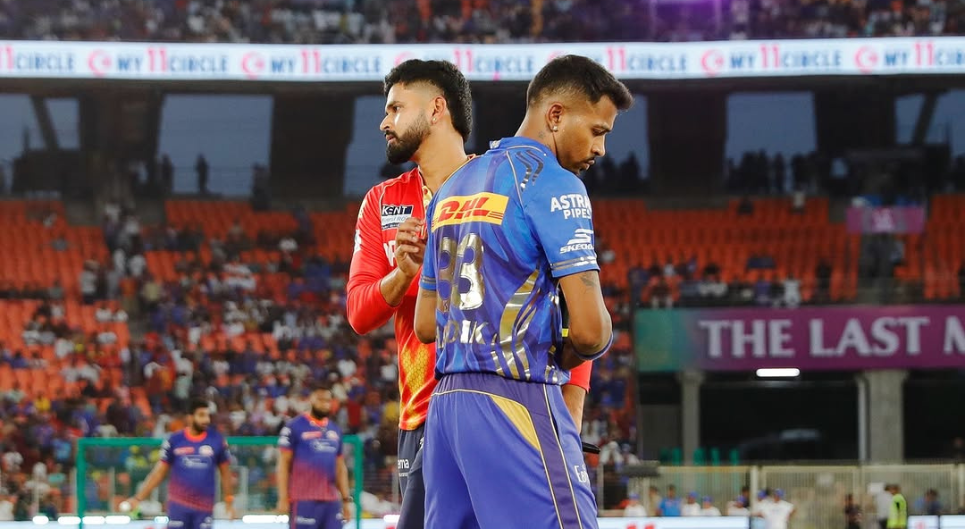
Of course we know that mixed-gender sports will face resistance rooted in deep social conditioning. Selection resentment is one flashpoint — if an Indian cricket team’s 12 male roster spots dropped to 6 to make room for women, that could strain team cohesion. Fan acceptance may be slow too: hostility toward female fans and reporters is well documented, from F1 to the IPL. That hostility could hit sponsorships and ticket sales before mixed teams earn real buy-in.
There is a case to be made for merit-based lineups in mixed-gender sports, provided that both men and women players of that sport start on a level playing field, with similar facilities and resources to bring them up to the point of competing side-by-side. Given the lopsided growth of women’s sports in certain areas, like cricket, basketball or even hockey (Hello Chak De! India), there might also be a need to establish mandates of the ratio of male-to-female players on the field, until true equality can be achieved on merit alone.
For much of the mainstream sporting world, such competitions remain an experiment. But their value does not lie in claiming a moral victory for gender equality. Instead, it lies in creating space for curiosity and asking a simple question: what happens when we play together rather than apart?
No meaningful pursuit of gender equality can be achieved through symbolic gestures alone. Yet mixed-gender sport can serve as a promising starting point. By bringing men and women onto the same team, it challenges long-held assumptions about ability and performance. In doing so, it offers a powerful reminder that success in sport is shaped by skill, strategy, teamwork and intent far more than by gender. If perceptions are ever to shift, mixed-gender competition may be one of the most effective ways to demonstrate that ability cannot be reduced to a binary.




Leave a Reply