

Do you remember running as a child?
Running for the pleasure of the run, arms windmilling, legs a-blur as you careened down the road, running hell for leather, running and collapsing into giggles, running without direction, just running. When was the last time you ran like that?
We’re all grown up now of course. We have full time jobs, families to caretake, homes to maintain. If we have time to run (or exercise), it is clocked and measured and logged into apps. Ours is an era of utilitarianism in which all acts must be overtly purposeful, their value measurable in some way, else they are deemed a waste of time, dispensable.
Let us for instance, take the app Strava. Strava is an app for active people – “Strava athletes upload everything from walks around the block to Tour de France stage wins. If you’re out there going for it, you’re one of us,” says the website.

In every way, this is admirable. If there is an app that can propel a largely sedentary population to get off their behinds and move, it can only be a good thing. Similarly, My Fitness Pal is an excellent food tracker, logging meals to help us eat better by tracking calories and macros. Both are amongst the most downloaded free fitness apps available around the world.
The bonus? Most apps (including the two mentioned above) offer community resources to build camaraderie and competition. “I love the connection, I love the encouragement,” says Tamiko G, a My Fitness Pal member. Users log the details of their day, their cycle runs, their meal plans, their Pilates sessions. Thus, they measure the minutiae of their lives against their online fitness community, who cheer them on to get even faster, even thinner, even better.
Research on runners inside virtual training clubs has found that people who receive encouragement and recognition for their logged activities tend to run more consistently, than those who don’t. Over time, runners in the same online groups take on similar training habits, syncing pace, distance and frequency with their community. People who engage with fitness-app communities, whether through encouragement from friends and family or friendly competition with strangers, report higher activity levels than those exercising alone.
The other side of the coin? There’s a particular kind of guilt that didn’t exist a generation ago: the guilt of going for a run and not recording it. “If it’s not on Strava, it didn’t happen” has become something of a running joke among athletes. But when fitness becomes an act that is constantly performed for others, how does that affect our identity and our behaviour?
As with traditional social media, we begin to chase the thrill of the like, growing ever more virtuous with every post. Segments and personal bests became a kind of currency. We begin to shuttle between the demands of social media and a sense of inadequacy in the face of thousands of people whose lives seem more productive than our own.
After all, scrolling past an athlete’s effortless-looking long run distorts what a regular workout looks like; most of us aren’t really trying to win the Mumbai Marathon, we’re just trying to stay in shape.
However bright a gloss you paint on it, leaderboards and badges can tap into our worst primal instincts: pride in winning, envy at being outdone, vanity at having outdone another. These mechanics aren’t accidental; they’re the same psychological levers that make any social platform sticky.
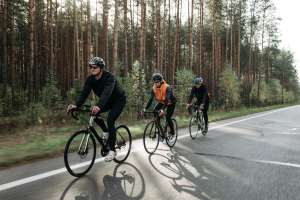
Missed goals or broken streaks don’t just disappoint people, they can trigger guilt, shame, anxiety, or a compulsion to ‘make up’ for the lapse later, a pattern that sits uncomfortably close to disordered relationships with food and exercise. Notably, much of this distress gets framed by users themselves as a personal failing rather than a predictable consequence of how these systems are designed to keep people engaged.
Consequently, an October 2025 study in the British Journal of Health Psychology found that users highlighted “numerous negative behavioral and psychological consequences of these apps, including feelings of shame, disappointment, and demotivation, and subsequent disengagement with apps and health behaviors.”
The same social features that can breed comparison and guilt are, for many people, the reason they exercise at all. The honest picture is more like a double-edged sword: the visibility that pulls someone off the couch is the same visibility that can make them feel inadequate once they’re moving.
What seems to matter most is who that visibility is shared with. People whose feeds consist mostly of peers, friends, and genuinely supportive communities use others’ fitness metrics as fuel. Those who follow professional athletes or influencers report feeling a constant sense of inadequacy tugging at their thoughts; enough sometimes, to stop them from exercising at all.
Fitness apps didn’t invent comparison, pride, or the desire to be seen. They simply built a stage for instincts that were already there. Whether that stage helps you move more or makes you feel worse seems to depend less on the app itself, and more on what you choose to watch while you’re on it.




Leave a Reply