

Bollywood actor Vidyut Jammwal is basking in the limelight of his latest film release – Street Fighter, in which he plays the role of Dhalsim, alongside 50 Cent and Jason Momoa. Square-jawed Jammwal’s character is rippling with muscles and schooled in martial arts; he uses his extraordinary abilities of elongating arms and fire breathing to bring down his opponents one by one.
But Dhalsim is also ridden with stereotype, cast as a yogi using his extraordinary abilities to save his poverty-stricken village. As a final touch, he also wears a necklace made of skulls.
Games made in the West have long perpetuated these Orientalist cliches. But recently, there has been a changing of the guard. The South Asian diaspora has been helming gaming studios, using their games as a lens to explore complicated idea of Indianness, hybridity and migration. Working from North American cities of Toronto and Seattle, these game developers are not only centring South Asian characters with South Asian stories, they’re doing it without the prism of traditional diaspora tropes.
Take for example Venba, made by the Toronto-based game development company Visai Games. The gameplay revolves around Venba and Paavalan, a couple from Tamil Nadu who have set up home in Canada in the 1980s. The story is absurdly simple. Venba’s treasured old cookbook is falling apart at the seams. The ink is smudged, pages are town, and you, the gamer, are required to recreate each recipe from scratch, using a combination of accompanying diagrams and page fragments, and a healthy amount of guesswork. But perhaps not much guesswork is required, for the recipes included well-beloved dishes such as idli and dosa.
The emotional anchor comes via Venba and Paavalan’s son Kavin, who grows up as a diaspora kid immersed in Canadian culture. Kavin tries to put together the recipe but faces a stumbling block since he cannot read Tamil. He compensates, in the way many children of immigrants do, by cooking from her drawings. Food is the shared language that brings the family together.
And then there’s Seattle’s Outerloop Games and their latest creation Dosa Divas, which pulls from RPGs such as Super Mario RPG and Octopath Traveler. The story revolves around a family of three sisters, in which the oldest sibling has captured the family restaurant, turned it into a capitalist corporation, and is using it to sell slop in tubes. At one level, this is a simple gameplay in which the younger sisters fight off lawyers and staff. On the other, it becomes a comment on the commodification of South Asian culture and the way Indian food gets packaged and sold abroad. Players may be reminded of the way haldi doodh and chai has been co-opted by big corporations.
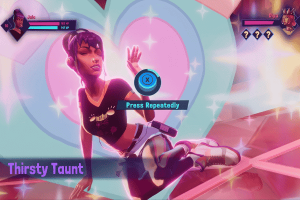
Equally fun and equally stereotype-busting is Thirsty Suitors in which Jala faces a litany of ex partners while dealing with her sister’s wedding and the familial expectations that always stem from such celebrations. The game mixes turn-based combat, skateboarding and cooking. But most radically, it centers the experiences of a young queer South Asian woman, even winning a Tribeca Games Award in 2022 and earning a BAFTA nomination.
Ubisoft itself has supported Thousand Star Studios on Aikyam, a Bollywood-inspired fantasy role-playing game.
These are games that bring diaspora culture to the fore; What unites these games is how they treat culture: food, language, and family duty are both the mechanics and the plot, immediately recognizable to South Asians who have grown up in North America. That alone is a rare shift. For players in India, the games offer something else: a view of how relatives abroad hold on to home, and a reminder of what migration costs and what travels with it.
In that sense, these games work as a link between the diaspora and the homeland. A mother’s hand-written cookbook, a grandmother urging her grandchild to get married, a queer young woman navigating her identity while dismantling stereotypes are shared cultural references on both sides. Nor are these games meant only for South Asians.
By telling these stories on their own terms, these games invite players everywhere to lookbeyondstereotypes and discover the messy, joyful, deeply human experiences that shape identity. In doingso,they make room for a richer idea of Indianness — one that travels across borders without losing its roots.





Leave a Reply