

For centuries, modern law has drawn a firm line between people and nature. Wildness was dangerous, and required taming. As a result, a river could be dammed or diverted. A forest could be handed over for exploitation by companies. A mountain could be mined. Animals are treated almost as property rather than sentient beings. The term ‘natural resource’ reveals our prejudicial perception of nature as something to be ‘used’. Companies, meanwhile, could be incorporated, acquire assets and appear in court as legal persons.
That line is getting blurred.
Around the world, an alternative history is getting writ: wild places such as rivers, forests, glaciers and even animals are increasingly being seen as worthy of legal recognition, beyond the pursuits of humanity, a wildness that exists according to its own natural laws beyond our ken.
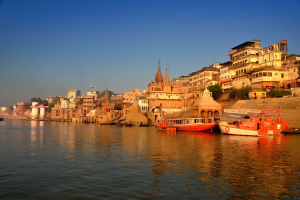
In India, for instance, this has led to some amount of legal back and forth.
In March 2017, the High Court of Uttarakhand ruled that the Ganga and Yamuna rivers were in danger of losing their existence, thanks to encroachment and pollution, and were therefore extended “all corresponding rights, duties, and liabilities of a living person”; the Chief Secretary and Advocate General of Uttarakhand were chosen as the rivers’ legal custodians, and granted the standing to act on the rivers’ behalf in any legal proceeding.
This was later overturned by the Supreme Court of India, who noted that while the protection of the Ganges and Yamuna was crucial, the assignment of personhood to natural entities required legislative, not judicial, authorization.
Yet the idea that wildness needs protection, has continued. The Madras High Court recently invoked the ‘parens patriae jurisdiction’ and declared ‘Mother Nature’ as a ‘Living Being’ having a legal entity/ legal person / juristic person / juridical person / moral person / artificial person having the status of a legal person, with all corresponding rights, duties and liabilities of a living person. This conception of nature has swelled to include water bodies, flora and fauna, forests, mountains, glaciers and air.
These judgments are part of a much larger legal movement. New Zealand’s 2017 Te Awa Tupua Act recognised the Whanganui River as an indivisible, living whole and as a legal person. This was moored to the long struggle of the Whanganui Māori Iwi people, for whom the Whanganui is inseparable from the identity and life of the iwi. The legislation explicitly recognises the relationship between the people and the river, as well as their responsibilities towards it.
That these judgements came about only when the threats to such natural places became untenable, speaks volumes. Legal systems are only just catching up with the ancient laws of indigenous people, who have lived companionably with the wild for centuries.
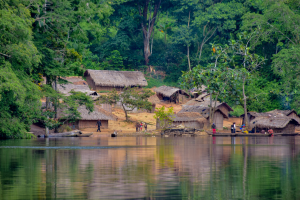
After all, for many Indigenous peoples the land and the skies themselves are ancestors, living participants in community life. In India for instance, numerous Adivasi communities believe forests and other commons are cognate with social, cultural and spiritual relationships. Sacred groves, customary rules, community forest management and rituals are not merely expressions of modern-day environmentalism, but can be far more significant – the forest as family itself.
Examples of this are scattered across the country. The resilient Adivasi communities of Gadchiroli, Maharashtra, have come together through the unique initiative of the Maha Gramsabha, a cosmos of village assemblies that challenges extractivist development and asserts indigenous rights to forests and territory. Through collective action, they are working to protect the environment, preserve cultural identity, advance gender equality, and confront historical injustices, offering a community-led vision of a more sustainable future.
This is only a drop in the ocean of a coexistence that unspools back centuries in India. In 1730, India’s Hindu Bishnoi community of Rajasthan, led by a woman named Amrita Devi, stood between a grove of sacred khejri trees and woodcutters looking to scythe them for the king of Jodhpur. They paid with their lives, while the king, repentant, later banned all logging.
But critics say that modern legal personhood on its own is little more than symbolism. Other difficulties may arise. Who decides the most appropriate ‘guardian’ for the interests of any particular piece of nature? And how does one guarantee that the people appointed to the position do in fact stand for the ecosystems and not for extractive state or corporate power? Legal rights may also compete with human claims: agriculture, housing, infrastructure, livelihoods and development. Granting nature rights does not magically resolve battles over the balance of human and wildlife needs.
There is another danger. Legal verbiage can easily divorce traditional knowledge from its cultural context and repackage it as a fashionable innovation. This is why the Whanganui example is so significant. The legislation refers not only to fraying environmental pressure but equally to a recognition of indigenous law and the empowering of indigenous communities.
Perhaps the most useful contribution is therefore not another category of legal rights. It is a challenge to the imagination. A river need not become human in order to matter. A forest need not acquire a passport or a courtroom representative to have value. What changes when we understand these entities is far more significant: what changes is our own behaviour towards them.





Leave a Reply