

When is a roti not just a roti?
Rolled out every day in kitchens across the Indian subcontinent, the roti has traveled around the world. It moved with merchants, sailors, immigrants, and indentured labor — its shape gently shifting with every border it crossed. In the 19th and early 20th centuries, after the abolition of slavery, Britain sent over 1.3 million Indian indentured laborers to far-flung colonies — about 145,000 to Trinidad alone between 1845 and 1917. Alongside clothes and keepsakes, they carried recipes and muscle memory: the instinct to make something familiar in an unfamiliar land.
In the Caribbean, that meant lentils — giving rise to dhalpuri, roti stuffed with split peas and blistered on a hot stove. In Singapore and Malaysia, Tamil Muslim immigrants stretched wheat dough into flaky roti prata. In some ways, the roti becomes an edible testament of who migrates, how they adapt, and whose foodways get preserved or erased. Even Mexico’s tortilla, though corn-based, echoes roti’s logic of adaptability: a flatbread shaped by the land it’s made on. What this really shows is that roti’s evolution has always been tied to power — who moves, who adapts, and whose foodways get preserved or erased. What this really shows is the flatbread’s evolution has always been tied to power — who moves, who adapts, and whose foodways get preserved or erased.
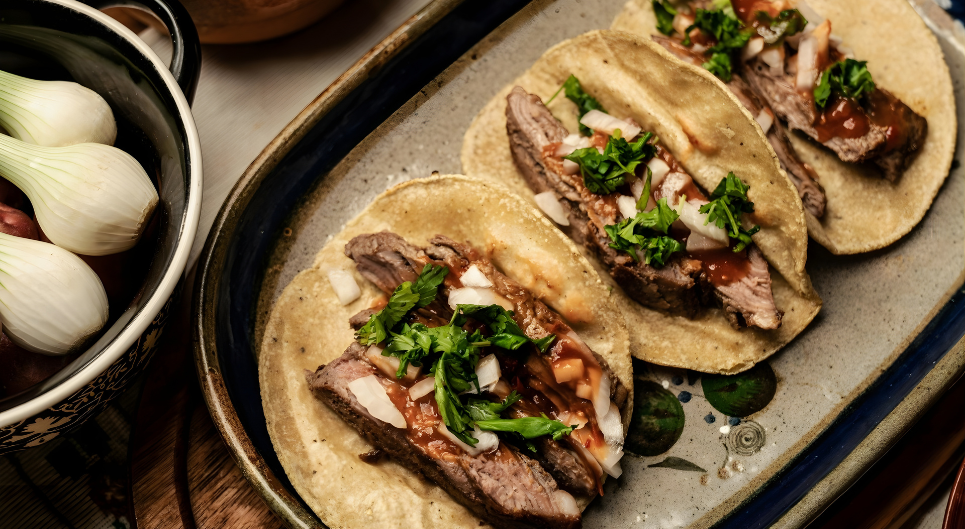
Today, Indian cuisine means different things in different kitchens in different parts of the world. In London, it may appear on a posh tasting menu; in Trinidad, in a lunchtime wrap sold by a street vendor; in Kuala Lumpur, on someone’s breakfast table. That Indian food has carved inroads into most countries is indisputable.
Yet, in some Western dining spaces, while Indian flavors are reframed as modern or refined, there is often little acknowledgement of their history. British chef Tom Kerridge’s £28 butter chicken, for instance, became a talking point because of how casually it detached a dish rooted in Delhi dhabas from its cultural context. For many, the issue wasn’t the reinvention — it was the idea of presenting it at a luxury price point without any real nod to where it came from.
Of the few Michelin-recognized Indian restaurants in the world, many sit outside India — a reminder that global prestige often arrives only when Indian cuisine is filtered through Western institutions. For instance, the UK has multiple Michelin-starred Indian restaurants. Meanwhile, India itself has none; the Michelin Guide still doesn’t operate in the country.
Not that borrowing is a one-way street. Indian chefs reinterpret French pâtisserie, Japanese matcha, and New York bagels, layering their own stories onto global cuisines. The question isn’t whether adaptation is allowed — it’s whether the origin story stays visible, and whether those who shaped a dish have a seat at the table.
The flavors may be the same, but the reception rarely is. Upscale restaurants serving ‘elevated Indian street food’ often draw critical attention, while dhabas offering similar dishes are rarely spotlighted. Part of this is access — who can secure prime real estate, hire PR, or design spaces that match fine-dining expectations. Part of it is perception: dishes become more ‘approachable’ when plated minimally, spiced subtly, and narrated through a Western frame.
The commercial landscape mirrors this. On supermarket shelves, boutique spice brands continue to favor polished packaging over conversations about sourcing and credit. The market for Indian packaged foods and spices has grown rapidly, with diaspora-led brands driving global curiosity. Those who control the narrative often control the profits, too.

But these tensions exist within the diaspora as well. A Trinidadian dhalpuri won’t taste like a Punjabi roti, yet both carry the same emotional resonance for those who grew up eating them. Authenticity becomes a question of belonging rather than purity: who decides what counts, and what gets preserved?
In the end, roti’s story isn’t about drawing hard lines between ‘authentic’ and ‘changed.’ It’s about recognizing that every flatbread — whether folded around curry in Trinidad, flipped in a Malaysian street stall, or plated in a New York bistro — carries the imprint of the hands that made it and the landscapes it travelled through. The challenge is making sure those hands and landscapes aren’t forgotten when the dish arrives at the table.





Leave a Reply